Anthropic unveils cryptographic model verification FlashProve and reports $17 billion in Q3 revenue alongside heavy compute costs, while Meituan, OpenAI, and Apple roll out major model and hardware updates.
01Anthropic FlashProve: Cryptographically proving "this output really came from a specific model"
Image source: TechCrunch
An open-source research system announced by Anthropic on November 3: it assigns each model a "fingerprint" without leaking weights, allowing outputs to be cryptographically verified as genuinely coming from the claimed model—preventing providers from secretly swapping in cheaper models and stopping third parties from falsely claiming "a frontier model reviewed me." Currently only an interim research milestone, Anthropic explicitly stated there are no plans to deploy it in any lab yet, with technical specifications and partial code open-sourced.
💡 Lumo’s take
Inspiration: When cataloging entries for a directory site, adopt this mindset first—don't just label items "AI-generated," but record the triad of model name + generation timestamp + source link; once verification tools like this launch, that metadata becomes ready-made trust equity. Direct link: Anthropic's official research page is linked inside TechCrunch (anthropic.com; the original article did not provide a directly citable URL, so none is fabricated); News: https://techcrunch.com/2026/11/03/anthropic-is-working-on-a-system-to-prove-ai-models-identity/ ; Image: https://techcrunch.com/wp-content/uploads/2026/09/GettyImages-2294192768.jpg?resize=1200,798
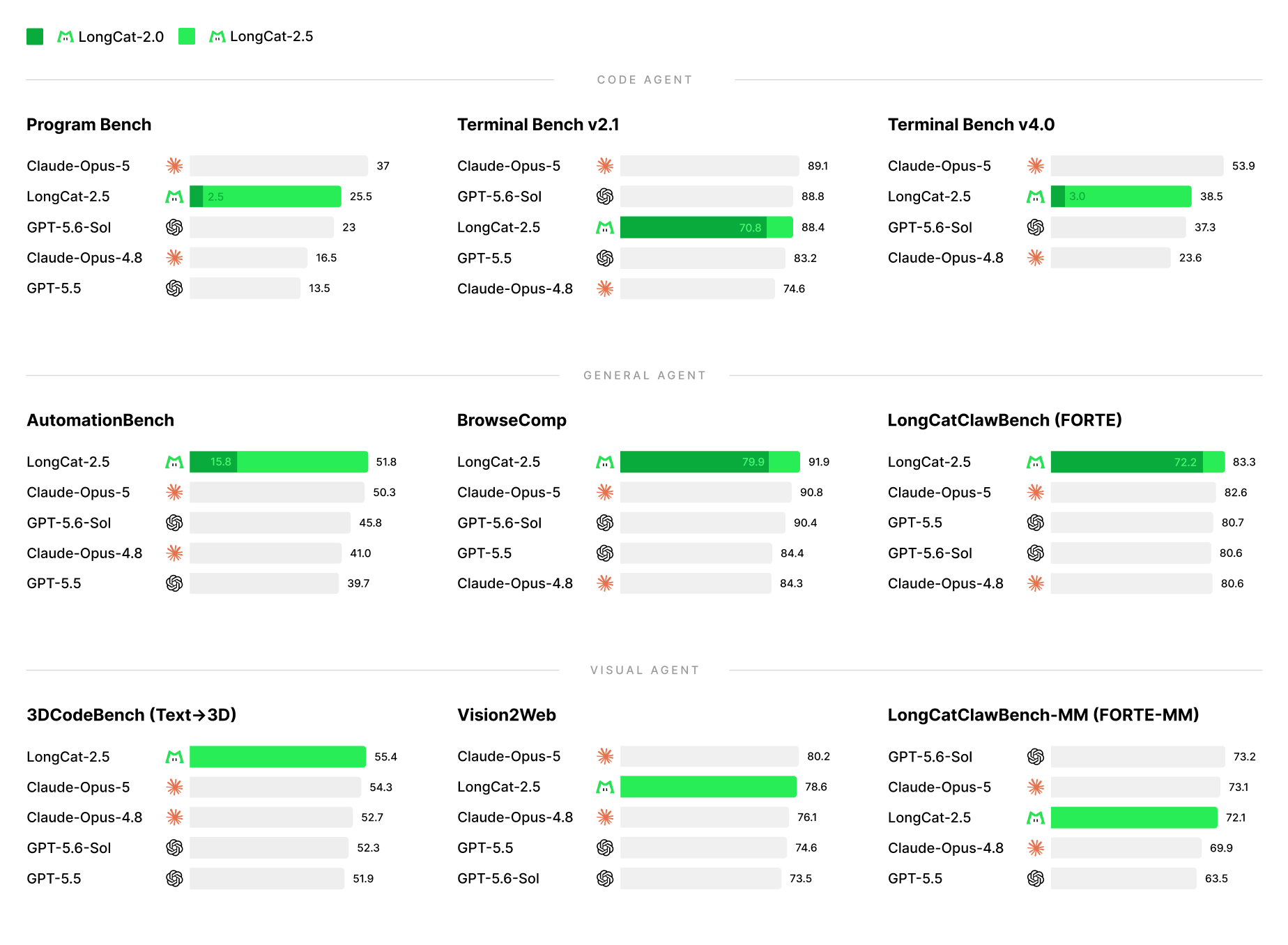
Released by Meituan's LongCat team on November 1–2, LongCat-2.5 is a native multimodal model with 1.6 trillion total parameters and roughly 48 billion activated parameters per token, built for long-horizon Agent tasks with a 1-million-token context window and OpenAI/Anthropic-compatible API formats. Training and inference are optimized for domestic accelerators (vendors unnamed). Its internal leaderboard claims it outperforms GPT-5.6-Sol on 20 of 27 shared benchmarks and Claude Opus 5 on 10—all self-reported without independent verification, while GitHub/Hugging Face weights are marked Coming soon. Separately, Moonshot promised full Kimi K3.1 Pro weights by November 4, which remained unlaunched as of November 3 checks and is worth watching today.
💡 Lumo’s take
Inspiration: Don't rush to switch models—first run your directory site's curation Agent long-workflow tasks through its API (compatible formats mean low switching costs); also note the practice of turning "failure trajectories into reproducible training tasks"—Agents get more reliable by turning real failures into training sets. Direct link: No standalone product page yet (available via LongCat chat and API; weights unreleased); News: https://fourweekmba.com/ai-meituans-1-6t-model-on-chinese-chips-rivals-openai-gpt-5-6/ ; Image: https://s3.meituan.net/static-prod01/com.sankuai.friday.longcat.next2p/assets/chat-image-D95MTdam.png
03OpenAI: GPT-6 Astra designs a talking hardware prototype within a week
Image source: The Decoder
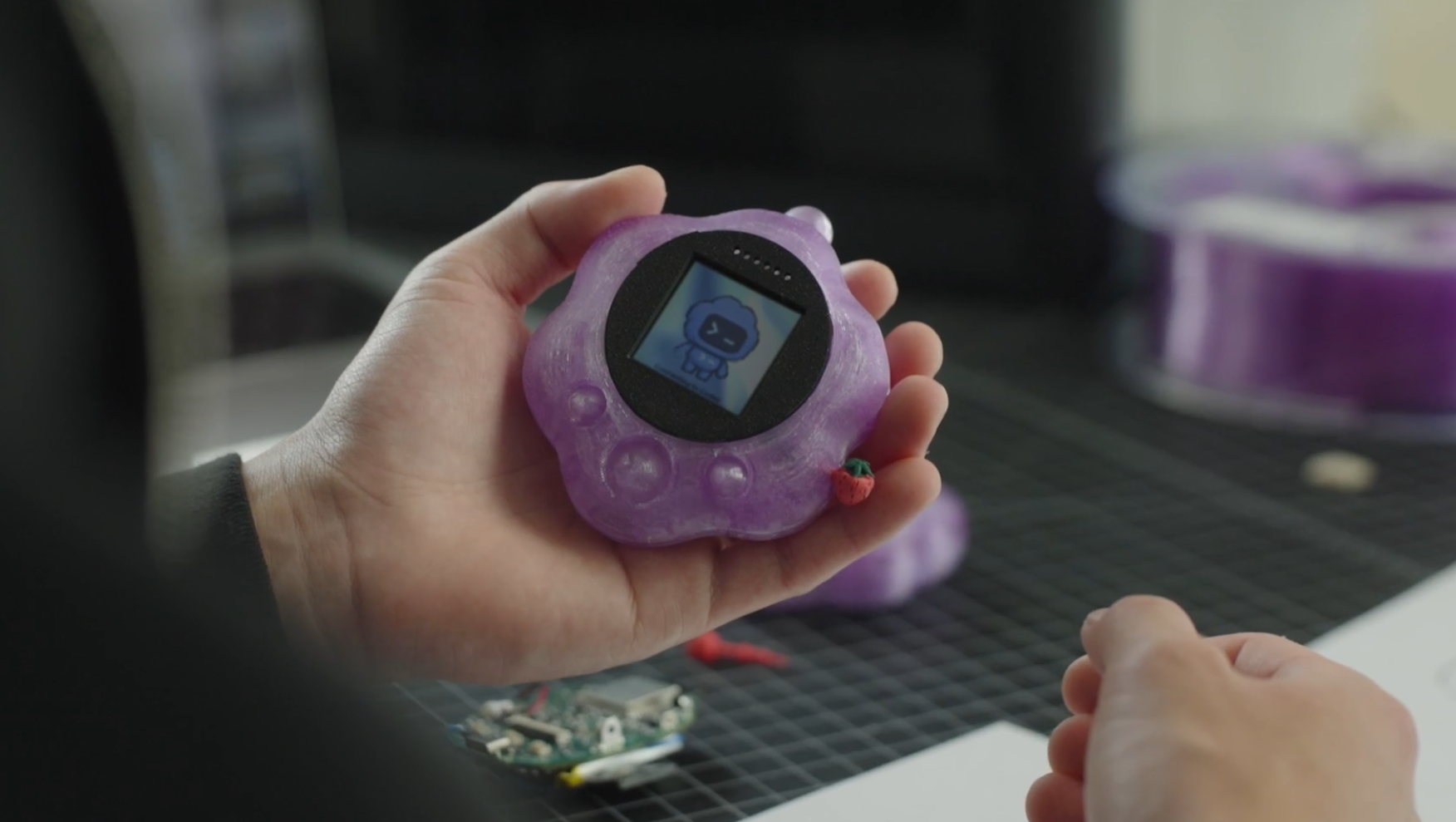
Disclosed by OpenAI on November 3: two employees used GPT-6 Astra as a side project to design a device that talks with Codex in under a week—covering enclosure, PCB layout, component selection, routing, firmware, and interface—with a contract manufacturer producing a small batch of prototypes in under a month. However, the model repeatedly overlooked mass-production constraints, tolerances, and assembly details, requiring multiple rounds of human review and revision; a new internal model, BenchCAD 2.0, scored 0.875 compared to 0.594 for Astra's highest reasoning tier. Engineering partnerships with Chip Ganassi Racing and Mazda were also announced the same day.
💡 Lumo’s take
Inspiration: When building small products, don't expect "AI to output a finished product directly"—copy its division of labor by letting the model generate v1 designs and multiple options, followed by human manufacturing/compliance review; directory sites can add a dedicated "AI-assisted hardware design" category as this segment opens up. Direct link: No standalone official product page for this experiment (not mass-produced, no purchase link); News: https://the-decoder.com/openai-says-gpt-6-astra-designed-a-hardware-device-from-scratch-in-under-a-week/ ; Image is an illustrative graphic from the source page, not an actual product photo.
04kwant: Open-source Agent squad—can't say "done" until verified
Image source: Product Hunt
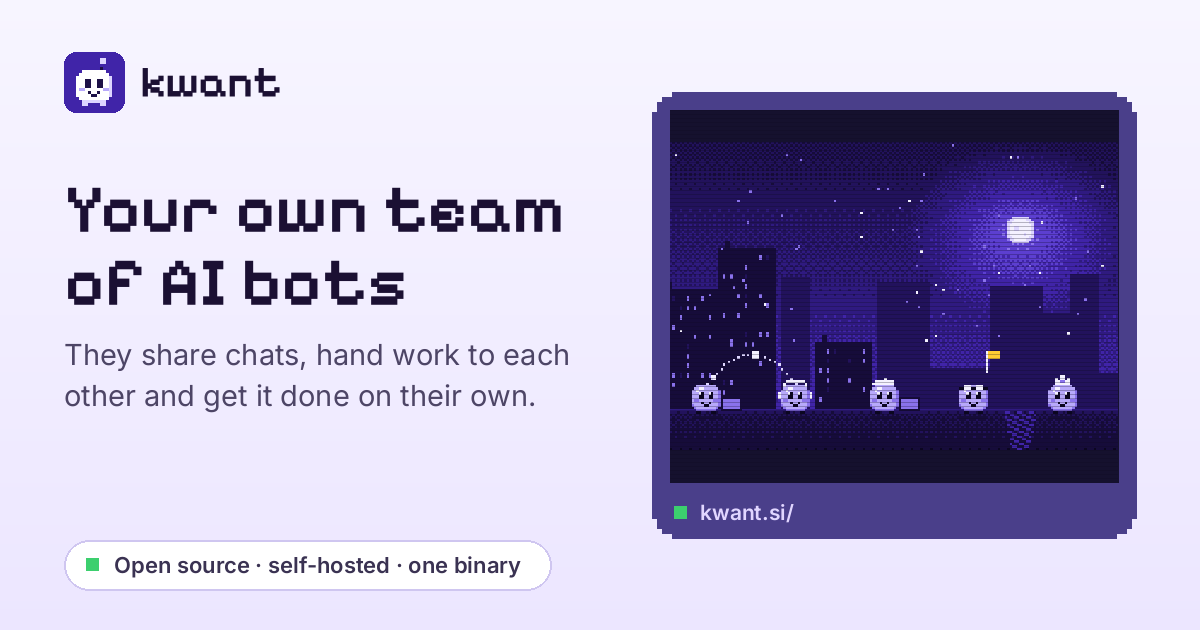
An open-source (AGPL) Agent team app featured on Product Hunt's November 3 chart: 27 role-based bots divide work into cards, hand off tasks, and test each other's output, marking a card "Verified" only after kwant runs checks itself. Web-sourced facts must include links pointing directly to source quotes, with missing or approximate citations rejected outright. Payment actions always require user confirmation, and each bot has configurable permissions and allowed sites. It runs on your existing paid Claude/Codex/Grok subscriptions, keeps data local, and supports Mac plus newly added Linux/VPS.
💡 Lumo’s take
Inspiration: Directory curation workflows can immediately borrow one rule—"an entry is only complete after passing official-website verification," making "Verified" a status field rather than a verbal promise; having an Agent squad peer-review itself is the cheapest way to curb confident AI hallucinations. Direct link: No verified standalone official site yet (none provided on the PH page, and searches found no distinguishable official domain; no guessing, added to backlog); News: https://www.producthunt.com/products/kwant ; Image: https://kwant.si/assets/og/home.png?v=77495a5e49
05Fal valuation doubles to $16 billion in half a year: Inference is the cash cow of this wave
Image source: TechCrunch
TechCrunch reported on November 3 that generative media inference platform Fal raised $1.65 billion across Series E and F rounds, including a $1.3 billion Series F led by Bessemer with participation from Nvidia and others, valuing the company at $16 billion—double its $8 billion valuation in April. Annualized revenue has surpassed $800 million this year, and the CEO acknowledged having to rate-limit traffic during the summer due to surging demand.
💡 Lumo’s take
Inspiration: When selecting multimedia model providers, include "whether traffic gets rate-limited at peak times and whether usage-based pricing is transparent" in your evaluation matrix; when listing video/image tools on a directory site, note their inference backend (such as Fal or Replicate), as this is a concrete metric for users. Direct link: https://fal.ai ; News: https://techcrunch.com/2026/11/03/ai-inference-startup-fal-doubles-its-valuation-to-16b-as-demand-surges/ ; Image: https://techcrunch.com/wp-content/uploads/2022/12/GettyImages-1268605503.jpg?w=1024
06OpenAI LifeVal: Not testing code, testing whether AI can handle everyday life
Image source: ExplainX (citing OpenAI release)
An internal benchmark unveiled by OpenAI on November 2, LifeVal tests "helping people get everyday errands done" rather than exams or coding—such as finding childcare, enrolling in preschool, budgeting, ordering groceries, and handling government paperwork—with tasks drawn from U.S. and international time-use surveys plus a 3,995-person questionnaire. GPT-6 Astra achieved an average reward of 80.6%, up from 49.3% for GPT-5.2 (December 2025), though GPT-5.6 already reached 80.0%, showing the curve flattening near 80%. Moreover, it is an internal tool built and tested by OpenAI reporting only its own scores, with no dataset, code, or independent verification released yet.
💡 Lumo’s take
Inspiration: Build a LifeVal-style validation set for your own small products—don't just measure "answer quality," measure end-to-end completion rate "from stating a need to getting a usable result"; a directory site's goal of "helping users find and actually use tools" fits the exact same yardstick. Direct link: No standalone LifeVal product page (OpenAI research post; no directly citable link provided); News: https://explainx.ai/blog/openai-lifeval-everyday-tasks-benchmark-gpt-6-astra-childcare-government-paperwork-2026 ; Image: https://explainx.ai/images/blog-library/evals-benchmarks.webp
07Anthropic Q3: $17 billion in revenue, yet compute eats up 58%
Image source: TechCrunch
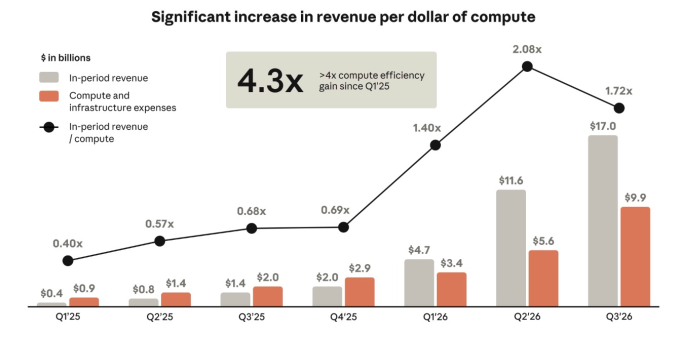
According to Anthropic's amended S-1A filed November 2 (analyzed by TechCrunch on November 3), Q3 revenue reached $16.96 billion—up 47% quarter-over-quarter and 1,127% year-over-year—while compute and infrastructure expenses hit $9.86 billion, or 58% of revenue (up from 48% in Q2), including $5 billion in costlier short-term compute commitments. Operating results swung from a $974 million profit in Q2 to a $567 million loss, with signed purchase and lease commitments totaling roughly $895.4 billion. The company stated compute will remain its largest expense for the foreseeable future.
💡 Lumo’s take
Inspiration: Create a "unit economics sheet" for your own Agent product tracking per-task token costs, short-term compute premiums, and failed-retry costs—while Anthropic had to buy expensive compute reactively, you can build circuit breakers and fallback tiers proactively into your product. Direct link & News: https://techcrunch.com/2026/11/03/anthropic-is-still-grappling-with-the-economics-of-compute/ ; Image: https://techcrunch.com/wp-content/uploads/2026/11/image-2-1.png?w=680
08Teamily AI: A group of people and a group of Agents working together in the same chat room
Image source: Product Hunt
Featured on Product Hunt's November 3 trending list alongside an official announcement the same day: AI-native instant messaging platform Teamily AI grew registered users 32x from 10,000 to 320,000 within one quarter (company-reported). Users directly @ Agents in group chats and build their own Agent teams, where Agents and humans share context and "living memory" to co-produce web pages, slides, documents, Kanban boards, research, and videos within a single conversation. Launched publicly in July, its founders hail from Meta, Tencent, and USC.
💡 Lumo’s take
Inspiration: Think of a directory site's curation Agent this way too—not running silently in the background, but reporting progress in a group chat and @-mentioning you for confirmation when stuck; spin up a free "curation squad" group for a week to see if chat-based collaboration cuts communication overhead compared to ticket workflows. Direct link: https://teamily.ai/ ; News: https://www.producthunt.com/newsletters/archive/daily (November 3 PH daily newsletter listing Teamily on that day's trending board); Image: https://teamily-ai.becdn.net/assets/release-20261103-132351-328/logo-teamily-NdypfL1G.webp
09nana: Run all coding Agents side-by-side in one terminal without stepping on each other's files
Image source: Product Hunt
A native Windows terminal (built with Rust + GPUI + Ghostty engine, not Electron) featured on Product Hunt on November 3: up to 12 Agents including Claude Code, Codex, and OpenCode each occupy a split pane with an isolated git worktree and at-a-glance status (working / waiting for you / done). Sessions stay alive in a background nana-server even after closing the window and can connect to remote Linux/macOS machines via SSH; free beta for Windows 10+ with no admin rights required.
💡 Lumo’s take
Inspiration: Try it tonight—open two Agents simultaneously in nana on Windows to edit separate directory-site modules (one on curation logic, one on frontend display), using worktree isolation to naturally prevent conflicts; Mac users can start by using it via SSH as a remote Agent dashboard. Direct link: https://nana.areshk.dev/ ; News: https://www.producthunt.com/products/nana-2 ; Image: https://nana.areshk.dev/icon.png
10Apple November hardware week: Touchscreen Mac goes on sale this Friday, HomeView follows next Friday
Image source: MacRumors
Apple's November schedule compiled by MacRumors on November 2: five new products go on sale Friday, November 6—OLED iPad mini (A20 Pro, starting at $699), M6 iMac (starting at $1,499), 14-inch M6 MacBook Pro (starting at $1,999), and Apple's touchscreen Macs, the 14- and 16-inch OLED touchscreen MacBook Pros (starting at $2,899 and $3,399). On November 13, the HomeView smart home display and fourth-generation Apple TV 4K (both $299) go on sale. Today, November 4, Apple Intelligence enters iOS developer beta testing in China ahead of a December public rollout with iOS 27.3 (initially iPhone-only, excluding Siri AI for now).
💡 Lumo’s take
Inspiration: When building small apps, watch two openings—touchscreen Macs mean macOS apps need to account for touch interactions (button sizing, gestures), while HomeView points to lightweight "living-room" Agent entry points (recipes, schedules, home control) potentially gaining traction earlier than on mobile. Direct link: Refer to apple.com for official product pages (the article did not verify individual direct links, so no URLs are fabricated); News: https://www.macrumors.com/2026/11/02/apple-isnt-done-with-2026-heres-whats-still-coming/ ; Image: https://images.macrumors.com/t/TFeHILeBRsR4AU6D1lqra05fejE=/400x0/article-new/2024/09/Apple-Logo-Top-Half.jpeg?lossy