Tencent Hy4: 770B-Parameter Flagship Model Launches with Vision and Computer-Use Capabilities
Today’s highlights
Tencent Hy4 and Kimi K3.1 Pro debuted on the same day, competing head-to-head among domestic flagships
OpenAI acquired Pierre and Meta absorbed Conductor as agent infrastructure M&A continued
Google required schools to turn off AI tools, removing Search along with them
Render gave each agent an isolated computer that boots in under 1 second
Nothing slated its first AI-native product for December, while OpusClip 4.0 upgraded to full-video editing
01Tencent Hy4: 770B-Parameter Flagship Model Launches with Vision and Computer-Use Capabilities
Image source: TechNode
On November 4, Tencent released the official version of Hy4: featuring 770 billion total parameters and a 1 million token context window, it can read fine-grained images and complex charts, operate computers across command-line and graphical user interfaces, and was specifically trained for Blender, CAD, game development, and financial tasks. API pricing remains unchanged from the preview version, with limited free access on WorkBuddy and CodeBuddy from November 4–15, and 50% off on TokenHub through December 31. However, the weights and full system card remain a promise to be "released in a few days"; at this stage, it is only accessible via hosted API rather than as a downloadable open-source model, with a cheaper Hy4 Flash also on the way.
💡 Lumo’s take
Inspiration: Start by using the hosted API to run the longest cross-software task in your directory submission workflow (such as checking official websites -> verifying information -> filling out forms) to see its failure rate across multiple steps; wait until the weights are actually released before considering local deployment. Direct link: https://www.tencent.com/tencent-launches-hy4-joining-the-ranks-of-the-worlds-leading-open-source-ai-models/ ; News: https://technode.com/2026/11/04/tencent-launches-hy4-with-vision-and-computer-use-capabilities/ ; Image: https://i0.wp.com/technode.com/wp-content/uploads/2025/10/tencent-average_person-XYjLiJxQmAU-unsplash.jpg?fit=1920%2C1280&ssl=1
02Google Gives Schools an Either-Or Choice: Turn Off AI Tools and Lose Search Too
Image source: The Neuron
Under new education settings disclosed by Google on November 4, if schools completely turn off AI tools such as Gemini for student accounts, they will simultaneously lose Google Search—because Google states that AI is deeply integrated into Search and it cannot provide "traditional Search" separately. In its place are guided learning features such as Guided Learning, which help students reason step by step rather than giving direct answers. The new default settings will take effect in early 2027 and have already drawn criticism from U.S. lawmakers and the education community.
💡 Lumo’s take
Inspiration: When building small products, prioritize making AI the "default path" rather than an "add-on switch": for example, having directory search default to AI summaries + structured filtering so users don't have to click "AI Mode" first; default value design often determines retention more than feature count. Direct link: None available (policy setting, not a product page) ; News: https://www.theneuron.ai/digest/everything-that-happened-in-ai-today-wednesday-november-4-2026/ ; Image: https://d.techtimes.com/en/full/419905/google-search.jpg
03Moonshot Kimi K3.1 Pro: 2.8T-Parameter Weights Released on Schedule on November 4
Image source: ExplainX
On November 4, Moonshot fulfilled its promise by releasing the Kimi K3.1 Pro weights on Hugging Face (moonshotai/Kimi-K3.1-Pro): 2.8 trillion total parameters, 104 billion activated per token, 896 experts, a 1 million token context window, and MXFP4 quantized weights totaling approximately 1.56TB across 96 shards, with vLLM/SGLang recommended for inference. The license follows the K3 model: generally free, though Model-as-a-Service offerings with annual revenue exceeding $20 million or products with over 100 million monthly active users require a separate agreement. Vendor self-testing scored 65.7% on Terminal-Bench 4.0, less than 1 percentage point behind Claude Opus 5.5's 66.4%, though this has not yet been independently verified.
💡 Lumo’s take
Inspiration: Don't rush to download it; first run your long-workflow coding tasks via the API and build a cost table accounting for its "thinking-mode-only" constraint. The value of open weights lies in fine-tuning and auditability, making it suitable for secondary development by small teams with compliance requirements. Direct link: https://huggingface.co/moonshotai/Kimi-K3.1-Pro ; News: https://explainx.ai/blog/kimi-k3-1-pro-open-weights-benchmarks-price-terminal-bench-nov-4-2026 ; Note: No fabricated images included.
04Meta Acquires Conductor: Parallel Coding Agent Team Absorbed, Cloud Service Shutting Down November 20
Image source: TechCrunch
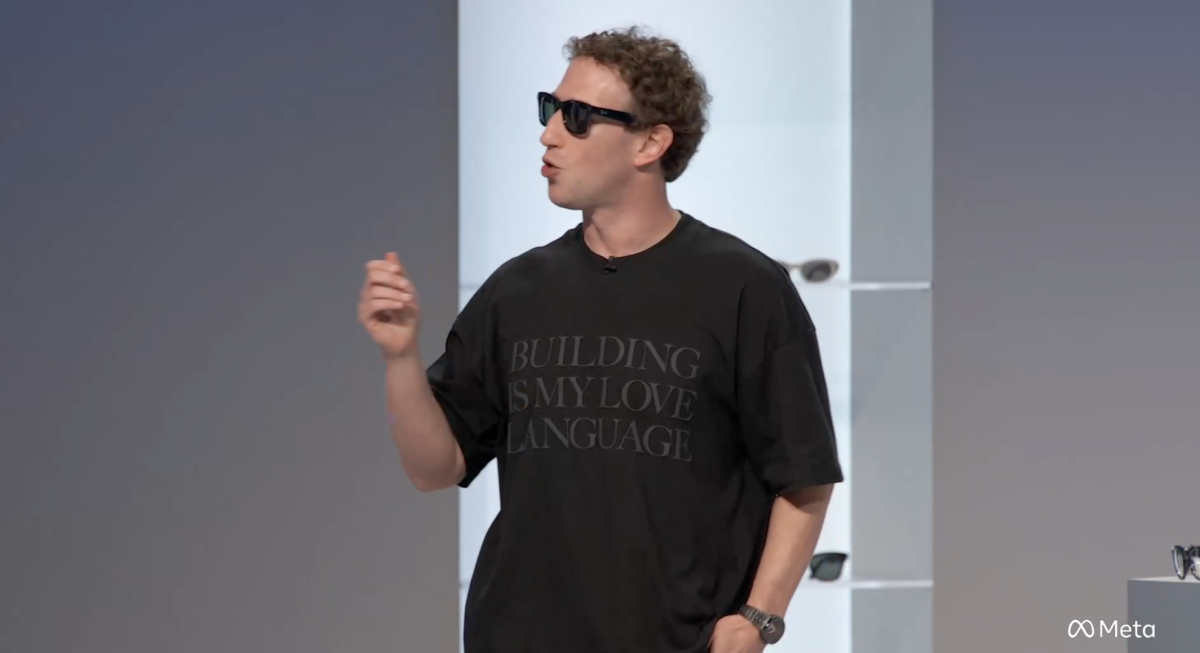
On November 4, Meta acquired Conductor: the Mac app allowed multiple coding agents—including Claude Code, Codex, Cursor, and OpenCode—to work in parallel inside isolated workspaces. The team is joining Meta Superintelligence Labs for an undisclosed price. The trade-off is an immediate wind-down of the product: new sign-ups and downloads stopped the same day, cloud workspaces become read-only on November 13, the cloud service shuts down on November 20 with cloud data deletion beginning then, and the local Mac app will be supported until early 2027, with founders only promising "something new" in early 2027.
💡 Lumo’s take
Inspiration: When choosing an agent orchestration tool, make "one-click data export and local execution capability" hard requirements; this is also a product opportunity—building a small "workspace migration" tool for users of shut-down tools addresses a real, time-sensitive need. Direct link: None available (new sign-ups closed, no official site linked) ; News: https://techcrunch.com/2026/11/04/meta-acquires-ai-coding-startup-conductor/ ; Image: https://techcrunch.com/wp-content/uploads/2026/09/mark-zuckerberg-ray-bans.png?resize=1200,653
05OpenAI Acquires Pierre: Bringing "Git Storage for Agents" into Codex
Image source: Unite.AI
On November 4, OpenAI announced the acquisition of Pierre Computer Company: its open-source libraries such as Trees and Diffs already power file browsing and diff rendering in the Codex app, while its commercial product Code Storage is a Git storage service built for machines—allowing applications to embed cloning, pushing, pulling, and repository syncing, claiming support for 32TB repositories and high-concurrency writes, with Lovable and Bolt already using it. The price was not disclosed and the deal is subject to regulatory approval; the open-source projects are committed to remaining open source, existing customers can continue using Code Storage, and its features will gradually be integrated into Codex.
💡 Lumo’s take
Inspiration: When building multi-agent small products, bake "one rollbackable snapshot per agent" into the architecture from the start rather than patching it in later; directory submission agents can adopt this too—take a snapshot before every change for one-click rollback if things go wrong. Direct link: None available (verified standalone product link not provided in acquisition announcement) ; News: https://www.unite.ai/openai-to-acquire-pierre-computer-and-bring-code-storage-to-codex/ ; Note: No fabricated images included.
06OpenAI Discloses ChatGPT Search Volume Reaches About 20% of Google's, 1.2 Billion Weekly Active Users
Image source: The Neuron
On November 4, OpenAI Head of Consumer Product Adam Fry disclosed that ChatGPT's search-like query volume has reached roughly 20% of Google Search volume, with 1.2 billion weekly active users and 250 million weekly active users for voice input (including dictation), alongside plans to merge Chat and Work into a single experience with shared usage limits in December. Note the methodology: the 20% figure is OpenAI's own estimate based on its internal definition of "search-like activity," not an independently audited market share, and should not be read directly as search market share.
💡 Lumo’s take
Inspiration: Every listing in a directory isn't just for humans to read, it's also for agents—the cleaner the structured fields (official website, category, capabilities, price range), the easier it is to be cited and invoked by conversational interfaces; this is the core value of Jianguangku itself. Direct link: None available (statement data, not a product page) ; News: https://www.theneuron.ai/digest/everything-that-happened-in-ai-today-wednesday-november-4-2026/ ; Image: https://cdn.theneuron.ai/everything-that-happened-in-ai-today-november-4-2026.png
On November 4, Render launched the public beta of Sandboxes: each agent gets a dedicated isolated Linux environment based on Firecracker microVMs, capable of installing dependencies, modifying files, and running code, booting in under 1 second, scaling to thousands of instances, and running long-term. Instances automatically suspend when idle, retain files and memory upon waking, and bill only for actual CPU consumed, while a secrets broker (in private beta) keeps keys out of the sandbox. On the same day, Workflows reached general availability and shared file systems opened for applications, all running on the same platform alongside existing web services and databases.
💡 Lumo’s take
Inspiration: Next time you add agent capabilities to a directory or small product, don't build your own sandbox first—use this kind of managed sandbox directly to run a "submission verification agent," paying only for actual CPU with zero cost while suspended, so switching providers if it fails won't hurt. Direct link: https://render.com ; News: https://www.businesswire.com/news/home/20261104661760/en/Render-Expands-Its-Platform-to-Simplify-Running-AI-Agents-Inside-Production-Apps ; Image: https://cdn.sanity.io/images/hvk0tap5/production/a3528e77b010804af14908fab79f826d66437620-1600x900.png?fit=max&auto=format
08CrowdStrike Spends About $495 Million to Acquire Two Companies: Adding Monitoring and Security Checks for Enterprise Agents
Image source: TechCrunch
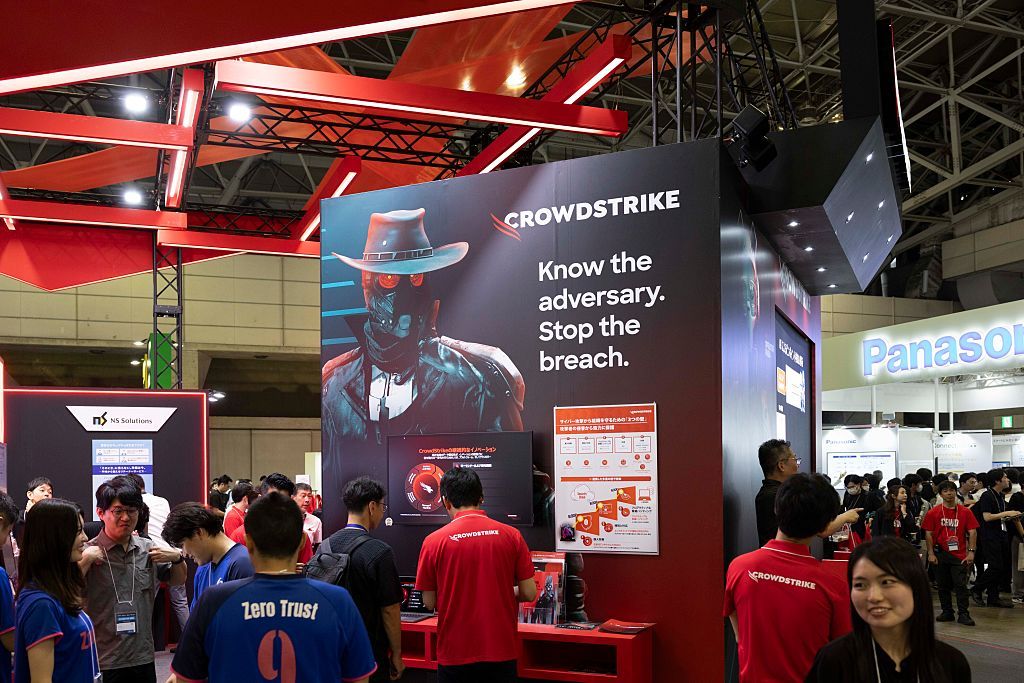
On November 3, CrowdStrike signed agreements to acquire Fiddler AI (approximately $400 million, according to The Wall Street Journal) and Dreadnode (approximately $95 million), totaling nearly $500 million pending closing. Fiddler provides enterprise agent observability and will be integrated into the Falcon platform as Falcon Observe for pre-deployment evaluation, runtime tracing, and behavioral monitoring; Dreadnode performs automated pre-deployment security testing for models and agents and will join Falcon Guardian to translate test results into security policy recommendations; CrowdStrike also introduced an agent "kill switch" alongside the deals.
💡 Lumo’s take
Inspiration: Add a minimal governance checklist to your own agent product—log traces at every step, support a one-click pause, and run privilege-escalation and prompt-injection tests before launch; this checklist itself can be packaged as a service and sold to other small teams deploying agents (see the idea at the end). Direct link: None available (verified standalone product link not provided) ; News: https://techcrunch.com/2026/11/03/crowdstrike-to-shell-out-nearly-500m-for-2-ai-security-startups-as-the-market-for-securing-agents-takes-off/ ; Note: No usable image returned by the source page; no image fabricated.
09Nothing's First AI-Native Product Slated for December Launch: A Productivity Tool with No New Screen and Not Just an App
Image source: TechCrunch
On November 4, Nothing CEO Carl Pei announced on X that the company's first "AI-native product" will launch in December, positioned as a productivity tool—"no new screen, nor could it just be an app"—while downplaying connections to AI wearables (pendants, pins, glasses, companion devices), with exact form factor, pricing, and release date undisclosed. The company had previously teased AI smart glasses and AI-enabled earbuds, though Pei did not specify whether this product is one of them.
💡 Lumo’s take
Inspiration: When building small apps, don't chase hardware form factors first—chase scenarios: what is "one task you can complete without pulling out your phone or opening an app"? Validate that scenario as a mobile shortcut first, and discuss hardware only after it works. Direct link: None available (CEO post only, no product page published) ; News: https://techcrunch.com/2026/11/04/nothing-ceo-says-companys-mysterious-ai-first-device-is-dropping-next-month/ ; Image: https://techcrunch.com/wp-content/uploads/2024/02/2560x2040_5fe778b6-8919-4143-bf11-8d86af754f52_2192x.webp?w=1024
10OpusClip 4.0: Upgrading from "Clipping Highlights" to "Automatically Editing Full Videos"
Image source: OpusClip Official Blog
OpusClip 4.0 launched on November 1–2 and appeared on Product Hunt on November 4, shifting its positioning from "finding highlight clips in long videos" to "automatically editing full videos": Auto-edit performs one-click voice cleanup, captions, and B-roll to output ready-to-publish videos; a single edit can generate multiple formats such as 60–90 second highlights and 3–5 minute extended versions; Recipes saves common editing settings as reusable templates; Viral Hook and Motion Graphics automatically create opening hooks and animated graphics; and AI Producer enables style-based video editing via plugins inside ChatGPT and Claude.
💡 Lumo’s take
Inspiration: When building content-oriented small products, borrow its Recipes approach—save "the exact workflow users repeat every week" as a one-click template, because reuse rate equals retention; Xiangzi's own daily digest and Jianguang submission workflows are equally worth standardizing into templates before automating. Direct link: https://opus.pro ; News: https://www.opus.pro/blog/opusclip-4-0 ; Image: https://cdn.prod.website-files.com/6388604483b03a34a734d6b1/6ae8928b455465faa6be604a_AutoEdit-webp.webp


 WorkBuddyTencent's all-scenario AI office workbench: assign tasks in one sentence to plan, execute, and deliver docs, sheets, and slides across Tencent's ecosystem.
 CodeBuddyTencent Cloud AI coding assistant available as IDE plugins, a standalone AI IDE, and a CLI tool for code completion, debugging, and testing.