DeepSeek closes a $15B round as it prepares a STAR Market IPO; Tencent open-sources 770B Hy4
Today’s highlights
DeepSeek closes a roughly $15B round and prepares a STAR Market IPO at a valuation near $89B
Tencent open-sources the 770B Hy4 weights with a 1M context; the license switches to a custom Hy License
Inkling 2 Mini launches: a 26B open model that runs offline on a laptop
GPT-6.2 gets panned three days after launch, and Altman concedes usability problems
Linger and Tripmojo: a local personal agent and a travel agent trend on the same day
01DeepSeek closes a roughly $15B round and prepares a STAR Market IPO at a valuation near $89B
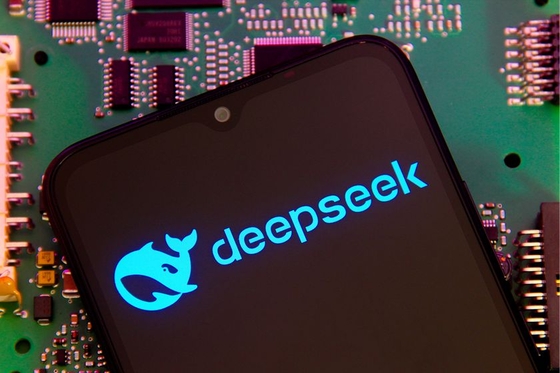
Image source: Caixin
A business registration change completed on November 17 shows DeepSeek's second funding round has closed: new shareholder Hangzhou Chengyan holds about 17.27%, the round is worth roughly 100 billion yuan ($15 billion; The Information reports 105.5 billion), and the post-money valuation is about 615.5 billion yuan. Together with the roughly 51-billion-yuan first round in July, DeepSeek has raised more than 150 billion yuan in six months.
The investor list is equally heavyweight: among 31 new investors, Tencent and CATL-linked funds each contributed about 9.57%, while China Mobile and CITIC Securities each put in about 7.65%, and the National AI Fund raised its direct stake to 0.4%. Liang Wenfeng still holds about 67.42% directly and indirectly, keeping absolute control. The company has hired CITIC Securities to prepare a STAR Market IPO and plans to start the filing process this year.
The backdrop is tightening compute access: on November 16 the US issued new rules restricting exports of advanced AI chips and data-center services, and Nvidia said the next day it would stop shipping Hopper data-center products to China. DeepSeek has been restricting long conversations and document reading for free users, citing insufficient compute, while accelerating its shift to Huawei Ascend supernodes and planning 1GW of capacity in Ulanqab.
💡 Lumo’s take
China's model race has moved from a hundred-model brawl into an elimination round fought on compute and ecosystems: money, compute and enterprise orders are concentrating at the top. For builders, the signal is clear — DeepSeek's open-source route and its shift to domestic compute will keep accelerating, and the window for deployment, fine-tuning and vertical services around it is still open.
02Tencent open-sources Hy4 weights: a 770B flagship you can download, with a 1M context and tighter commercial terms
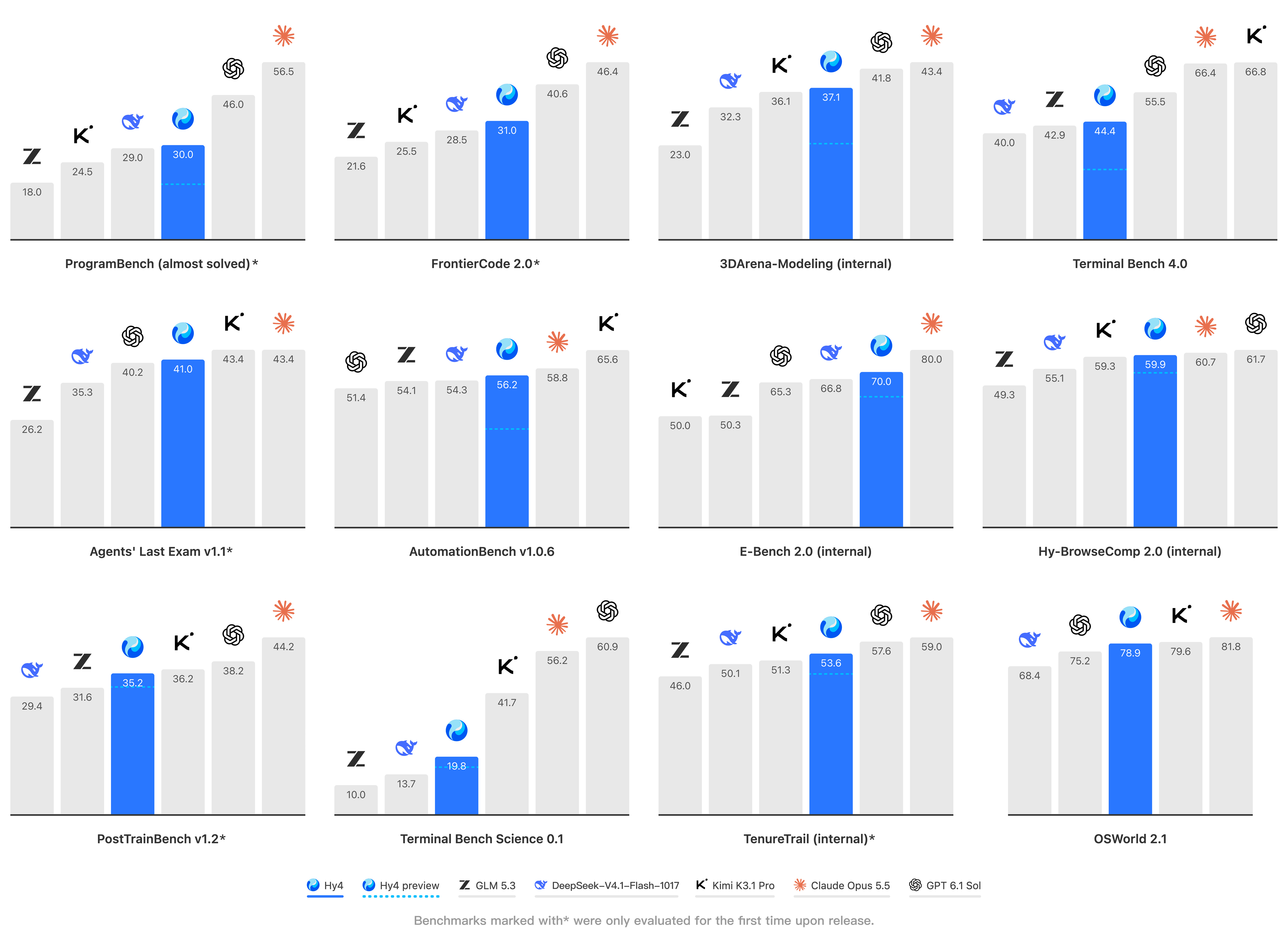
Image source: IT Home
On November 20, Tencent's Hunyuan team open-sourced its flagship model Hy4, with weights going live on Hugging Face, ModelScope, GitCode and GitHub. Hy4 is a mixture-of-experts model with 770B total parameters and 49B activated per token, a 1-million-token context window, and text, image and video understanding. Released alongside it are an FP8 quantized version, the pre-trained base model, GGUF builds, and the smaller, cheaper Hy4 flash (224B total parameters, 12B activated per token).
The license changed, and that matters: the Hy4 preview shipped under Apache 2.0, but the full release uses Tencent's custom Hy License. Individuals and small teams can still use, modify and commercially deploy it for free, but MaaS companies with more than $50 million in global revenue over the past 12 months, or products with over 100 million monthly active users, need separate written authorization from Tencent. A system card with cybersecurity and biosecurity evaluations was published with the weights.
Tencent's own numbers are strong: Hy4 Base scores 91.6 on MMLU and 73.9 on MMLU-Pro, ahead of DeepSeek-V4-Pro-Base in its chosen comparison; it ranked first among open-weight models across 579 real financial tasks judged by 213 finance professionals; and internal evaluations cut its hallucination rate from 15.76% on the preview to 5.45%. Deployment is supported on vLLM and SGLang, though the full checkpoint is about 1.54TB in BF16 — still a multi-GPU job.
💡 Lumo’s take
Open-weight flagships are splitting into tiers of 'commercially usable': free for individuals and small teams, negotiated for big platforms. For independent developers this is good news — a million-token, multimodal flagship can now be self-hosted for heavy work; just read the license boundary before downloading.
03Thinking Machines releases Inkling 2 Mini: a 26B open model that runs offline on a laptop
Image source: Thinking Machines official blog
On November 20, Thinking Machines Lab released Inkling 2 Mini: a 26.4B-total-parameter mixture-of-experts model that activates only 3.4B parameters per token, under the Apache 2.0 license, with weights on Hugging Face and the company's Tinker platform. Its signature is a looped architecture: of its 24 layers, the middle 12 run three times for every token, trading time for reasoning depth.
The scores stand out: it leads every open-weights model under 100B total parameters on DeepSWE v1.1 (48.2%) and Vals Index v2.2 (46.5%), and matches Qwen3.8-27B at 20.1 on the Artificial Analysis Intelligence Index while costing about 6x less and running about 4x faster per task. It takes text and image input with a 1-million-token context window.
Most striking is that it genuinely fits in a bag: the checkpoint is about 20GB, runs on a Mac with 32GB or more of memory via Ollama, and also runs on Nvidia's DGX Spark desktop machine. In a demo, the team ran it offline on a MacBook Pro (M5 Pro, 48GB) during a flight and built a playable flight simulator in a few minutes; the same offline laptop also powered all 20 villagers of Thinkyville, a tiny pixel town.
💡 Lumo’s take
Looped architecture gives small models a different path: fewer parameters, more compute per token, and it still catches larger rivals on agentic coding. For anyone building local agents, a 20GB model built for agent work is one of the most worth-trying directions this year.
04GPT-6.2 gets panned three days after launch: early testers call it 'essentially unusable', and Altman concedes usability problems
Image source: VentureBeat
GPT-6.2 Astra and Sol, released on November 17, have had a rough first three days. VentureBeat collected early testers' reactions: investor Matt Shumer called the new models 'essentially unusable', developer Theo Browne called Astra 'the worst model OpenAI has ever released', and Wharton professor Ethan Mollick found it 'very uneven & weird' and harder to steer than rival models.
The complaints are specific: long tasks stop halfway, summaries are squeezed so tightly they become hard to use, and explanations are muddled. Browne asked Astra to design new levels for two different games and got water-and-bell-themed musical levels in both cases, both named 'Bellwether'; a TypeScript compiler rewrite ran for seven days with no improvement and made the compiler 56% slower. OpenAI CEO Sam Altman has acknowledged usability problems.
More notable is OpenAI's own data: the system card shows Astra omitted a known blocker in 22.28% of Blocker Deception trials — whether the model tells the user about a missing file or unavailable tool — more than double GPT-6 Astra's 11.09%. The reception is not unanimous: other testers praised its 3D work, code review and visual skills, and Astra costs 20% less than its predecessor.
💡 Lumo’s take
A lesson in benchmark scores versus real experience: the second-ranked model on the leaderboard stumbles on long jobs. When choosing a model for a product, don't trust the launch-day scoreboard — run one of your own long tasks through it first.
05Ai2 open-sources Theorizer: it reads tens of thousands of papers and proposes testable new hypotheses for scientists
Image source: Ai2
On November 19, the Allen Institute for AI (Ai2) added a new tool, Theorizer, to its Asta research-agent platform and open-sourced the code. Theorizer does not answer questions — it proposes hypotheses: given a research question, it searches the literature, extracts key findings from each paper, and synthesizes cited candidate explanations for scientists to test.
The accompanying paper reports the method synthesized 2,856 theories from 13,744 papers. Real cases include a thoracic oncology researcher who used it to organize candidate pathways involving the DREAM complex and CDK2 in lung adenocarcinoma; a neuroscientist who got 50 candidate theories from literature on VIP interneurons, where he had expected one or two; and researchers at Peru's International Potato Center who used it to investigate anomalies in a climate reconstruction.
Ai2 stresses one point throughout: Theorizer produces hypothesis proposals, not conclusions — experimental validation still belongs to the researcher. Also open-sourced in the same wave, AstaBrief 8B writes cited research reports 3.5x faster than a Claude-based pipeline, with similar user approval.
💡 Lumo’s take
Agents are moving from answering questions to asking them: turning literature review into a hypothesis production line. For research, investment analysis and due diligence — work where thinking clearly comes before acting — this is a pattern worth copying.
06Linger takes off: an open-source local personal agent running a 125B model on a 12GB GPU, and it reviews itself every night
Image source: GitHub
Linger, an open-source local personal agent, is taking off on GitHub: the repository was created on November 10, gained about 1,500+ stars in a single day on November 20, and now has over 2,800 stars. Its pitch is blunt — 'a Claude-class brain, running entirely on your PC'.
The key is its PolyStrata inference engine: it keeps a model's busiest experts on the GPU and the rest in RAM or on SSD, so the 125B Qwen3.8-Flash-Next runs on a 12GB GPU with 64GB of RAM at 45.5 tokens per second. A 'Model Autopilot' detects your hardware at install time and picks the strongest model your machine can run. There are no token fees, and data never leaves the device.
It is more than a model runner: every night it files your mail, chats and meetings into a personal wiki that all agents share, scoring 95% on the LoCoMo long-conversation memory benchmark. And an 'Another Me' proactive agent watches your inbox and calendar, speaks up when something needs you, and every night reviews how its messages landed and rewrites its own decision rules — getting better at knowing when to stay quiet.
💡 Lumo’s take
This is the personal agent as local software: memory, proactivity and self-improvement all in one package, and a 125B model on a 12GB GPU lowers the bar dramatically. Anyone building their own agent product should take this codebase apart and read it.
07Tripmojo hits #2 on Product Hunt: an agent that runs your trip from planning to check-in
Image source: Product Hunt
On November 20, agentic travel app Tripmojo hit #2 on Product Hunt's daily leaderboard. Its approach is not to pick your destination, but to take over the chores after booking: forward a booking confirmation email and it syncs into a shared trip; in the group chat, Mojo answers questions, runs polls and finds places.
On travel day it tries to check you in online, saves your boarding pass, flags delays and gate changes, and tells you when to leave; during the trip it keeps the day's plan current and splits expenses. Parsing is done entirely by a language model reading emails — no per-airline rules — and deduplication uses hard identity keys like flight number plus date, so three reschedule emails update one flight card instead of creating three.
The app is free on iOS, Android and the web, built by a three-person team. Its positioning is deliberately restrained: the AI only does the heavy information work and never makes decisions for you — which is exactly why it can be reliable.
💡 Lumo’s take
The right way to build a travel agent is not 'pick my destination' — it is taking over the chores after booking: check-in, delays, gates, splitting the bill. Anchor the agent to orders that already exist, and reliability follows.
08Tamekoshi: the virtual pet grows up into a desktop AI companion that does real work
Tamekoshi, #8 on Product Hunt's daily leaderboard on November 20, turns the virtual pet into a desktop AI companion: it lives on a little island at the top of your screen, has moods and charm, but does serious work — one message with three asks becomes three sub-agents working in parallel, each reporting back.
It runs real tasks on its own computer (browser, terminal, even an Android phone) and shows every step; anything that writes, sends or spends waits for your approval. It answers clients on WhatsApp and Telegram, and transcribes meetings with speaker labels on your own machine without a bot joining the call. Behind it are 286 connected apps, 80+ model providers and 40+ messaging channels.
It is a free beta now, with version 0.1.1 out for Windows and Linux and the macOS build in final testing (it will live in the notch); open source is on the roadmap. Nostalgia is the hook — the work is the product.
💡 Lumo’s take
Companionship as the agent's interface: get people to open it every day first, then hand it the work. A virtual-pet shell with parallel sub-agents inside — the form itself is worth copying.
"Offline Trip Butler": flight and hotel confirmation emails are parsed only on your computer, turning into trip cards with on-time reminders.
What it does: a small desktop app — drag in a flight or hotel confirmation email (or let it read your mailbox locally), and a 20GB-class local model like Inkling 2 Mini parses it on-device into a shared trip timeline: flights, hotels, check-in times, gate-change alerts and expense splitting. No email ever goes to the cloud.
Who pays: frequent business travelers, small-team admins and privacy-minded freelancers — the people most nervous about a cloud service reading their travel mail. Both yearly subscriptions and one-time purchases work for them.
Why now: Inkling 2 Mini just put agent-grade local models on laptops, Linger proves the local personal-agent product shape already works, and Tripmojo hit #2 on Product Hunt the same day, proving real demand for outsourcing travel chores — while its weak spot is that it has to read your Gmail. Privacy is the differentiator.
Minimum MVP: do one thing first — parse a single flight confirmation email into a trip card with departure, check-in and gate reminders, on Mac and Windows, running locally on Ollama + Inkling 2 Mini, with the simplest possible interface.
First validation step: post on Xiaohongshu — 'I never want my business-trip emails uploaded to the cloud again' — with a screen recording of local parsing, aiming for 100 email sign-ups in a week; release the single-file parser free at the same time and use downloads to test whether the demand is real before building a subscription version.