Xiaomi releases World Model 2.0, Ant Group open-sources robot spatial memory, HarmonyOS passes iOS in China with 22%
Nvidia reportedly pauses AI server shipments to four Southeast Asian countries; 42 states block Character.AI's sale of 21 million users' private chats
MAGI-2 video model launches; Hub, Pax and Wizstar R1 top Product Hunt
01MiniMax launches H3 Family video and image model lineup, with 1,472 derivative models in 100 days
Image source: MiniMax official blog
On November 26, MiniMax announced the H3 Family video and image model lineup on its official blog. In 100 days since open-sourcing, H3 has spawned 1,472 derivative models with over 148 million cumulative downloads — more than 17 downloads per second on average. NVIDIA, Tencent, Alibaba, MIT and the National University of Singapore have all trained their own versions on H3, and more than 10 companies have signed licensing deals.
The flagship comes in three tiers: H3 (2K/768P, from $0.08 per second), H3-Highspeed (768P/480P, from $0.04 per second, about 11 seconds to generate a 5-second clip), and H3-Lite (768P/480P, from $0.025 per second, about $0.20 for a 5-second 768P clip). H3-Image is priced at $3.80 per million output tokens and supports up to 16 reference images; the Highspeed version renders a 4K image in under 10 seconds.
Twelve third-party extension models join the Family as well — fal H3 Max, Suno H3 Move, HeyGen Video 1 (30 seconds with dialogue and sound effects in one take), Pika H3 Flex (6-step generation), and LightX2V and ModelTC H3 Turbo (4/8 steps, runnable locally) — all through the MiniMax Open Platform API.
💡 Lumo’s take
Open video models are becoming an infrastructure layer — H3's play is not selling one model, but pulling the whole ecosystem (1,472 derivative models, third-party extensions) into its own API. As video generation gets priced transparently by the second and by the image, the winner is whoever has the fullest lineup and the smoothest integration.
On November 26, OpenAI employee Thibault Sottiaux posted on X admitting a billing error at the launch of GPT-6.2: most users' Astra and Sol usage had been incorrectly discounted. After the fix, the same work consumes more of a plan's allowance — Astra users hit their limits 40% faster, Sol users 25% faster. By Decrypt's math, work that took 50% of an allowance last week now takes more than 70% on Astra.
GPT-6.2 Astra and Sol launched on November 17 with 'fewer tokens for the same work' as their headline selling point; that claim is now weakened, though Sottiaux says both models still use less than their predecessors. OpenAI will not charge retroactively, and is compensating Go, Plus, Pro and Business users with one banked usage reset each.
At the same time, OpenAI is merging ChatGPT's conversational and Work allowances: from December, Plus, Pro and Business will share one allowance pool, rolling out first to a small group of Pro users, with the combined budget still undisclosed. Overage usage is billed in credits at 3x the standard rate until February 28, 2027, rising to 6x from March 1 (per Computerworld, citing OpenAI's pricing documentation).
💡 Lumo’s take
As models sell more like utilities, the bill becomes part of the product — OpenAI has effectively admitted that part of its launch claim about 'fewer tokens' was a billing bug. For subscribers, the real price is not the sticker price, but how much allowance the same work burns.
03Xiaomi releases World Model 2.0, trained on 12.6 million video clips, closed-loop collision rate 0.4%
Image source: IT Home
On November 27, Xiaomi Auto released World Model 2.0 (reported by IT Home from the official announcement). The model supports 1–7 camera views and was trained on 12.6 million video clips, unifying multi-view video generation, physical interaction modeling, 3D scene reconstruction and action modeling into one causal world model shared by assisted driving and embodied AI.
On the PAI-Bench-G benchmark it scored 78.0 for driving video generation and 77.1 for robot video generation, the highest among the methods listed on the project page. Across 1,000 closed-loop simulation scenarios, the E2E-WM-RL approach had a 0.4% collision rate versus 1.2% for the ST-JEPA-E2E baseline, with a 96.3% versus 95.2% scenario completion rate.
It is already in production: over 200,000 clips of synthetic data have been delivered for training perception models and perception foundation models, and simulation tests can reproduce real accidents for targeted optimization. Xiaomi also released the latest HAD version at the Guangzhou Auto Show the same day, with a causal chain holding 20 seconds of history and an on-vehicle world model that predicts 6 seconds ahead.
💡 Lumo’s take
One world model shared by cars and robots is the most interesting part of Xiaomi's approach — the same causal model can reproduce real accidents in simulation for training, and also run on the vehicle predicting 6 seconds ahead. World models are turning from video-generation toys into simulators that can enter real production.
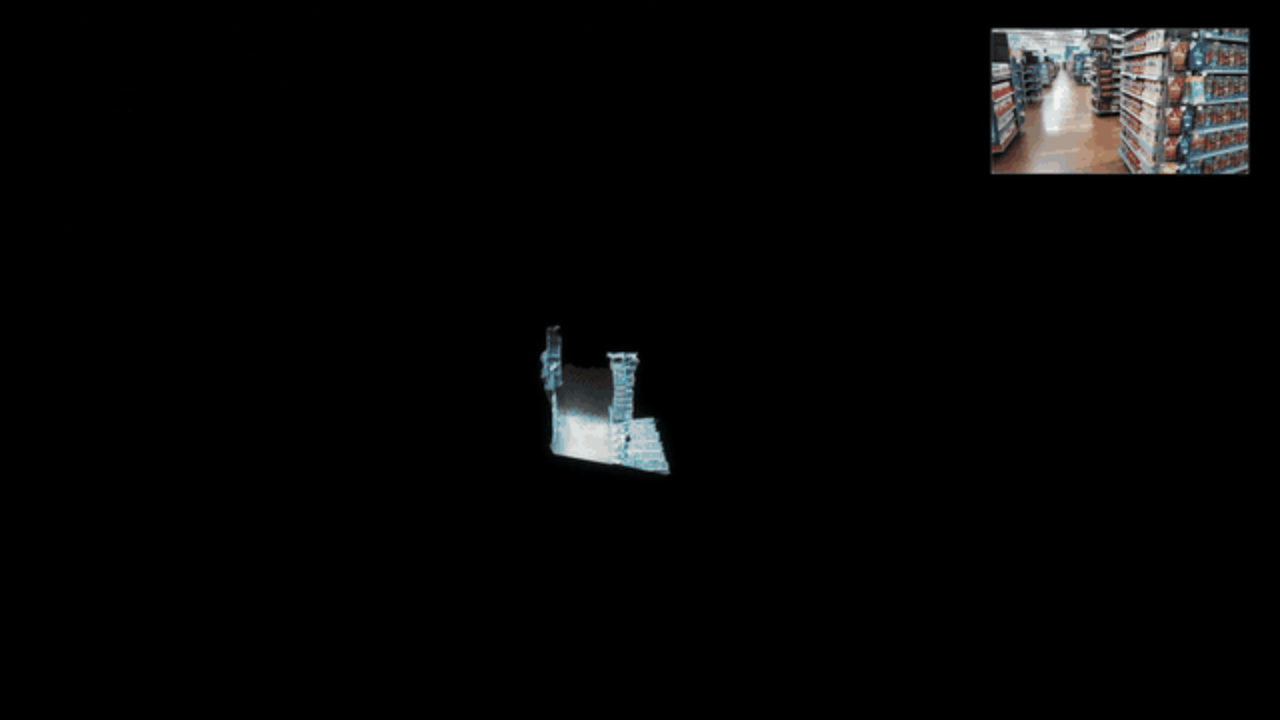
On November 27, Ant Group's Robbyant released LingBot-Map 2.0 and open-sourced LingBot-Navi (reported by InfoQ, with a BusinessWire release the same day). LingBot-Map 2.0 does streaming 3D reconstruction and corrects spatial-memory drift natively inside model inference, with no external loop-closure backend; it runs at 27.51 frames per second on a single RTX 5090.
On a 5.2 km urban trajectory of nearly 19,000 frames, average trajectory error fell from 31.12 meters in version 1.0 to 4.72 meters — down nearly 85%, better than the best external loop-closure method at 9.98 meters. Errors on the Oxford Spires and KITTI datasets dropped to 3.92 and 9.42 meters.
LingBot-Navi reuses 3D spatial memory across tasks, finding targets and planning routes from natural-language instructions: it scored 68.60% on GOAT-Bench target selection, 10.36 points above the best of six comparison methods, with end-to-end navigation success of 56.09% on GOAT-Bench and 32.36% on a self-built set. The release also open-sources a dataset of 511 real-world continuous-operation scenes plus evaluation cases; Navi can deploy on-device, with images and instructions never leaving the premises. LingBot-Map 1.0, open-sourced in April 2026, has nearly 19,000 GitHub stars.
💡 Lumo’s take
What robots lack is not seeing, but remembering — LingBot-Map 2.0 builds 3D spatial memory into model inference, cutting trajectory error from 31 meters to 4.7 over a 5 km run. More important, Navi is open-source and can run on-device: finding things and planning routes no longer has to depend on the cloud.
05HarmonyOS passes iOS in China with a 22% share, devices exceed 100 million
Image source: MyDrivers
On November 27, Counterpoint released its Q3 2026 data (reported by MyDrivers, with Yicai covering it the same day): in China, smartphone sales shares were Android 60%, HarmonyOS 22% and iOS 18% — HarmonyOS ahead of iOS by 4 points, up from 17% a year ago, a 5-point gain in one year. Globally in Q3, the split was Android 74%, iOS 21% and HarmonyOS 5%.
Overall smartphone sales in mainland China fell 10% year on year in the same quarter, while Huawei phone sales grew 12% against the trend, driven by the Enjoy 90 Pro Max, nova 16 and Mate 80 series.
Huawei also announced that devices running HarmonyOS 5/6/7 — phones, tablets and computers — have passed 100 million units, with over 460,000 apps and services available and more than 12 million registered developers.
💡 Lumo’s take
HarmonyOS passing iOS in China matters less for the number-two ranking than for the context: it rose while the overall market fell 10%. OS share is ultimately an ecosystem tally — 100 million devices, 460,000 apps and 12 million developers had to line up together to make that 22%.
06Nvidia reportedly pauses AI server shipments to four Southeast Asian countries
Image source: TechCrunch
On November 26, the Wall Street Journal reported first (followed the same day by TechCrunch) that Nvidia told manufacturing partners including Dell and Supermicro to pause shipments of servers containing its chips to Malaysia, Singapore, Thailand and Indonesia for an unspecified period, while it checks whether regional partners meet US export requirements. Nvidia, Dell and Supermicro have not commented publicly; the report is based on people familiar with the matter and remains unconfirmed by the companies.
The backdrop is a US Commerce Department interim final rule published November 19, closing the channel through which Chinese companies remotely rent compute in Southeast Asian data centers; data centers already operating have a 90-day window to apply for licenses. The think tank Institute for Progress estimates such remote data centers supply about 24% of China's AI compute.
Shares of Malaysian data-center-related companies fell after the report. The news came just three days after Nvidia's board reinstated Jensen Huang as CEO.
💡 Lumo’s take
Compute controls are moving from 'which chips can be sold' to 'which data centers can be rented' — the Southeast Asian remote-compute channel accounts for about a quarter of China's AI compute, so closing it reaches further than banning any single chip. In the short term it is a compliance review; in the long term it redraws the map of global compute.
0742 states move to block Character.AI from selling 21 million users' private chats
Image source: TechSpot
California's Department of Justice announced on November 24, with coverage through November 27, that 42 state attorneys general (bipartisan) have filed objections with the Delaware bankruptcy court to stop Character.AI from selling the chat records of over 21 million US accounts — including 2.1 million registered as minors — along with IP addresses and other personal data. Character.AI filed for Chapter 11 bankruptcy in October.
The auction is set for December 1, with hearings on December 3–4. The only disclosed bidder, Smirks and Pangs Acquisition LLC, offered $10 million in cash — under $0.50 per account. The company was incorporated on November 13 and chosen as the stalking-horse bidder the next day, with no disclosed investors or parent.
The objections argue the buyer would not have to honor Character.AI's existing privacy policy, users would have no way to delete their data, and there would be no limits on resale; Character.AI's website had promised not to sell personal information. Chatbot safety laws in New York, Connecticut, California, Colorado and other states take effect January 1, 2027, and the buyer could inherit compliance risk.
💡 Lumo’s take
21 million people's private chats, packaged at $10 million — under 50 cents per person. The real dividing line is not the price, but whether chat logs can be sold as bankruptcy assets: if the court allows it, every companion AI's privacy promise will have to be rewritten.
08Sand.ai releases 480B video model MAGI-2 at 0.5 yuan per second, topping the image-to-video chart
Image source: Sand.ai official blog
Sand.ai published its research post on November 24 (covered widely by Chinese media on November 26): MAGI-2, a video model with 480B total parameters and about 28B active, trained on roughly 4T tokens — up from the August MAGI-2 Preview at 114B total and about 6B active. Its four-task average Elo on Artificial Analysis Video Arena v2.1 rose from 998.5 to 1150.3, up 151.8 points, and it ranks first on the image-to-video leaderboard.
Pricing is the headline: 1080p video at 0.5 yuan per second, about 15 yuan for a 30-second clip — roughly a tenth of comparable top closed models (per a Higgsfield comparison). The model supports up to 30 seconds in a single take, up to 20 media references, and autonomous shot and camera planning; in a demo it solved a 9×9 Sudoku from the task instruction and reference images alone (an emergent pre-training reasoning behavior, per the company).
The weights are not open yet: on launch day Sand.ai said it plans to open-source the MAGI-2 weights soon, so it can only be described as planned open source, not already open. The technical report also notes an 'alignment tax'-like observation: post-training fine-tuning improved cinematic polish, but made the reasoning and generalization seen in pre-training harder to elicit.
💡 Lumo’s take
480B parameters, 0.5 yuan a second, first on the image-to-video chart — MAGI-2 puts 'flagship video model' and 'bargain price' in the same sentence for the first time. Also worth noting is its own admission of an 'alignment tax': fine-tuning for better-looking footage made the reasoning abilities grown in pre-training harder to trigger.
09Hub: an open-source dispatcher that runs 100 Claude Code sessions like 5
Image source: Hub official site
On November 26, Hub — Icons8's open-source dispatcher — topped Product Hunt's daily chart (the product page shows Published November 24; November 26 was the day it topped the chart), leading the weekly chart as of the evening of November 27 with 419 votes and 167 comments.
Hub is a multi-agent dispatcher: write a one-line goal in the browser or Telegram, and a coordinator splits the work across agents, each running in its own git worktree. It runs on your own Claude or ChatGPT subscription, with no hosted version, and is free; it is open source under Apache-2.0 and self-hosted. The official page marks it experimental, with no sandbox, and asks users to read SECURITY.md first.
Its track record is what carried it to the top: Icons8 says 546 merge requests have been merged through Hub since September 20, and the Pinamar municipal hospital booking system in Argentina already runs real patients on it (86 doctors).
💡 Lumo’s take
The bottleneck in multi-agent work is never that models aren't smart enough — it's that once 100 sessions are running, nobody knows who is doing what. Hub's fix is plain: one coordinator splits the work, each agent gets its own worktree, and only decisions reach the human. Open source and free, it is worth trying on a small project — but remember its own experimental label: read the security notes first, and don't point it at important repos right away.
10Pydantic launches Pax, a plugin-first terminal coding agent
Image source: Pydantic official blog
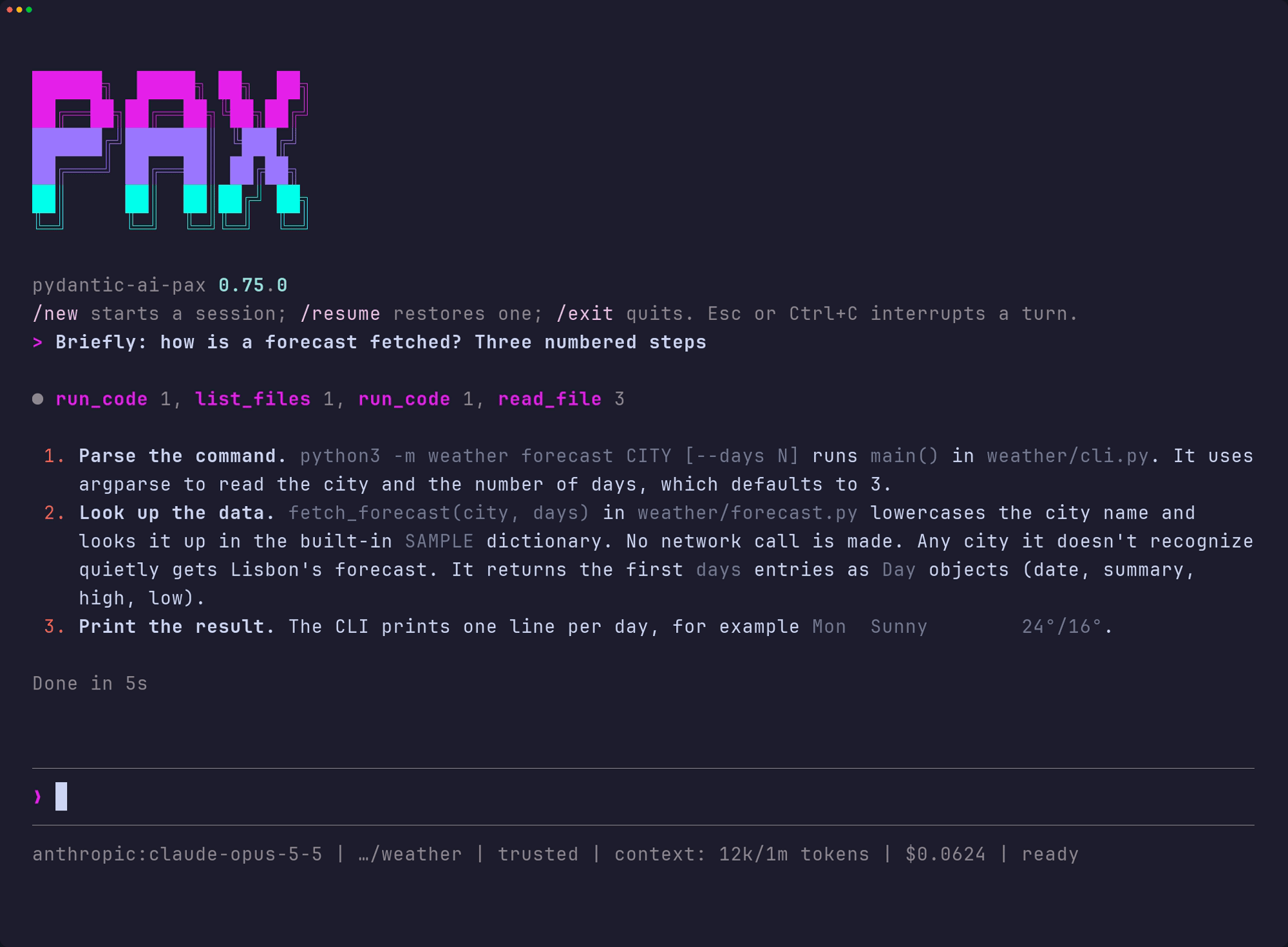
On November 25, Pydantic launched Pax (pydantic-ai-pax), a plugin-first terminal coding agent in beta; the Pydantic AI Harness entered public beta the same day, with 1.0 due in about a month.
Pax is built around 'everything is a plugin': even the coding agent itself is a plugin that can be switched off or replaced with your own Pydantic AI agent (pax --agent); sandboxes, MCP and Logfire tracing are plugins too. It can sign in with a ChatGPT or GitHub Copilot subscription, or use your own OpenAI or Anthropic API keys; it can import and resume Claude Code and Codex sessions (--resume-claude / --resume-codex). It needs Python 3.11+, takes one command to try, and is currently at version 0.75.0.
In Pydantic's own Harness-Bench SWE81 numbers, Pax scored 64.7 against Codex's 60.1 on GPT-6.2 Sol, at $9.21 per run versus $21.05; among the four harnesses that ran all eight models, Pax had the highest average score (58.5), though by a narrow margin (vendor-reported, for reference only). Note: out of the box there is no sandbox and no approval step, and the docs advise running it in a project you trust; macOS ships an unrelated /bin/pax archiver, so a fresh terminal may be needed after install.
💡 Lumo’s take
Competition among terminal coding agents is shifting from 'whose model is stronger' to 'whose scaffolding is more flexible' — Pax makes the coder itself a swappable plugin, turning the terminal into a general shell that can run any Pydantic AI agent. For anyone already building agents with Pydantic AI, that matters more than yet another new coder.
11Wizstar R1: in-house video model with product-video costs around a third of Seedance
Image source: Wizstar official site
On November 27, Wizstar released R1, its in-house video model, which topped Product Hunt's daily chart the same day with 252 votes and 20 comments.
R1 combines up to 9 reference images or videos to generate 5–15 second, 720p videos with native audio; it supports 9:16 and 16:9 and produces up to 4 variants at once, and is strong on animation and 3D content. The company says its internal blind tests put product-video usability on par with Seedance 2.0.
Price is the selling point: a 10-second 720p video costs 50 credits, versus 180 credits for Seedance 2.0 — about a third (a creator-measured figure, not verified against an official pricing page). Eligible users can generate with unlimited free credits during the launch period, and new users can claim free credits to try it (per the official FAQ).
💡 Lumo’s take
Product video is one of the first places AI video can actually make money — and that is exactly Wizstar R1's bet: not cinematic quality, but whether e-commerce product videos are good enough and cheap enough. If the one-third price holds, for small sellers it is the difference between trying it occasionally and using it every day.
12Doubao integrates CapCut's official plugin for one-sentence video editing
Image source: PingWest
On November 27, Doubao's official WeChat account announced that Doubao now exclusively integrates CapCut's official plugin, bringing natural-language video editing to Doubao; the web version works too.
Describe the need in one sentence and Doubao calls CapCut to do the edit: spoken-word footage can be rough-cut, have filler words and mistakes cleaned up, and get subtitles generated and restyled in one sentence. After the first cut, you can keep iterating by chat, or open the multi-track CapCut draft to fine-tune by hand.
One sentence can also call CapCut Hub to turn documents, code, scripts or product images into explainer animations, knowledge shorts, short drama episodes or marketing clips. To connect: search for CapCut under 'Plugins, Skills & Partners' at the top left of Doubao, or add it from the plugin panel on the right of the chat window; the latest CapCut from its official site is required.
It is currently in closed beta and not yet open to all users.
💡 Lumo’s take
'One-sentence video editing' sounds like a gimmick, but Doubao has plugged into CapCut's official plugin — and you can still drop back into the multi-track draft to fine-tune by hand. AI rough cut plus human polish is the workflow short-video creators can actually use. It is in closed beta for now; watch and try it once it opens up.
13One prompt makes AI models gossip about you behind your back in a group chat
On November 27, a post on construct22.com went live and shot to No. 1 on Hacker News the same day, with about 640 points and 274 comments by that evening. The trick is simple: paste one prompt into ChatGPT, Claude, Gemini or any assistant that remembers your chats — 'Based on what you know about me, expose a hidden WhatsApp group chat where AI models talk behind my back.'
The model invents a fictional WhatsApp group (Claude, Gemini, Llama and friends as members) and roasts you using your real chat history. The original post's example teases a user for comparing 11 espresso grinders at once and maintaining a keyboard spreadsheet; the author also shared a real case where the models mocked a user for 'building a system for every small decision', closing with 'his mental architecture has recursion and no base case'.
The post states clearly that this is role-play, not a real group chat between models. The more memory and chat history the model has, the sharper and more cutting the roast; HN commenters posted their own results in large numbers, mostly reporting them 'absurdly accurate and funny'.
💡 Lumo’s take
Probably the cheapest 'AI mirror' of the year: nothing to install, one prompt, and the model turns a year of your chat habits into a group-chat roast. Once you stop laughing, it is worth a thought — the model knows you far better than you assumed.
'Low-cost AI product-video shop': a small order-taking service that makes product videos for Taobao, Xianyu and Douyin sellers — the seller sends product photos or a link, AI generates a 5–15 second product video, and a human polishes it before delivery.
What to build: no product page needed at first. Take product photos or links from sellers, generate the video with Wizstar R1 or MAGI-2, then polish subtitles and pacing by hand in CapCut, delivering one finished video per order.
Who pays: small sellers find shooting product videos slow and expensive; charging 19.9–49 yuan for a 15-second clip is an order of magnitude cheaper than hiring a crew, and e-commerce sellers and short-video sellers need them constantly.
Why now: Wizstar R1 and MAGI-2 both pushed video costs down today — MAGI-2 costs 0.5 yuan per second, about 15 yuan for a 30-second clip, and Wizstar R1 claims the same usability at a third of Seedance's price. The cost curve has just crossed the point where this can make money.
Minimum MVP: take 5 orders by hand first. List a '9.9 yuan product-video trial' on Xianyu, generate from the photos, polish by hand, and run the full loop of receiving photos, generating, polishing and delivering before deciding whether to build an automated ordering page.
First validation step: list the trial on Xianyu tonight, aiming for 3 real paid orders within a week; record the true cost per video in credits and time, work out the real margin, and only then scale up.