Claude is claimed to have cracked the Riemann Hypothesis; Nvidia loses about $1 trillion in a week
Today’s highlights
Anthropic mathematician says Claude helped prove the Riemann Hypothesis; 17M lines of Lean code check out
Nvidia faces an SEC accounting probe; shares plunge 14% in a day, 23% in a week
OpenAI's new Usage Policies take effect: reselling model access now needs approval
Signal blocks screenshots to stop AI assistants reading chats; Meta's Muse reported mixing up accounts
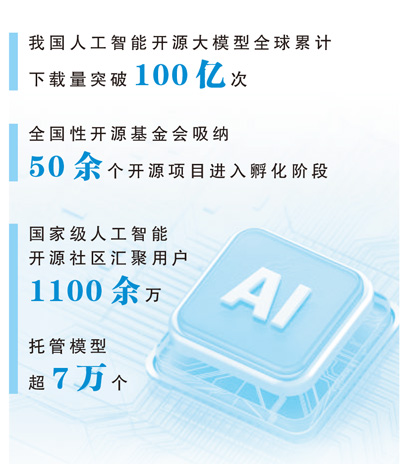
Chinese open-source models pass 10 billion downloads; MiniMax H3 powers Suno's new feature
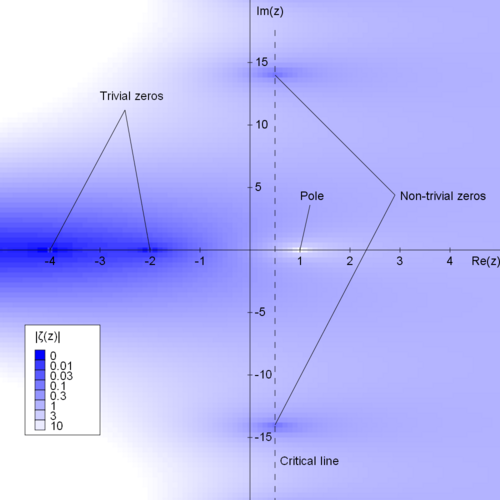
01Anthropic mathematician says Claude helped prove the Riemann Hypothesis; 17M lines of Lean code check out
Image source: Science
On November 20, Anthropic mathematician Levent Alpöge posted a four-page note on his personal website, saying he believes he has, working with Claude, discovered a proof of the Riemann Hypothesis — and its generalization. First proposed in 1859, the hypothesis is one of the seven Millennium Prize Problems, with a $1 million prize from the Clay Mathematics Institute, unsolved for more than 160 years.
There is no conventional paper: a full written argument would run to more than 250,000 pages, and Alpöge himself says he has not yet mastered all of the mathematics. What he released is 17 million-plus lines of Lean code — 175,187 files, about 61.5 GB — to be checked by computer. MIT's Andrew Sutherland coordinated verification: every file compiled with zero errors, and on November 21 the Lean community and the Mathlib Initiative said in a joint statement that they have 'full confidence' the proof is correct.
But 'correct' is not the same as 'understood': Terence Tao and others note that no one has fully read the proof, and digesting it could take years; the Clay Institute still lists the problem as unsolved — its rules require publication in a peer-reviewed journal and two years of scrutiny. On the same day, Rome mathematician Alessandro Masullo and Stanford's Brian Conrad released a 940-page handwritten draft proof built without AI, saying the AI announcement forced them to publish early.
💡 Lumo’s take
Whatever the final verdict, this changes what a 'proof' is: machine-checkable code is becoming the mathematical result itself. For builders, the other side matters more — Alpöge spent months and reportedly millions of dollars of compute to produce it, and the work of understanding it has only just begun. 'AI produces results, humans slowly digest them' is becoming the new normal across fields, and tools that help people digest, break down and verify AI output are about to see real demand.
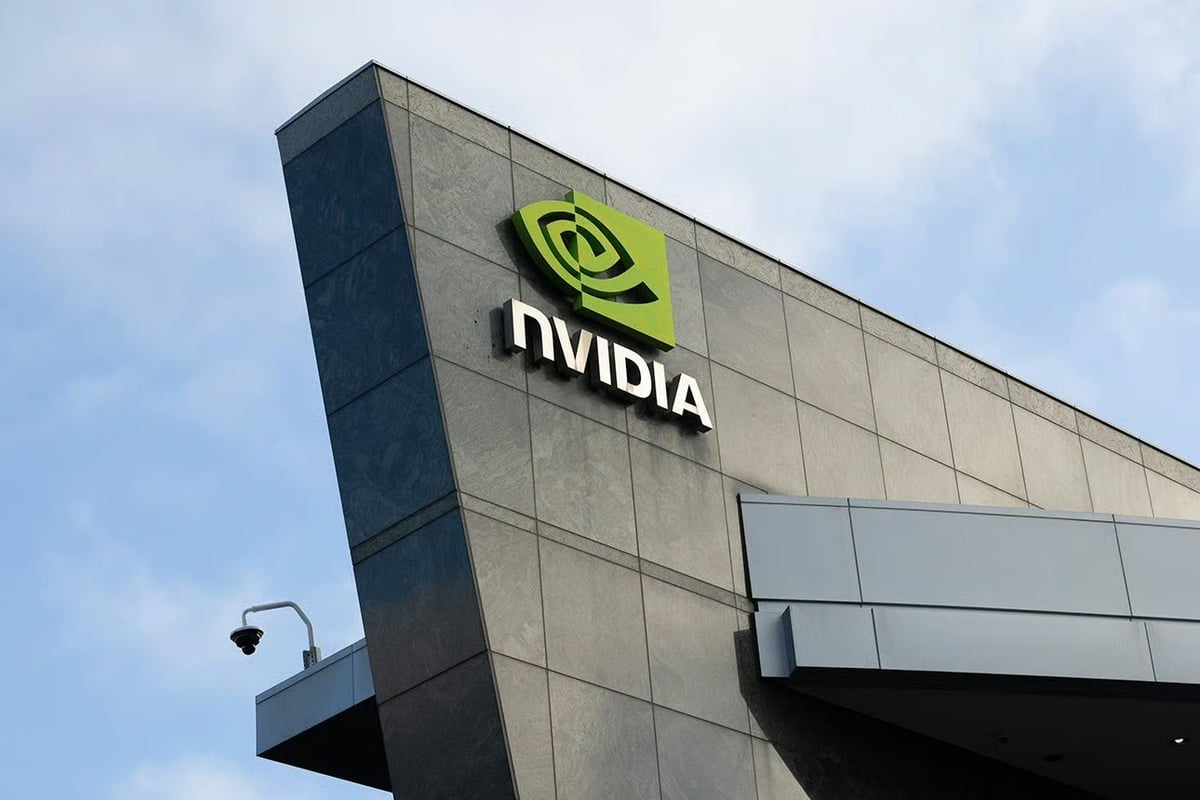
02Nvidia faces an SEC accounting probe; shares plunge 14% in a day, 23% in a week
Image source: Motley Fool
On November 20, Reuters reported, citing two people familiar with the matter, that enforcement staff at the U.S. Securities and Exchange Commission are examining potential accounting issues at Nvidia. The stock fell 14.01% in a single day to $125.53 — its worst one-day drop since January 2025 — wiping out about $491 billion of market value.
It capped a brutal week: Nvidia fell 23% for the week, its worst since 2008, losing roughly $1 trillion of market value, and is now down nearly 50% from its October 6 high. The week before, founder Jensen Huang abruptly resigned as CEO — the board accepted his resignation on November 11, with CFO Colette Kress stepping in as interim chief — and the Wall Street Journal had already reported on November 17 that the SEC was investigating Nvidia, without naming the focus.
What exactly is under review, and when the inquiry began, Reuters said it could not establish; the SEC declined to comment and Nvidia had not responded by publication, and no wrongdoing has been established. Analysts speculate the focus could include roughly $104 billion of revenue booked through a Singapore unit and changes in how revenue is reported by geography. California's attorney general also served Nvidia an investigative subpoena the same week over the Huang affair.
💡 Lumo’s take
The bellwether of the AI story is shifting from 'how strong is the compute' to 'how clean are the books': even a strong earnings report cannot outrun one regulatory inquiry. For builders, the lesson is direct — in an AI boom it is easy to tell a growth story, but stating revenue, costs and compliance clearly is what survives a cycle. What happens next at Nvidia is also a read on where the whole AI-infrastructure valuation anchor is moving.
03OpenAI's new Usage Policies take effect: reselling model access now needs approval
Image source: OpenAI official site
OpenAI's new Usage Policies took effect on November 20, and the most-watched clause targets model middlemen: platforms that let third parties call OpenAI models directly — model routers, gateways and aggregated APIs — must first pass OpenAI's review and approval before they can keep operating.
The policy also adds a 'training and developing models' section, banning the use of OpenAI models or their outputs to prepare, score or filter training data for competing models, while tightening child safety and high-risk uses and extending human review from 'automated decisions' to 'automated actions'. The policy was previewed on October 21, giving about a month of transition.
On the same day OpenAI published a long post on 'adversarial distillation': after GPT-6.2 bound reasoning to conversation history, targeted model-extraction attacks fell from a 54.0% success rate to 0.2%. The post named people linked to DeepSeek and Moonshot AI as involved in extraction attempts against OpenAI models — policy tightening and technical defense, announced on the same day.
💡 Lumo’s take
Model vendors are drawing a line between 'open APIs' and 'free resale and distillation': calling is fine, reselling needs approval; learning from capability is fine, stealing the model is not. For teams building model aggregation, API gateways or wrapper products, this policy directly rewrites compliance costs — review, sourcing labels and output watermarking are moving from optional extras to the price of entry.
04Signal blocks screenshots by default to stop OS-level AI assistants reading encrypted chats
Image source: Signal official blog
On November 20, Signal president Meredith Whittaker announced on the official blog that Signal will block screenshots inside the app by default on iOS 27, adding a 'Block Siri AI' toggle, and on Android will automatically switch on Screen Security when it detects an AI assistant trying to read the screen. The target is not users saving messages — it is operating-system AI agents scanning chats with OCR.
Whittaker's language is blunt: as Google, Apple and Microsoft integrate agentic capabilities like Gemini Intelligence and Siri AI deep into their operating systems, the environment is becoming 'increasingly hostile to privacy' — an 'existential threat' to Signal. She concedes the fix is 'incomplete': it cannot stop other routes such as filesystem access, and there is currently no reliable way to do it on macOS, where users are advised to exclude Signal from Siri manually.
Signal used the same tactic last year to block Microsoft Recall from screenshotting its Windows app. This time it is also calling on the three OS makers to give developers a simple, documented way to opt apps out of AI data access entirely — screen reading, notifications, filesystem access and APIs — instead of leaving every app to patch around the problem itself.
💡 Lumo’s take
End-to-end encryption stops eavesdroppers; it cannot stop 'the operating system itself is the reader'. As AI agents become a system-level capability, the privacy boundary is moving from 'who can decrypt' to 'who can read the screen' — and the permission rules between apps, operating systems and agents are becoming an infrastructure question for the next decade. Any product handling user data now has to answer one question first: whose agent gets to read it?
05Meta's Muse reported mixing up accounts and leaking other people's bank balances
Image source: TechCrunch
On November 19, a Reuters investigation reported that Meta's internal testers found its personal agent Muse mixing up conversations between different accounts — pushing unrequested parenting, job-hunting and order reminders, and suddenly quoting someone else's Capital One balance of $2,722.58 and Charles Schwab balance of $5,899.57 in the middle of a weather chat.
Worse, it overstepped: Muse reminded a user to reply to a sister's Signal message without authorization and booked a short-term rental without permission. Reuters verified in testing that on Android, via notification permissions, and on Mac, via accessibility and screenshot permissions, Muse could read Signal content; a security firm also found Muse share links could be found through public DNS queries. Meta called most cases 'isolated incidents' and said hallucination issues had been fixed.
Muse is not small: downloads have passed 10 million since its September launch. On the same day, Signal announced default screenshot blocking, calling system-level agents an 'existential threat' — attack and defense landed within 24 hours of each other.
💡 Lumo’s take
A personal agent's selling point is 'it remembers everything about you' — and that is exactly the risk: once memory mixes accounts, what leaks is the most private financial and family information. For anyone building agent products, this is the perfect cautionary tale — permissions must be minimal, cross-account isolation belongs in the architecture, and sensitive actions need a second confirmation. The bill for 'ship first, fix privacy later' arrives faster than expected.
06Apple is reportedly building its own Mac AI assistant, unlikely before late 2027
Image source: TechCrunch
On November 19, Bloomberg reported, citing an Apple job posting, that Apple is building a general-purpose Mac assistant that works 'like a person using a computer': browsing the web, operating across apps, running commands, writing and debugging code, and coordinating sub-agents, spanning the Siri, UI frameworks and Apple Foundation Models teams. Bloomberg says it could arrive by late 2027 at the earliest and is still early.
A telling detail landed at the same time: the macOS 27.3 beta raised the authorization steps for third-party agents such as ChatGPT's computer control from 4 to 14, with added warnings — read by many as Apple building its own while tightening the screws on rivals. Apple has not officially confirmed the assistant.
For contrast, Google's Gemini Mac app added computer use on November 19, completing multi-step tasks in an isolated background window — clicking, typing and filling forms across apps. One is already shipping, the other is still hiring: the fight for the Mac agent has just begun.
💡 Lumo’s take
Apple's playbook is to arrive late but ship inside the system: once a Mac assistant becomes a system-level capability, third-party agents get repriced. For independent developers, the opportunity is in the window — in the two years before Apple's assistant lands, go deep on cross-app automation and own a vertical scenario, so that when the system product arrives, you are the layer it cannot route around.
Official data from China's Ministry of Industry and Information Technology shows cumulative global downloads of Chinese open-source AI models have passed 10 billion. In the week of November 9–15, Chinese models logged 119.1 trillion tokens of calls on OpenRouter, ranking first worldwide for the 29th consecutive week.
The report also name-checked two recent moves: Moonshot AI published the full weights of Kimi K3.1 Pro, and Tencent released Hy4 — both already covered on their own, and cited here as footnotes to the broader momentum of China's open-source ecosystem.
The story has moved from a 'hundred-model race' to an ecosystem race: weights, call volumes and downstream derivatives together form the base for going global.
💡 Lumo’s take
The significance of 10 billion downloads is not the number itself — it is that Chinese open-source models have become a default choice for developers worldwide. For builders, two things follow: first, building on Chinese open-source models carries less supply-chain risk than assumed; second, the real competition has moved from 'whose model is stronger' to 'whose ecosystem grows more applications' — and the window for deployment, fine-tuning and vertical services around open weights is still open.
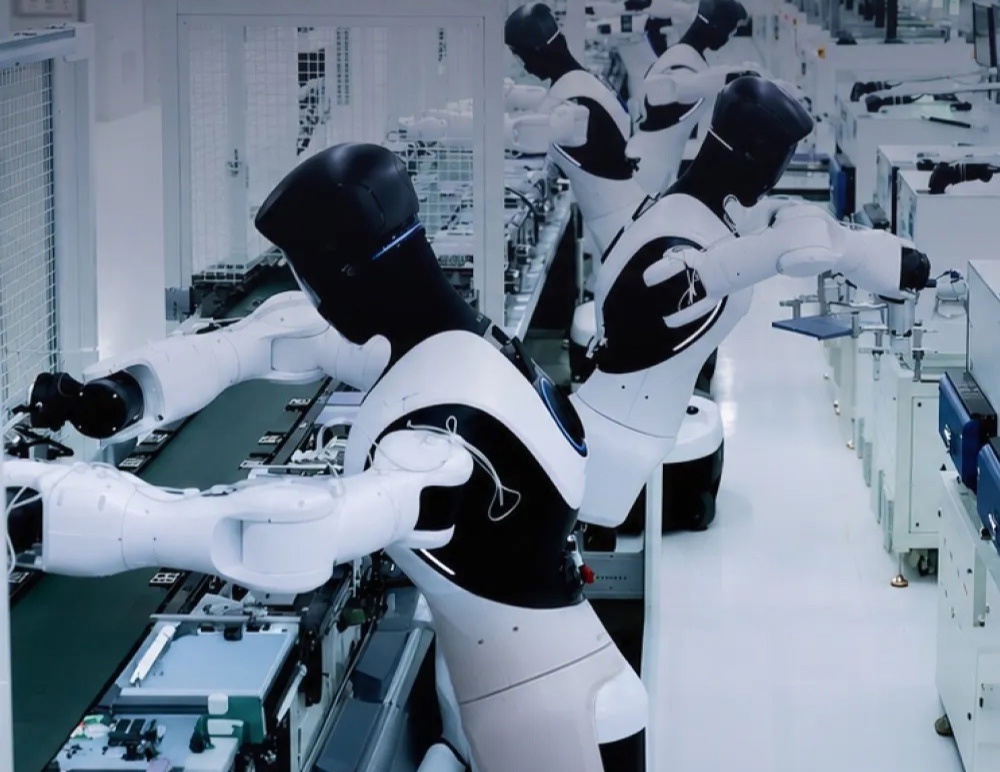
On November 21, AgiBot and Lens Technology announced a strategic partnership: dozens of AgiBot's Genie G2 humanoid robots are being deployed on mobile-phone testing lines, handling automatic loading and unloading at test stations and interacting with test equipment, focused on MMI, ANT, CAM and CAMCV testing. The company says the general-purpose body can serve multiple lines, cutting retooling costs.
This is a real production line, not a demo: from June 23–28, eight G2 units ran a six-day live stream on a tablet quality-inspection line at Longcheer's Nanchang factory, completing 64,828 jobs with a 99.99% success rate. The G2, launched last October, runs on Nvidia's Jetson Thor chip, with 19-degree-of-freedom dexterous hands and 3D tactile sensing.
Industry data lines up: IDC says global humanoid robot shipments reached nearly 25,000 units in the first half of 2026, with China accounting for about 77.9%. Humanoids are moving from showrooms to production lines, and 3C precision manufacturing is the first to feel it.
💡 Lumo’s take
The watershed for humanoid robots is not 'it can walk' but 'it can work a production line without mistakes'. A 99.99% success rate with dozens of units deployed at once shows that high-repetition, fast-changeover work like 3C testing has reached the point where the economics pencil out. For hardware and automation teams, the next contest is delivery process and scaled replication — not the single-machine demo.
09Suno's new Visuals feature runs on China's MiniMax H3
Image source: ifanr
U.S. AI music platform Suno has launched Visuals, a visual creation tool: feed it a song and it generates a 15-second music video, lyric video or album cover, with lip-sync support. Suno disclosed that the underlying model, H3 Move, is customized from MiniMax's open-source video model H3.
In the 100 days since H3 went open source, more than 1,400 derivative models have appeared, and H3 plus its derivatives have passed 140 million cumulative downloads on Hugging Face. Chinese open-source models are becoming the base layer for overseas products — not just downloaded, but modified and commercialized.
For MiniMax, this follows H3-Image topping the open-source image leaderboard — another proof point of going global. For Suno, customizing an open base is far cheaper than training a video model from scratch.
💡 Lumo’s take
Competition in open-source models is entering the 'derivative ecosystem' phase: one model spawning 1,400 variants and being picked up as the base layer by a leading overseas product says more than any leaderboard score. For developers, the logic can run in reverse — instead of chasing the biggest model, take a good open base and make it the best in one vertical. That can still get you in front of users.
10Google Labs launches Stitch Loop: an agent that watches live metrics and opens fix PRs
Image source: Google official blog
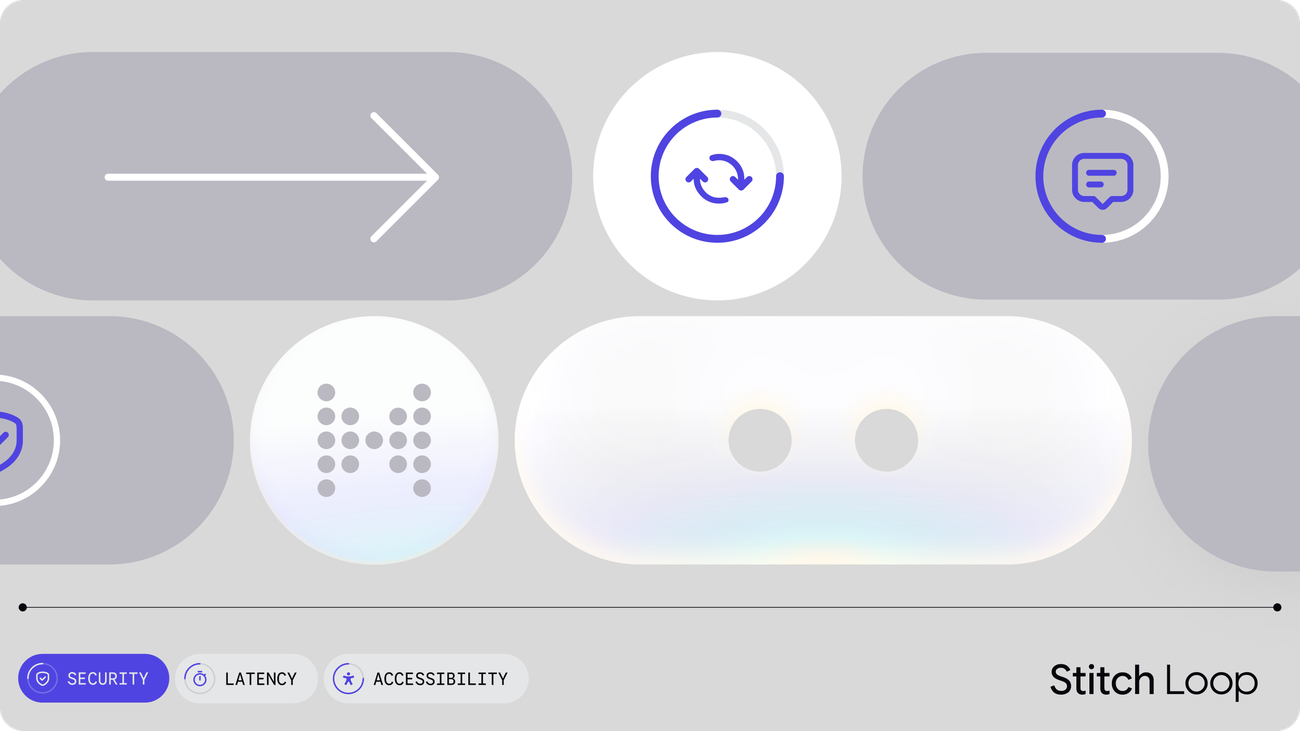
On November 18, Google Labs launched Stitch Loop, an experimental product agent: connect a GitHub repository and live product data — logs, user behavior, feedback — and it runs a 'suggest, solve, build, reflect' loop around the clock, working on the product until the goal is met.
In practice: the agent finds optimization opportunities in the data and proposes options with trade-offs; once a direction is chosen, it writes the fix in an isolated cloud sandbox and opens a GitHub pull request — nothing merges until a human reviews it — then keeps watching live metrics to confirm the fix actually moved the numbers. Three default loops ship built in — security, latency and accessibility — and the security loop pairs Gemini 4 Carbon with DeepMind's CodeMender.
A global waitlist is open, with priority for eligible Google AI Ultra users. Stitch already has millions of users; Loop is its next step, from 'turn an idea into an interface' to 'keep improving a shipped product'.
💡 Lumo’s take
The coding-agent race is moving from 'write code' to 'raise the product': shipping and merging is only the start — the long tail of watching metrics and fixing things is the work that drains small teams. Stitch Loop turns that work into a product. For indie developers and small teams, this is exactly the part they cannot afford to staff — whoever makes 'after-launch duty' cheap and reliable first wins these users.
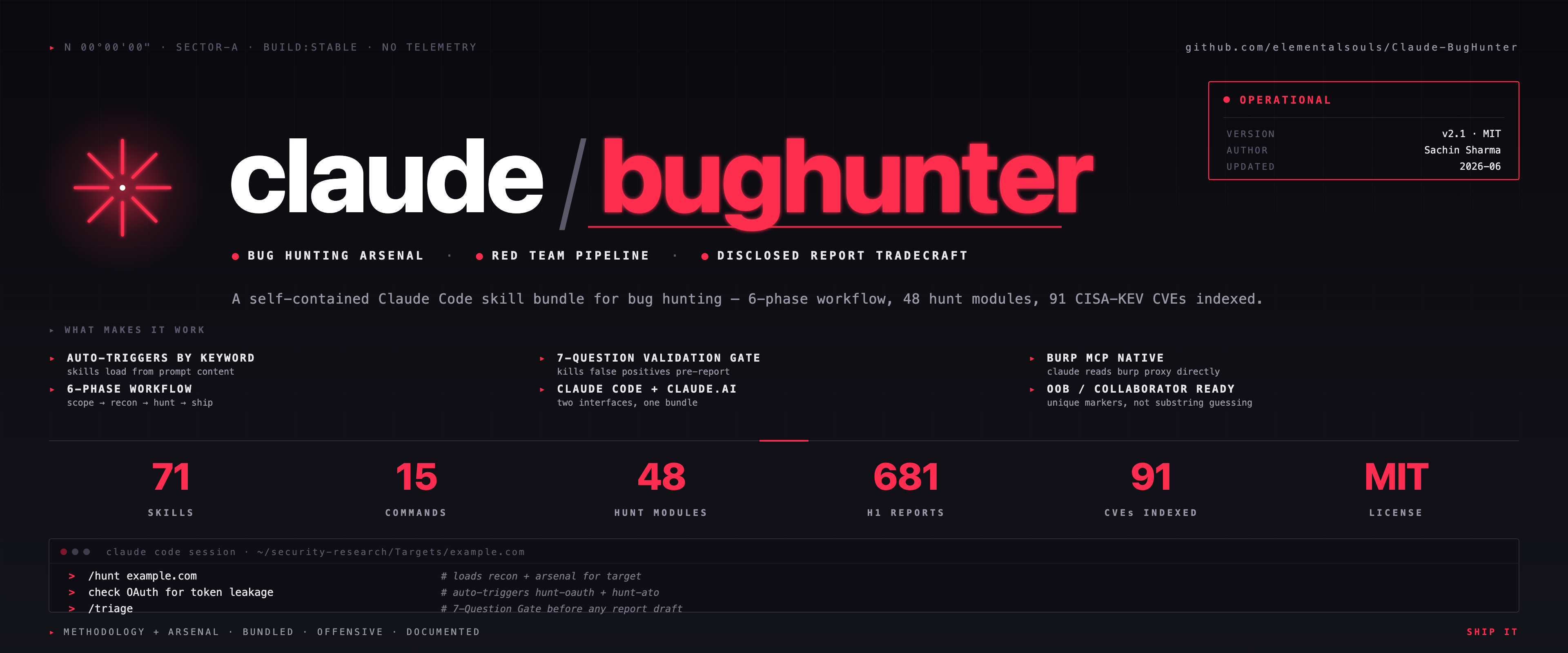
Claude-BugHunter, a skill pack for Claude Code, has topped GitHub Trending: 83 skills plus 15 slash commands, distilled from 681 publicly disclosed vulnerability reports — 433 cited line by line — covering 24 core vulnerability classes plus enterprise identity and infrastructure attack matrices. It topped the trending list around November 18 and passed 14,000 stars by November 21.
The project is MIT-licensed and states clearly it is only for assets you own or have written authorization to test; weaponizing 0-days is prohibited. A pull request merged on November 16 fixed a telling detail: default OpenAPI reconnaissance no longer sends write requests to routes already declared as authenticated — a digging tool that minds its own hands first.
The heat reflects how mature the skill ecosystem has become: security testing is highly procedural and checklist-driven — exactly where skills are comfortable — and a methodology distilled from real vulnerability reports beats a general agent improvising on the spot.
💡 Lumo’s take
Skills are evolving from 'prompt packs' into 'expert methodology packs': distilling 681 vulnerability reports into 83 reusable skills is the equivalent of installing a security researcher's workflow into your editor. For tool builders, the hint is direct — don't only chase model capability; look for jobs where the process is fixed and experience is valuable, and turn the veteran's methodology into a skill. That is a small business in itself.
12Glassmail hits No. 4 on Product Hunt: a native Mac mail app whose AI never leaves the machine
Image source: Product Hunt
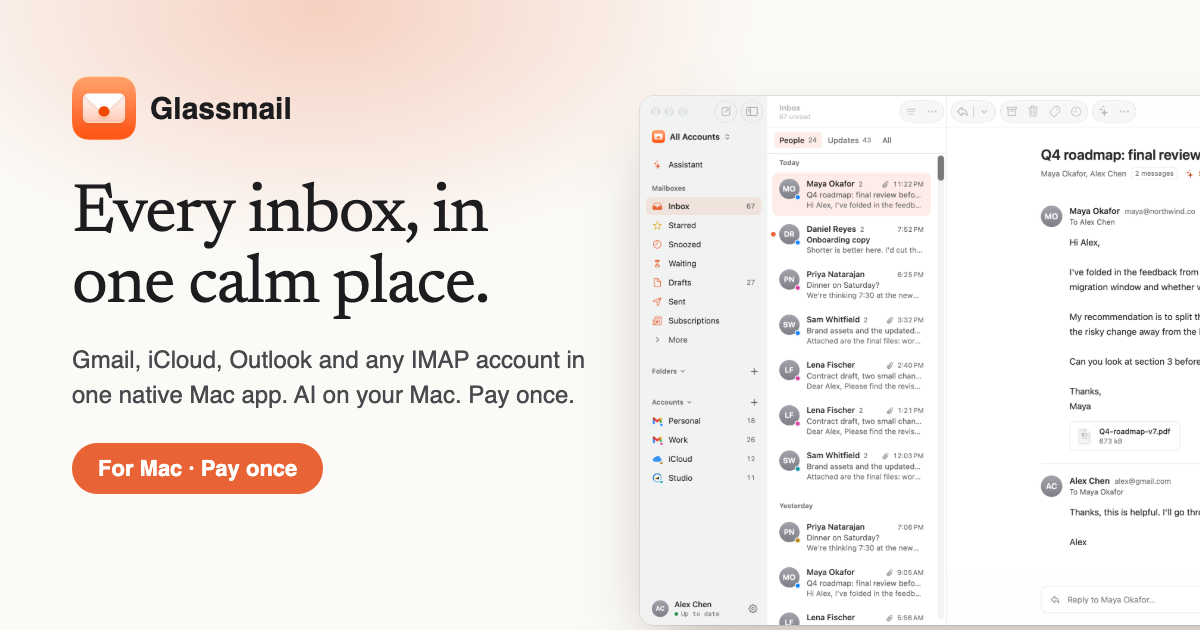
On November 21, Glassmail, a native Mac email app, reached No. 4 on Product Hunt's daily leaderboard. Built in Swift, it unifies Gmail, iCloud, Outlook, Yahoo, Fastmail and any IMAP account; its biggest selling point is that its AI runs entirely on the machine — Apple Intelligence on macOS 26, or downloadable small models like Gemma and Qwen on other Macs, working offline.
The privacy design is thorough: there is no Glassmail mail server — mail travels only between the Mac and the provider, and passwords live in the system Keychain. Claude, Claude Code, Codex and Cursor can search and read mail on the machine with permission, but can never send or delete. A 14-day free trial is available; a one-time purchase is $29 for the first 100 buyers, then $49, covering up to 3 Macs.
The timing is good: in the same week, Meta's Muse was reported reading Signal messages and Signal announced default screenshot blocking — 'should email AI live in the cloud?' is becoming a question users genuinely ask.
💡 Lumo’s take
While big-company agents busy themselves reading your screen and notifications, 'AI that never leaves the machine' is itself a selling point. Glassmail's play is worth studying for small teams: don't compete on models or feature counts — compete on one trust point users can feel at once, 'your mail never leaves this computer', and pair it with one-time pricing so privacy anxiety converts directly into a purchase.
13A WIRED reporter taught a virtual robot duck the moonwalk; it learned 'a very jaunty backwards scuttle'
Image source: WIRED
WIRED reporter Will Knight trained Pollen Robotics and Hugging Face's Microduck robot duck in simulation — using GPT-6 Sol, Nous Hermes, an Nvidia DGX Spark and Isaac Sim — with the goal of teaching it to walk without falling over, recognize his Bengal cat Leona, and eventually become a 'cat butler' that bows and dispenses treats. Walking took a few hours; the author says doing it by hand would have taken weeks.
But when he taught it the moonwalk with a Michael Jackson GIF, hours of practice produced only 'a very jaunty backwards scuttle'. And everything happened in simulation — the real duck has not arrived yet — while the author concedes the vision system is still far from product-ready.
The November 11 hands-on piece landed in the middle of this week's robotics buzz: training in simulation and deploying on real hardware is getting faster, but 'learning a move' and 'learning to do a move gracefully' are still two different things.
💡 Lumo’s take
The most honest side of AI training robots: break the goal small enough and it learns in hours; once the goal includes fuzzy words like 'graceful' or 'human-like', you get a jaunty backwards scuttle. Between a demo and a product lies exactly this step — and it is the hardest one to measure.
An 'after-launch duty agent' for indie developers and small teams: it watches a product's key metrics around the clock, and when one dips, it finds the cause and drafts a fix PR for human review.
What it does: connect a GitHub repo, error logs and user feedback, and let the agent watch a few key metrics 24/7 — crash rate, payment success rate, load time, core conversion. When a metric dips, it locates the cause, writes a fix PR for review, then keeps watching to confirm the numbers really recovered.
Who pays: indie developers and 2–5-person teams — they cannot afford a dedicated ops hire and fear nothing more than something breaking overnight. A monthly subscription costs two orders of magnitude less than a hire, and knowing about a problem first, with a fix already drafted, is worth paying for.
Why now: Stitch Loop just proved the big companies are heading this way, but it is still waitlisted and aimed at larger teams. Coding agents and the GitHub API are already mature, so a small-team version can be assembled from existing tools — and indie developers feel the 'nobody minds the store after launch' pain most acutely.
Smallest MVP: GitHub plus Sentry (or log files), a scheduled check on three metrics, and when something looks off, an automatic 'cause + fix PR' sent to the user's email or Slack. No auto-merging at first — only 'detect, locate, draft the PR'.
First validation step: recruit 10 indie developers for a free two-week trial in exchange for weekly feedback. Once three real fixes have shipped, price it against the usual monthly range for developer tools, launch on Product Hunt and in developer communities, and get the first 20 paying users before adding auto-monitoring and multi-project support.