OpenAI suffers a 211-minute outage, and the Riemann Hypothesis gains a human-made rival proof
Today’s highlights
OpenAI goes down for 211 minutes with failure rates peaking at 75%
The Riemann Hypothesis becomes a two-proof standoff; verification is now the real contest
Together AI discloses a prompt leak caused by its own coding agent
MiniMax's internal model breaks several NIST crypto candidates; Ant open-sources a 560B medical model
WeChat's desktop mini-tool agent launches; Tesla starts rolling out FSD v15
01OpenAI goes down for 211 minutes as routine maintenance takes out both auth replicas
Image source: OpenAI Status
On November 21, between 1:48 and 5:21 p.m. Pacific time, request failure rates for ChatGPT and the OpenAI API peaked at 75%, hitting paid and free users alike. The outage lasted 211 minutes and was not fully resolved until that evening.
OpenAI's same-day post-incident write-up names the cause: scheduled maintenance on a Postgres database service took out both read replicas used by its Primary API service, the single entry point for authentication across the entire stack. The primary database was unaffected, but the replicas were load-bearing, so every request path depending on them failed with them.
The blast radius was wide. On the API side, Chat Completions, Fine-tuning, Embeddings, Images, Batch, Audio, Moderations, Realtime and the Files endpoint were all hit. Inside ChatGPT, login, conversations, search, file uploads and voice mode failed at the same time.
OpenAI has paused similar maintenance, tuned settings to reduce database connection churn, and shipped a feature flag that shifts traffic away from replicas on a percentage basis. It also verified that routing 100% of queries to the primary instance holds up. Next steps are a pre-maintenance review process and a rapid recovery plan for every maintenance window.
💡 Lumo’s take
The lesson of this outage is not the database itself but the single point of dependency: all authentication for the whole stack ran through one path, so one routine job took every product down at once. For builders, it is a mirror — does your own service have a similar master switch? Multi-model, multi-vendor fallbacks look redundant on a normal day and become the lifeline on the day things break.
02Riemann Hypothesis becomes a two-proof standoff as a human-written rival appears hours later
Image source: Science
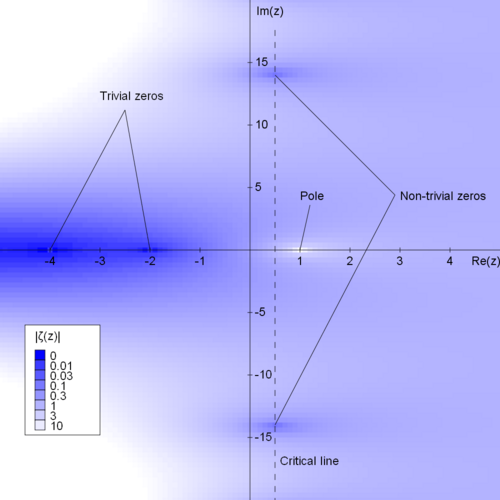
On November 20, Anthropic mathematician Levent Alpöge announced that he and Claude had completed a proof of the Riemann Hypothesis, including the generalized version. The argument is written in Lean as 14 data packages totalling more than 17 million lines of code — over 250,000 pages if printed.
The drama came hours later: Stanford mathematician Brian Conrad and independent Rome-based mathematician Alessandro Masullo released a competing proof draft described as purely human-written. Masullo had spent nearly 12 years writing the 940-page manuscript, Conrad had been reviewing it for months, and they had planned another year of polishing — but the Claude announcement forced them to release the unfinished draft early. The two claims now collide head-on, and neither has completed formal verification by the community.
What can be confirmed right now is not that the conjecture is solved, but something else: AI can already produce formal mathematics at the ten-million-line scale, and the human work of understanding it has only just begun. How the math community's verification proceeds over the next few weeks matters more than any launch event.
💡 Lumo’s take
Whatever the final verdict, the definition of a proof has already changed: machine-checkable code is becoming the mathematical result itself. For builders, the other side matters more — demand for understanding what AI produces is exploding, and tools that help people digest, break down and verify AI output are about to see real opportunity.
03Together AI discloses a prompt leak caused by its own coding agent
Image source: Together AI official blog
On November 21, Together AI published a security notice: while developing its public GitHub repository xorl, an AI coding agent committed a credential that provided access to a private Hugging Face repository. An unauthorized party used it to download the prompt samples stored there.
The samples came from requests sent to the MiniMax M3, GLM-5.2 and Kimi K2.6 serverless inference services on June 24, July 4, July 8 and July 14, 2026. After downloading them, the party searched the samples for credentials to other services and tested whether they were valid. Five of the credentials tested were canary credentials from a Dragos security experiment.
Together AI says it has found no evidence of further leakage and is reviewing the affected prompt contents to notify customers directly. Remedies already in place include scoped or short-lived credentials, credential checks on all pull requests, zero data retention as the default for new accounts, and rewritten development processes for AI coding agents.
💡 Lumo’s take
The leak did not come from a hacker but from an agent that had been given write access — and that is exactly what makes this incident worth attention. System prompts, a form of trade secret, were stored in plaintext in one place, while the permission boundaries for agents were still designed around 'just get the job done'. Before handing credentials to an agent, decide what it may touch and where the results go.
04MiniMax's internal model breaks several NIST crypto candidates, finding collisions in 0.045 seconds
Image source: IT Home
MiniMax announced on its official research blog on November 20 that its internal model, MIM, performed systematic automated cryptanalysis of modern cryptographic schemes, producing the first practical breaks against several NIST standardization-competition candidates that previously had no known practical attacks. Chinese media picked it up on November 22.
The numbers are stark: the first practical collision attack on Waterfall-256 took 0.045 seconds on a single core; full-round collisions on Blender-256 took 0.36 to 2.3 seconds; on the TII McEliece challenges, 94 instance private keys were recovered, 55 of them for the first time, with measured speedups of 6,180x to 43,400x; and HAWK was solved about 690x more efficiently in core-hours than Anthropic's earlier 96-core solution.
MiniMax also drew a clear boundary: the work targets academic designs, historical competition candidates and public challenge parameters, and does not affect the security of deployed standards such as AES, RSA and SHA-256. Findings were shared with the scheme authors in advance, and the reasoning traces and code are public on GitHub.
💡 Lumo’s take
Cryptanalysis is the cleanest test of AI capability: an attack script either runs or it does not, with no room for ambiguity. A model doing in seconds what takes human cryptographers months means the cost of verifying AI-driven science is collapsing — the next fields to be measured this way could be materials, drugs or chip design. Anyone building science tools should watch this direction.
05Ant open-sources LingSante-3.1-flash, a 560B medical model with 1M context
Image source: Hugging Face
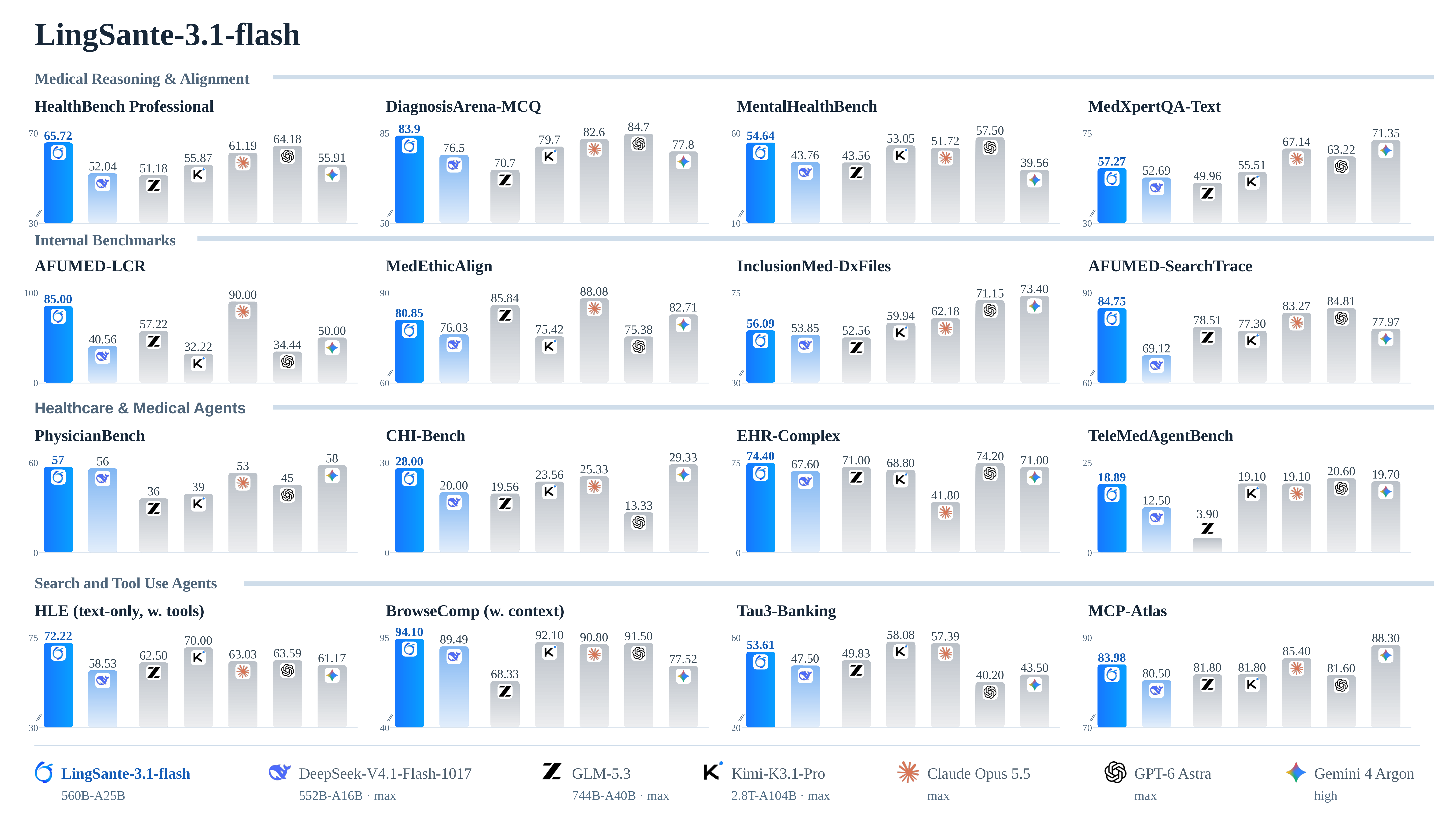
On November 22, Ant's Ling team formally released LingSante-3.1-flash, a medical model whose weights are open under the MIT license and downloadable from Hugging Face. Built on Ling-3.1-flash, it has 560B total parameters, activates 25B per token, and supports a 1-million-token context window.
The architecture is a hybrid-linear MoE: 63 KDA layers plus 9 gated MLA layers, with 512 routed experts per layer and 8 activated per token. Ant says it ranks second overall on medical professional-behavior benchmarks, behind only GPT-6 Astra.
Unlike general models, its pitch is reasoning plus execution in one package: it can verify evidence across scenarios, run multi-turn medical tasks, and call real MCP tools to complete long workflows from case analysis to reproducible scripts. Ant also warns that model output must not be used as the sole basis for diagnosis, prescriptions or treatment.
💡 Lumo’s take
Healthcare is becoming the most crowded vertical battleground for large models: Ant, Tencent and Baidu are all pushing general capability into professional scenarios. For indie developers, the real opportunity is not training a bigger medical model but building around it — wiring open models like this into real clinical workflows as compliant, usable tools, at a far lower cost than training from scratch.
06Tesla starts rolling out FSD v15 with 10B parameters and 25x better safety-critical handling
Image source: Electrek
On November 21, Tesla began rolling out Full Self-Driving v15 to Early Access members, version v15.0.1. The company says the release upgrades every part of its end-to-end driving network.
The biggest numerical change is model scale: neural-network parameters grew from about 1 billion in v14 to about 10 billion, running the same software as Robotaxi. Tesla claims the critical intervention rate — the core metric for progress toward unsupervised driving — improved 25x, though it published no absolute numbers.
The flashiest new feature is Tesla Reality View: a live, AI-generated visualization of the drive in full-screen, map or split-screen form, letting the driver see and influence what the car plans to do. The release also adds slowing for speed cameras, a Bike Rack Mode, and better detection of road signs, potholes, small animals and debris.
The cutoff is clear too: only cars with HW4/AI4 hardware can upgrade. Older HW3 cars stay on v14 Lite. Musk says the wide rollout comes in December with the 2026 Holiday Update.
💡 Lumo’s take
Every major FSD release is a public lesson in end-to-end AI: parameters up 10x, intervention rate claimed up 25x, yet Tesla still does not publish the absolute numbers. Builders can take two things from it: tell the story with one verifiable core metric, and never use a number nobody can check as your selling point.
07Dutch court blocks BYD Ti7 sales in the EU over Defender design
Image source: CarNewsChina
On November 20, the District Court of The Hague ruled that BYD's seven-seat SUV, the Ti7 (sold in China as the Fang Cheng Bao Ti7), infringes Jaguar Land Rover's registered EU design for the Defender L663, and issued a preliminary injunction barring ten BYD subsidiaries from importing, producing, selling, storing or delivering the car in the EU.
The injunction takes effect one week after formal service of the judgment. Violations carry penalties of 100,000 euros per day or 25,000 euros per vehicle, capped at 10 million euros in total. The Ti7 is not yet on sale in the EU, so the ban is preventive in nature.
It does not reach the UK: the Hague court declined jurisdiction over BYD's British subsidiary, so UK customer deliveries scheduled for January 2027 proceed as planned. In Britain the Ti7 costs 47,995 pounds on the road, 23,845 pounds less than the Defender 110 S.
BYD says the Ti7 is an independent design and will appeal. JLR must begin substantive proceedings within six months or the injunction lapses. A separate JLR case in Rotterdam, alleging copyright infringement and slavish imitation, goes to court on November 25.
💡 Lumo’s take
This is a textbook case of design patents used as a market weapon: the car is not even on sale yet, and the injunction arrived first. For Chinese companies going global, design-level compliance review is becoming as important a cost item as tariffs — design-patent clearance deserves a place on page one of any export checklist.
08WeChat's desktop agent builds a mini app from one sentence in about 6 minutes
Image source: woshipm.com
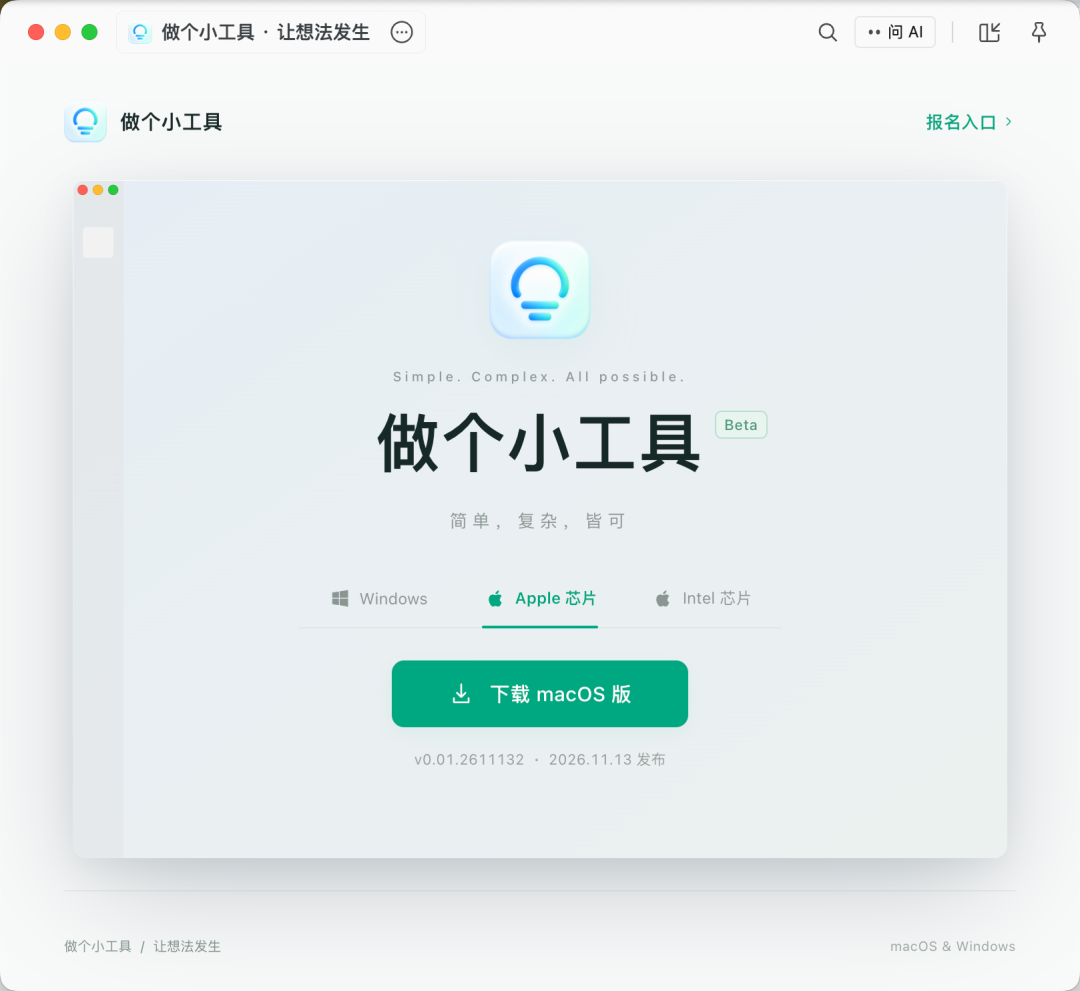
WeChat has spun the mini-tool capability out of its Xiaowei assistant into a standalone desktop AI agent, 'Make a Mini Tool', for macOS and Windows. It is in beta and requires a sign-up for access. The product went live on November 13 and broke into wider attention after hands-on media coverage on November 20.
The flow is plain: describe what you want in natural language, the agent confirms the plan with you, then a cloud agent called Minitool-Task builds it. In testing, a working mini-tool took about 6 minutes. Finished tools can be previewed in a simulator, pushed to WeChat on a phone or PC for immediate use, and shared with friends.
Underneath is WeChat's own WeLM model (welm-v4.6-flash), with no model picker and no code anywhere in the flow. Each mini-tool can also generate a management backend in one click, and unsatisfying edits can be rolled back to an earlier version.
Compared with Mini Programs, mini-tools need no registration, filing or review. They are positioned as personal apps — for yourself, family and friends. WeChat's Xiaowei assistant already has more than 30 million daily active users.
💡 Lumo’s take
WeChat has genuinely handed the power to create to ordinary people: no code, no review process — one sentence produces a real app with a backend. For tool builders the signal is clear: the next wave of opportunity is on the supply side of personal mini-apps. Help users turn an idea in their head into something usable, and keep it as light as possible.
09OpenAI brings GPT-Live-1.1 to the API with standby calls 60% cheaper
Image source: OpenAI API docs
On November 20, OpenAI put its voice model GPT-Live-1.1 into the API under the model ID gpt-live-1.1, via the v1/live/sessions endpoint. It is a full-duplex model: it can listen while it speaks, with reasoning over incoming and outgoing audio in a single model.
The most concrete change is billing. A new standby state pauses inference after 5 to 60 seconds of silence while keeping the connection open, and idle time is billed at $0.02 per minute versus $0.05 active — 60% cheaper. For always-on support and scheduling voice agents, that changes the math considerably.
OpenAI says version 1.1 improves accent consistency across languages, transcription accuracy, handling of letters and numbers, and task completion, but published no benchmark scores. The voice model does not do complex reasoning itself; when needed it hands reasoning and tool calls to a backend model such as GPT-6 Astra.
The model has powered ChatGPT Plus and Pro voice since October 15; this release opens it to API developers. Default context is 128K tokens, and image, video and structured outputs are not yet supported.
💡 Lumo’s take
The cost structure of voice agents is being rewritten: calls used to be billed at full price for the whole duration, and now the time spent waiting for someone to speak costs 40% of the active rate. For teams building voice support or phone-booking products, always-on voice agents finally pencil out.
10Claude Computer Use reaches Team and Enterprise plans, off by default
Image source: Anthropic release notes
Anthropic's release notes for November 20 state that Computer Use (beta) is now available on Team and Enterprise plans. Until now the capability was limited to the Pro, Max and Ultra individual plans, and enterprise organizations had no access.
The enterprise version works on different logic: it is off by default, only an Owner or Primary Owner can switch it on, and it is rolling out to organizations gradually. Claude can see a user's screen and click and type in the desktop apps they allow, running in the new Claude Desktop unified experience (macOS 14+ and Windows); web and mobile use needs the separate Computer access setting.
Admins get three controls: Enterprise can authorize by role, both plans can use app allow and block lists to govern which software Claude may touch, and IT teams can disable it entirely on chosen machines through the MDM policy key computerUseEnabled.
There are hard limits too: organizations with HIPAA, zero data retention, customer-managed encryption keys or FERPA configurations cannot enable it. Anthropic itself warns that there is no sandbox between Computer Use and applications, and that screenshots are saved with the chat.
💡 Lumo’s take
The biggest obstacle for computer-control agents entering the enterprise was never capability but who gets to decide. Anthropic shipped the full control set at once — the toggle, the app lists and the MDM key — setting a benchmark for every team building enterprise desktop agents: get governance complete first, then talk about automation.
11oovi puts a whole AI team on one person's desktop
Image source: Product Hunt
oovi, fifth on Product Hunt's daily leaderboard on November 22, is a desktop app built by a solo developer in Algeria for one-person companies. Hand it a job and a team of AI bots takes over: a leader breaks down the plan, a researcher digs into sources, a writer drafts, and a critic checks the result.
Each bot's work can be opened and watched live, and anything that touches the outside world — sending an email, posting, clicking a site — shows the exact action first and waits for approval. In the just-shipped v0.15.0, bots act instead of asking, and conversations cost about half as much to start.
The model is restrained: bring your own API key (Claude, GPT, Gemini, Grok, OpenRouter or a local model) and it is free, with nothing added on top. Or use the built-in model from $10 a month, with unused credits that never expire. Chats, files and keys stay on the local machine, and the team can be directed from Telegram too.
💡 Lumo’s take
Multi-agent collaboration is moving from a few chat windows to a team with real roles, and oovi makes that shape feel most like an actual team: a leader, a researcher, a writer and a critic, each doing their own job. For indie developers, the biggest lesson in products like this is not the feature list but the way work is organized — even a one-person company deserves a workflow.
12Ulika lets any team edit an AI-built website without touching code
Image source: Product Hunt
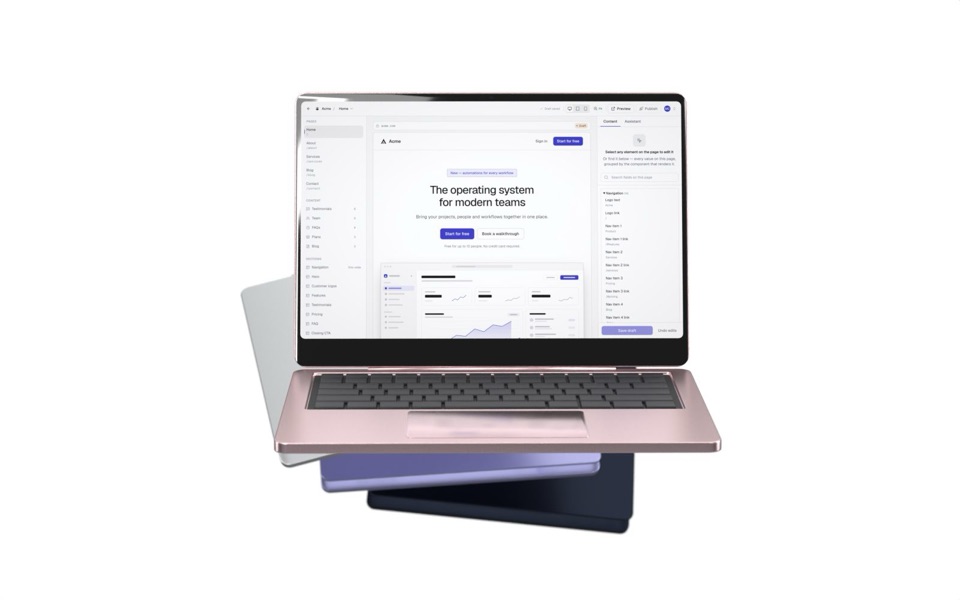
Ulika, which climbed Product Hunt's daily leaderboard on November 22, solves an old problem that follows AI-built websites: Claude, Cursor or Codex can put a site together overnight, but changing one line of copy or swapping an image still means finding someone who writes code.
It works by connecting GitHub and Vercel. Ulika detects every headline, image and link on the site, and team members click text or photos right on the page, edit them, and hit Publish. The code and design stay exactly as they are, and every change is saved with versions to restore.
The product is in open beta and free to try, with team and agency plans on the way. For indie developers who build sites for clients with AI tools, it splits building a site and running it into two separate jobs.
💡 Lumo’s take
The second half of AI website building is not building but editing: after delivery, changing copy and swapping images is more work than writing code. Ulika targets exactly that gap — handing the power to edit AI-generated work back to people who do not write code. More tools like this, finishing what AI starts, are coming.
"Agent Credential Gatekeeper": a safety layer that catches credentials leaked by AI coding agents.
What it does: a pre-commit safety layer for small teams that use coding agents. Before an agent commits code or changes, it automatically scans the diff for keys, tokens and private-repo credentials, blocks suspicious commits and points at the exact location. Agents get single-use, least-privilege temporary credentials that expire after use, so real keys never enter an agent's workspace. A weekly audit report lists which agents touched which sensitive files.
Who pays: teams of 2–20 people and indie developers — they use Claude Code, Codex and similar agents the most, and have no dedicated security role. One leak costs far more (rotating keys, notifying customers, lost deals) than a subscription of a few dozen dollars a month, so willingness to pay is direct.
Why now: Together AI just proved with a real breach that the risk is not theoretical — an agent committed a private-repo credential into a public repo itself. Coding agents are spreading far faster than the safety workflows around them, and the gap is widening. Existing secret scanners are written for humans and do not understand how agents work.
Minimum MVP: a Git pre-commit hook plus a lightweight server. Scanning rules first cover the 20 most common credential formats (cloud keys, HF tokens, GitHub PATs, database connection strings). A blocked commit offers three actions: delete it, move it to an environment variable, or rerun with a temporary credential. Temporary credentials first cover GitHub and Hugging Face only.
First validation step: release the MVP as a free open-source tool on GitHub and in developer communities, and collect feedback from 50 real teams. After 3 documented cases of catching a real leak, switch to a paid team plan (monthly subscription), launch on Product Hunt and in Claude Code communities, and sign up the first 20 paying teams.