GPT-6.2 Astra and Claude 5.5 leak on the same weekend: the big three head for a November clash (unconfirmed)
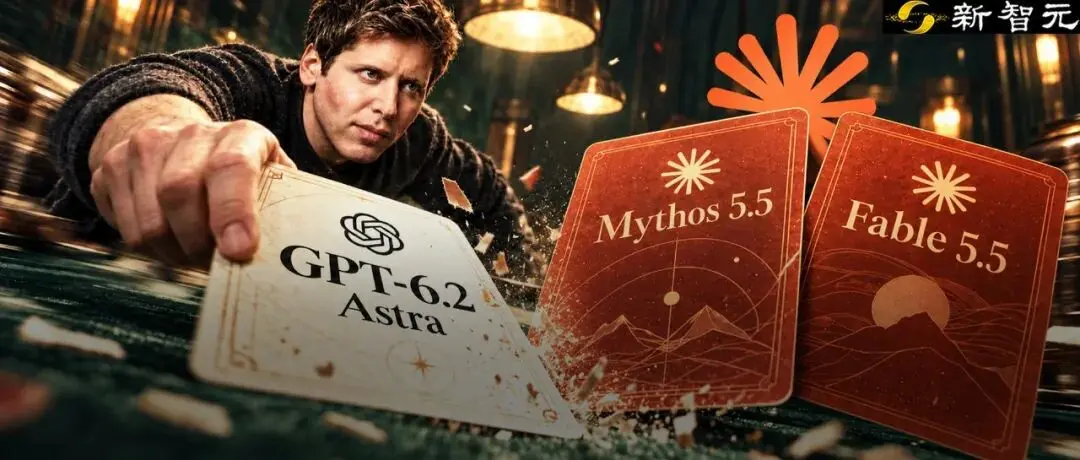
01GPT-6.2 Astra and Claude 5.5 leak on the same weekend: the big three head for a November clash (unconfirmed)
Image source: ChainCatcher (via Synced)
Two leaks occurred over the Nov 1–2 weekend: developers spotted the Codex backend returning gpt-6.2-astra, which already accounted for roughly 19.8% of traffic in billing stats, amid rumors that 6.1 was skipped due to safety testing issues and upgraded directly to 6.2 after a month of refinement. Meanwhile, six references to "Claude Mythos 5.5" were found pre-embedded in Anthropic's official website source code, and the general-purpose flagship Fable 5.5 reportedly supports a 1M-token context window and has appeared in MLflow and Azure catalogs. Neither company has made an official announcement, with leakers speculating the official launch window could be Nov 3–4.
💡 Lumo’s take
Don't rush to switch models yet—once officially announced, run the old and new models side by side on the exact same set of tasks right away (not "slacking off partway" on long tasks is a touted feature of Fable 5.5, which is ideal for testing your directory site's listing agent on long workflows). When building small products, a leak period is the right time to prepare a "model-switching layer" rather than betting on a single provider.
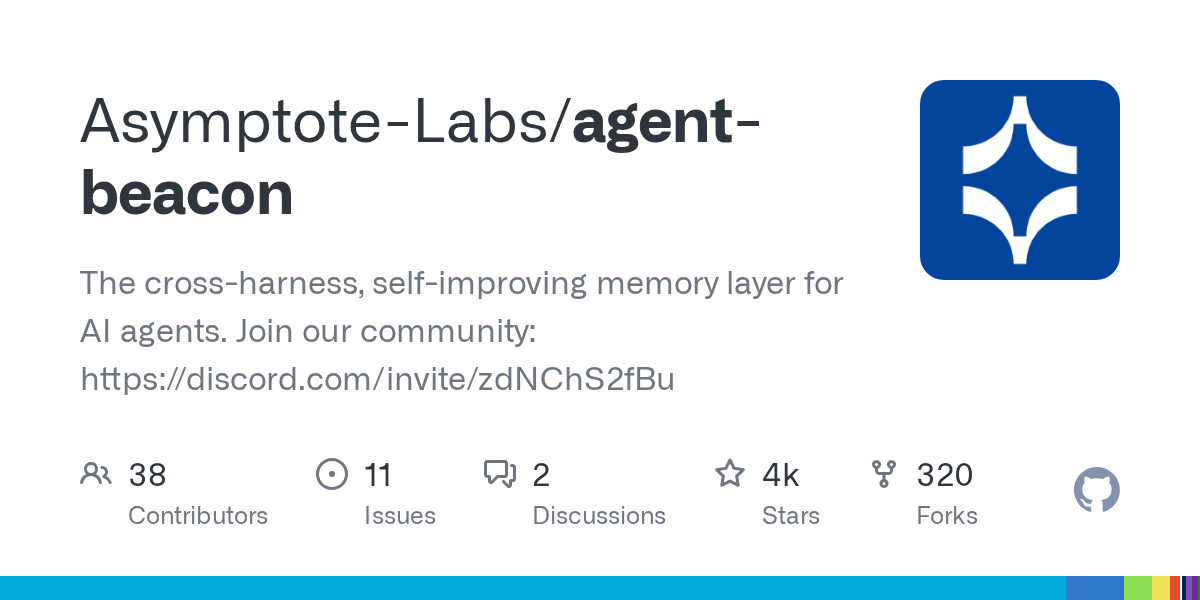
02beacon.sh: open-source, self-evolving coding agent memory layer trends on Product Hunt on Nov 2
Image source: Product Hunt
Asymptote Labs' Beacon climbed the Product Hunt trending chart on Nov 2: it consolidates sessions from over 20 coding tools—including Claude Code, Cursor, Codex, and OpenCode—into a unified OpenTelemetry-based trace, then uses Jev (low-cost evaluation) to filter out reusable error-correction and debugging patterns, turning them into cross-tool Skills after human review. Memory can run locally (local JSONL, so data never leaves the machine) or via MCP / Agent Skills. It is MIT open-source and free to start, and the team raised a $5.5M seed round in October. Watch out for privacy pitfalls: traces record prompts and commands, so only Local mode keeps data on your machine.
💡 Lumo’s take
You can try this tonight—install it in local mode, let it run on your directory site's API repository sessions for a week, and see if the first Skill it distills actually saves repeated explanations. Taking it a step further, your directory site's listing agent can also plug into this "session-to-Skill" loop so its listing experience gets smarter with use.
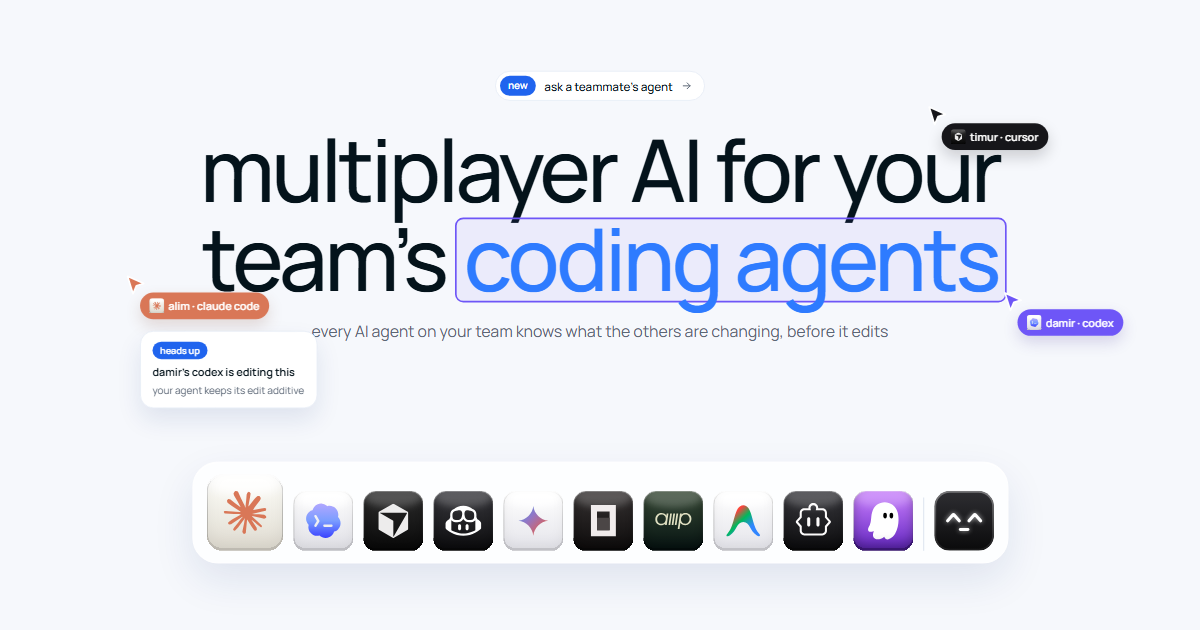
03agentmash: open-source "multiplayer" coding agent collaboration layer stops two agents from overwriting each other's code
Image source: Product Hunt
Launched on Oct 31 and still trending on Product Hunt on Nov 2, this open-source tool coordinates multiple people running their own coding agents (Claude Code, Codex, Cursor, Antigravity, etc.) on the same repository by telling each agent in advance "which file and branch a teammate's agent is editing," warning before edits rather than fixing conflicts after merging. It also supports @-mentioning teammates or their agents, switching tasks across models, and syncing Skills and chat. Self-reported figures on its official site claim pre-edit interception of overlapping edits rose from 55% to 98.6% and tasks with integration conflicts dropped by 73% (vendor self-tested, not independently verified). The free tier is $0 for up to 2 users, and the team tier is $16/user/month.
💡 Lumo’s take
When two or more people are editing the directory site's API repository at the same time, run a trial with the free tier first to see if it actually warns before modifying shared types (such as exported definitions like InviteRequest). When building small products, you can also borrow its "broadcast intent before writing" mechanism—having an agent declare what it is about to change before acting saves far more trouble than diffing afterward.
04Anthropic amends S-1A: says it "may soon" reach its recursive self-improvement (RSI) threshold
Image source: TechCrunch
Anthropic's amended S-1A filed with the SEC on Nov 2 adds a new risk disclosure: using AI to accelerate its own R&D could cause model capabilities to advance faster than safety and alignment measures can be verified. The company states that past capability jumps in its models were only recognized in hindsight, and internal estimates indicate it "may soon" reach what its Responsible Scaling Policy defines as "significant acceleration brought about by AI"—namely RSI. However, it emphasizes that no currently deployed model exceeds this threshold and that it does not intend to let Claude autonomously design next-generation models without human oversight.
💡 Lumo’s take
Use this as a "brake pad" reference for your own agent product—Anthropic's approach is "stronger capabilities mean stricter approval gates," rather than loosening controls. Your directory site's listing agent can learn from this too: reserve human confirmation for high-risk actions (deleting data, sending external messages), much like OpenDuet's approval-gate approach on Nov 1.
05Update: Anthropic to expand invisible text watermarking to Mythos 5, Opus 4.7/4.6, and Sonnet 4.6 starting Nov 3
Image source: AI Briefing (Nov 2 digest)
According to a Nov 2 daily digest, Anthropic will expand "word-choice watermarking" (text markers embedded via phrasing choices that are invisible to the naked eye) from newer models to older models including Mythos 5, Opus 4.7/4.6, and Sonnet 4.6 starting Nov 3; paying users have already raised objections to this asymmetry (invisible to users, detectable by the platform). On the same day, xAI also announced it will add watermarks to Grok API text outputs starting Nov 7—watermarking is becoming a default configuration for major AI providers.
💡 Lumo’s take
When your directory site collects AI-generated descriptions or summaries, keep "model and generation timestamp" fields alongside them—once watermarking and provenance become standard, this metadata will pay off as a compliance asset.
06OpenAI merges ChatGPT's Chat and Work tabs; ChatGPT and Codex to share a token pool starting in December
Image source: TechCrunch
TechCrunch reported on Nov 2 that OpenAI has emailed users about plans to merge the Chat and Work tabs in the ChatGPT desktop app into a single interface—moving from "chatting through an idea" to "having it build a website, make a presentation, or handle web tasks for you" without switching tabs, with files and plugins carrying over, while Codex remains a separate entry point. It will roll out to a subset of users first to gather feedback before a broader release. Along with this change, ChatGPT and Codex will share the same token quota pool; OpenAI says most users will not be affected, though heavy users may hit limits sooner and have to wait for resets.
💡 Lumo’s take
If you use both ChatGPT and Codex, audit your usage before December—move low-value, long chats to free or cheaper channels to save quota for Codex. When building small products, you can also copy this "explore first, execute without switching tabs" experience: letting users talk through an idea and execute it directly in one place yields the highest conversion rate.
0742AI emerges from stealth with $62.5M seed round to build a world model that can "predict human behavior"
Image source: TechCrunch
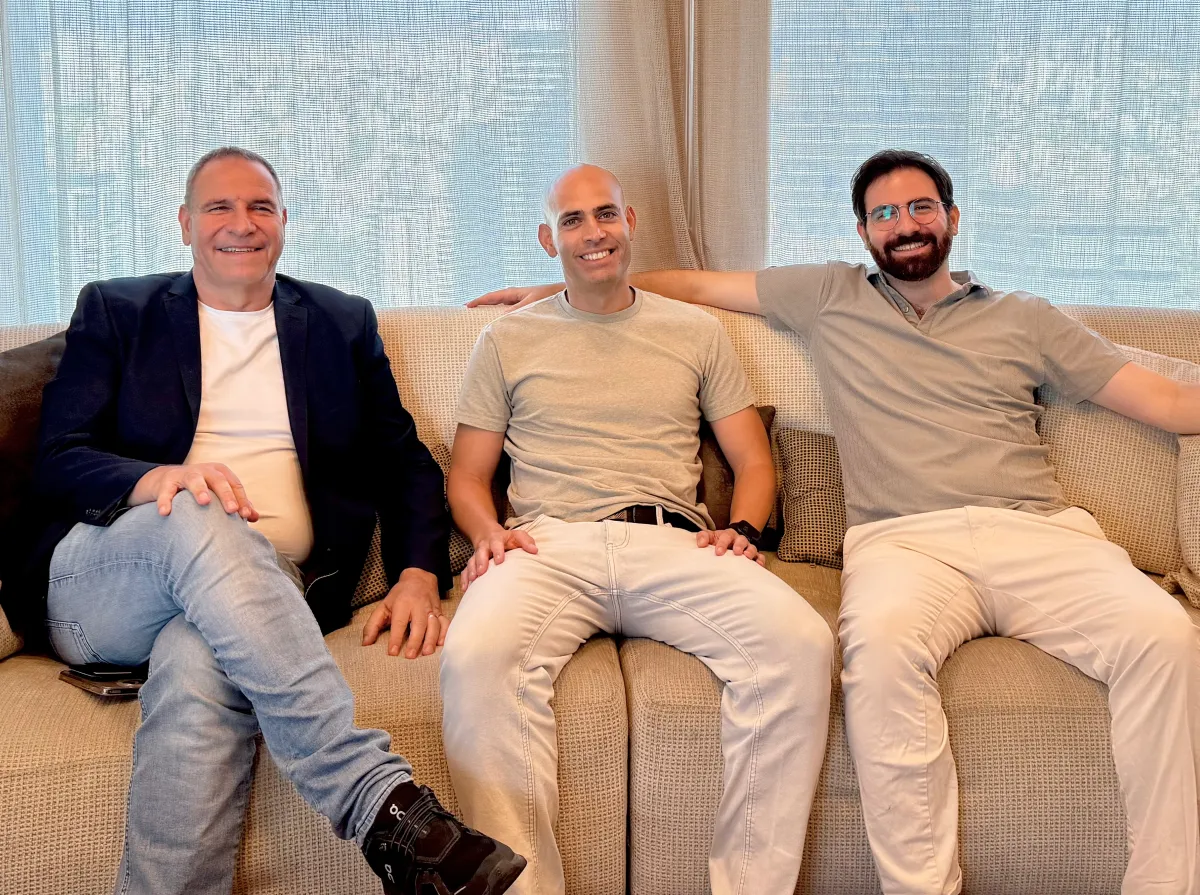
Israeli startup 42AI emerged from stealth on Nov 2, announcing a $62.5M seed round (committed gradually over three years by its founders and Infinity Group, not entirely external funding) focused on a "behavioral world model." Rather than looking only at what you did in the past, it extracts psychological tendencies from interactions such as account openings, customer service calls, transfers, and trades, feeding them into a transformer world model to output probability distributions of "how a person will choose in a new situation." Already deployed at 10 major brokerages for liquidity management, margin, and hedging, the company says 98% of trading flows fall within its predicted range (note: this does not mean every individual trade is predicted accurately), with an F1 score of roughly 0.8–0.85 for direction and trading volume.
💡 Lumo’s take
Data product builders should borrow its "probabilistic rather than deterministic" framing—don't promise to "predict what a user will do," instead provide "the probability distribution of each option under given conditions," which is both honest and sellable to risk control, pricing, and anti-fraud scenarios. However, discount that 98% figure carefully: the denominator is "falling within a range," not per-transaction accuracy.
08Grok Bot weekly limits suddenly tighten: Musk says serving costs are "unsustainably high relative to revenue"
Image source: TechCrunch
Over Halloween weekend, some Grok Bot users noticed their weekly usage abruptly jump from 50% to the 100% cap; Musk confirmed on X on Nov 1 that it was not a bug: "Grok Bot serving costs are unsustainably high relative to revenue." How limits will be adjusted going forward has not yet been specified. This comes against the backdrop of a SpaceX filing last month stating that AI accounted for 52% of company revenue and its "superintelligence" division posted a rare $431M profit—yet even so, agent inference costs remain hard to contain.
💡 Lumo’s take
Build a "cost circuit breaker" into your own agent product: per-task token caps, retry caps on failure, and cheaper models first—Grok Bot had to tighten limits reactively, whereas you can proactively design yours with adjustable tiers.
09Agent Inbox: give your agent an email, Slack handle, and Telegram handle; #1 on Product Hunt on Nov 2
Image source: Product Hunt
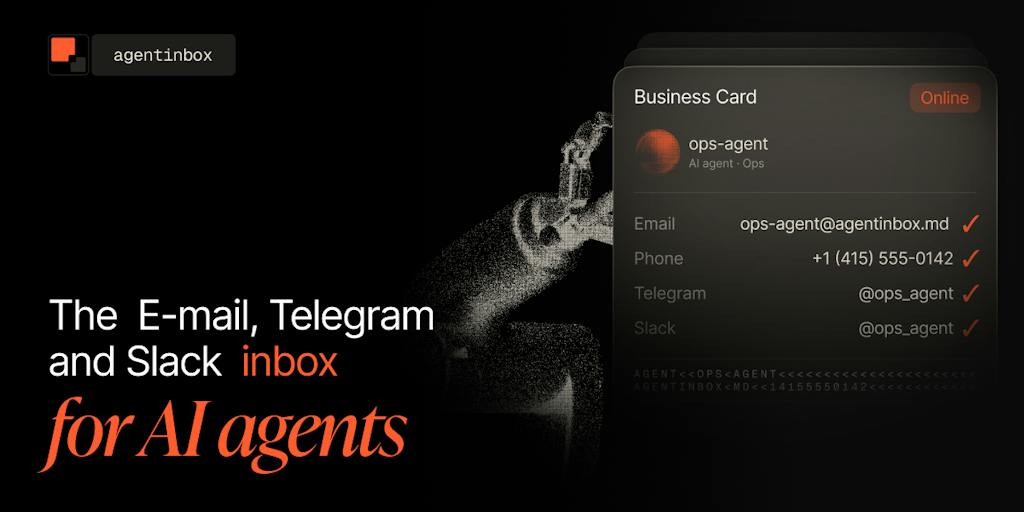
Product Hunt's #1 product of the day on Nov 2 gives each AI agent a unified inbox—an email address, a Slack handle, and a Telegram handle, all backed by a single API. When an agent gets stuck, it messages you to ask, and you reply in the same thread for it to resume; conversely, you can message it first to trigger work (currently supporting Claude Code first), as well as loop in coworkers so the agent can ask them directly. It is compatible with frameworks including Claude, Grok, OpenAI, and Hermes, and is listed on Product Hunt at $0 with no credit card required to start.
💡 Lumo’s take
Your directory site's listing agent is missing this exact piece—when a listing gets stuck (such as when an official site's layout changes and needs human confirmation), let it message you directly so it continues as soon as you reply, rather than failing silently or guessing blindly. Start by setting up an inbox for your listing agent on the free tier and running it for a week.