GitHub Copilot Fusion: Pick Effort Level Instead of a Model
01GitHub Copilot Fusion: Pick Effort Level Instead of a Model
Image source: GitHub Changelog
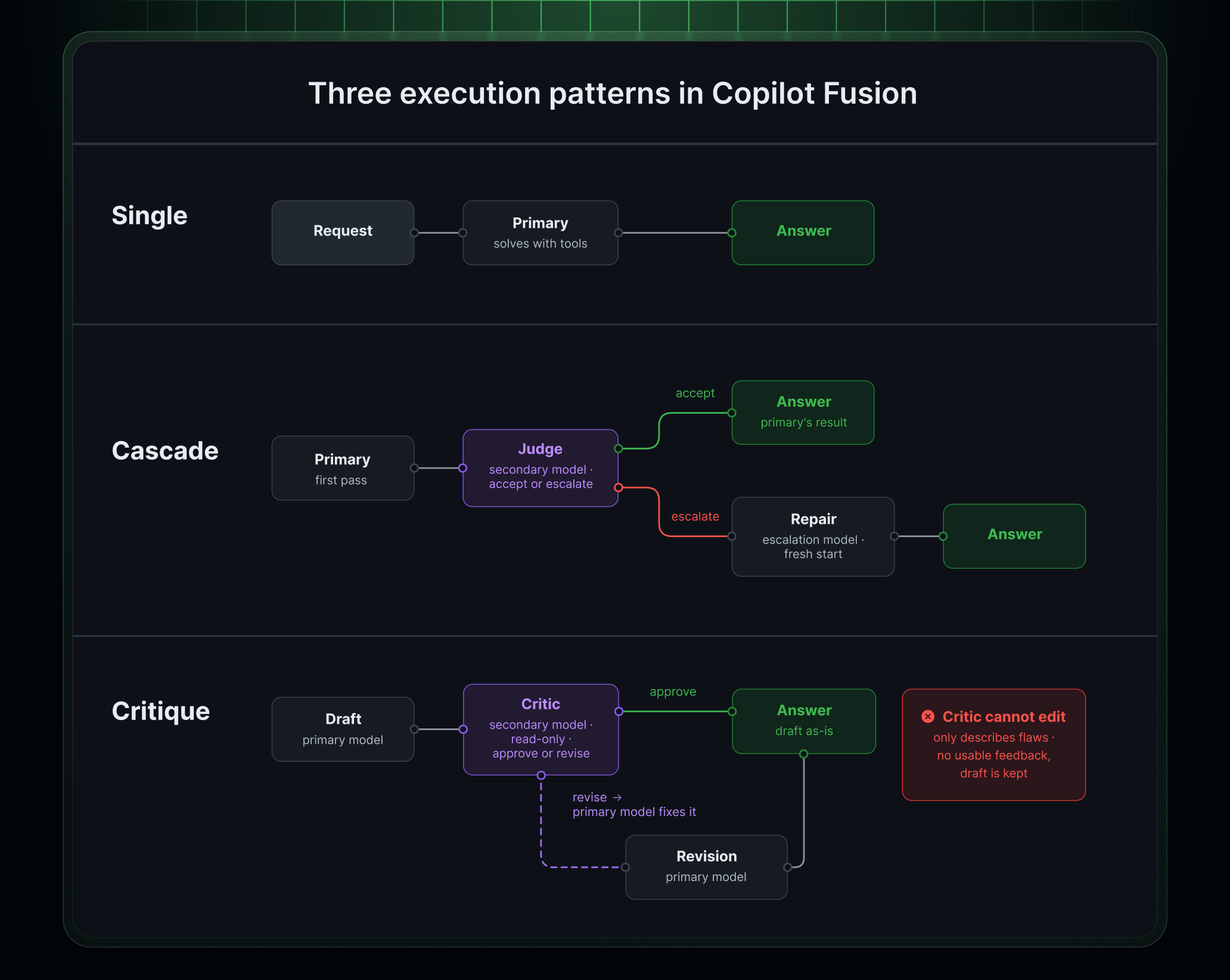
At its October 28 Universe conference, GitHub announced general availability (GA) for Copilot Fusion: instead of picking a specific model in the model selector, users choose Fusion plus an effort level—Standard for everyday tasks, High for tougher problems, and Max for the hardest tasks. Fusion automatically routes and orchestrates models per task across three modes: Single (one model solves directly), Cascade (a cheaper model drafts first and escalates if quality checks fail), and Critique (one model writes, another reviews, and the original model revises). Vendor figures: Fusion Max scores 60 on the Artificial Analysis coding agent index, 2 points behind Claude Code + Opus 5.5 Max, with roughly half the per-task API cost and tokens and about 40% lower latency (vendor-cited, not independently verified). Paid-plan users receive 30% off model usage through November 30 across VS Code, the Copilot App, CLI, and JetBrains.
💡 Lumo’s take
Your own agent products can adopt this effort-level abstraction—instead of asking users to pick a model, let them choose how much a task is worth or how rigorously to handle it. Also watch for a caveat in the vendor's notes: file edits made by discarded drafts do not roll back automatically, so always review before committing.
Released on November 2 and trending on Product Hunt, this first public 1.0 release of an open-source desktop Git client is built with Rust, Tauri 2, and React 19 under AGPL-3.0 and is free. Its pitch is deliberately restrained—no vendor account, no cloud workspace, zero telemetry, and zero AI, using the network only for Git, GitLab/GitHub APIs, and signature-verified updates—yet feature-complete: staging by file, hunk, or line; commits and amend; stashes, tags, worktrees, submodules, and patches; a virtualized canvas commit graph that stays smooth at 200,000 commits; and native support for GitLab (MRs, pipelines, CI badges) and GitHub (PRs, reviews, Actions logs), including self-hosted GitLab and GitHub Enterprise. Credentials stay strictly in the OS keychain rather than inside the app. Supports macOS (Apple Silicon), Windows, and Linux, requiring Git 2.34 or newer.
💡 Lumo’s take
You can try it tonight—download it, open the navigation site's API repository, and run through a full workflow (stage, commit, inspect the graph, open an MR) while verifying its self-hosted GitLab support. When building small products, take a cue from its approach: putting a "what we don't do" list in the README can sometimes earn developer trust better than a feature list.
03Apple's First Touchscreen MacBook Pro: PROLED XDR, Launching Friday, November 6
Image source: Apple Newsroom
Announced by Apple on October 28, the MacBook Pro with PROLED XDR Display brings touch to the Mac for the first time: a tandem OLED panel with 2000 nits peak brightness (matching across HDR and SDR), a 10,000,000:1 contrast ratio, 10–120Hz ProMotion, and dual P3 + Adobe RGB color gamuts. Touch sensors are integrated directly into the panel (with no added latency, according to Apple), and the notch is replaced by Dynamic Island housing Spotlight, Live Activities, and Siri AI. Powered by M5 Pro or M5 Max chips (note: not M6, which ships in a separate $1,999 14-inch entry model), it supports up to 128GB of memory and 16TB of storage, weighs 3 lb for the 14-inch and 4 lb for the 16-inch, and is rated for up to 24 hours of battery life. Pricing starts at $2,899 for the 14-inch and $3,399 for the 16-inch in the US ($4,499 / $4,799 for M5 Max configurations), and RMB 22,999 in China; pre-orders opened October 28 ahead of a November 6 release.
💡 Lumo’s take
When building desktop or creative apps, macOS automatically translates touch into clicks so existing apps work out of the box—but to truly capture the upside, rework gestures and touch targets following Apple's Touch guidelines rather than merely making buttons bigger.
04Backenly: Self-Healing Backend Built for AI Coding Agents
Image source: Product Hunt
Ranked #4 on Product Hunt on November 1, Backenly is an autonomous backend platform built for AI coding agents. Agents provision Postgres (with row-level security policies), authentication, storage, realtime capabilities, and functions via MCP. Once live, it runs health checks every minute, automatically applying verifiable, reversible fixes (missing indexes, RLS gaps, broken realtime triggers) while pausing risky or irreversible changes (dropping tables, deleting columns, removing files, revoking keys) for human approval. When schemas outgrow their design, it can also rehearse table splits on a replica before asking for approval to ship. The platform is open-source under Apache-2.0 and self-hostable; the hosted free tier requires no credit card and includes unlimited self-healing loops, while Pro at $25/month only raises capacity limits.
💡 Lumo’s take
Run a self-healing plus approval-gate experiment on a small backend like the navigation site's API: start with read-only health checks and missing-index repairs while keeping destructive operations like table drops strictly human-approved. This division of labor—agents handle routine execution while humans approve risky actions—is the backend counterpart to yesterday's OpenDuet approval gate.
05Specsight: Product Hunt #1 on November 1, Living Product Specs Grown From Code
Image source: Product Hunt
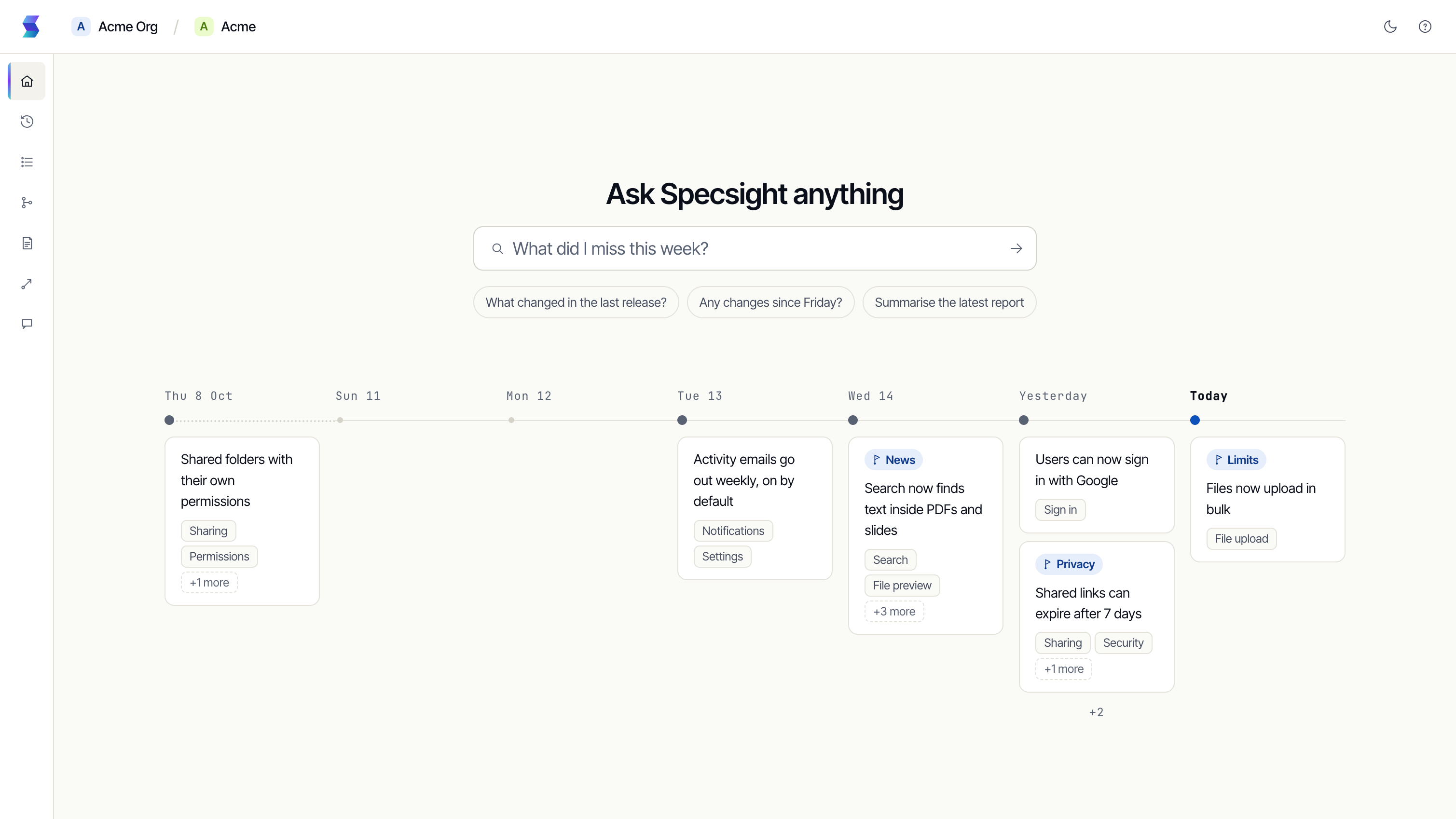
Built by a solo founder and ranked #1 on Product Hunt on November 1, Specsight connects to GitHub or GitLab repositories to read directly from source code what a product looks like, how features work, and how parts connect, updating automatically with every release. It outputs product maps, product specs, weekly digests, and one-click release notes, and exposes an MCP server so AI tools like Claude can directly query how the product currently works. According to the founder, most projects generate their first product map within 1 hour; pricing is €150/month (including 3 projects, 50 members, and 200 syncs per month), with Product Hunt promo code PH2026 offering 50% off for the first 3 months through November 8.
💡 Lumo’s take
The navigation site's directory workflow can borrow its living-spec approach—instead of manually rewriting each tool page's features and updates, refresh them periodically from official website or repository changes. Going a step further, turn that code-to-product-language translation capability into the navigation site's own curation agent.
06telemetry.dev: Draw a Cost-and-Failure Trace Graph for Every Agent Run
Image source: Product Hunt
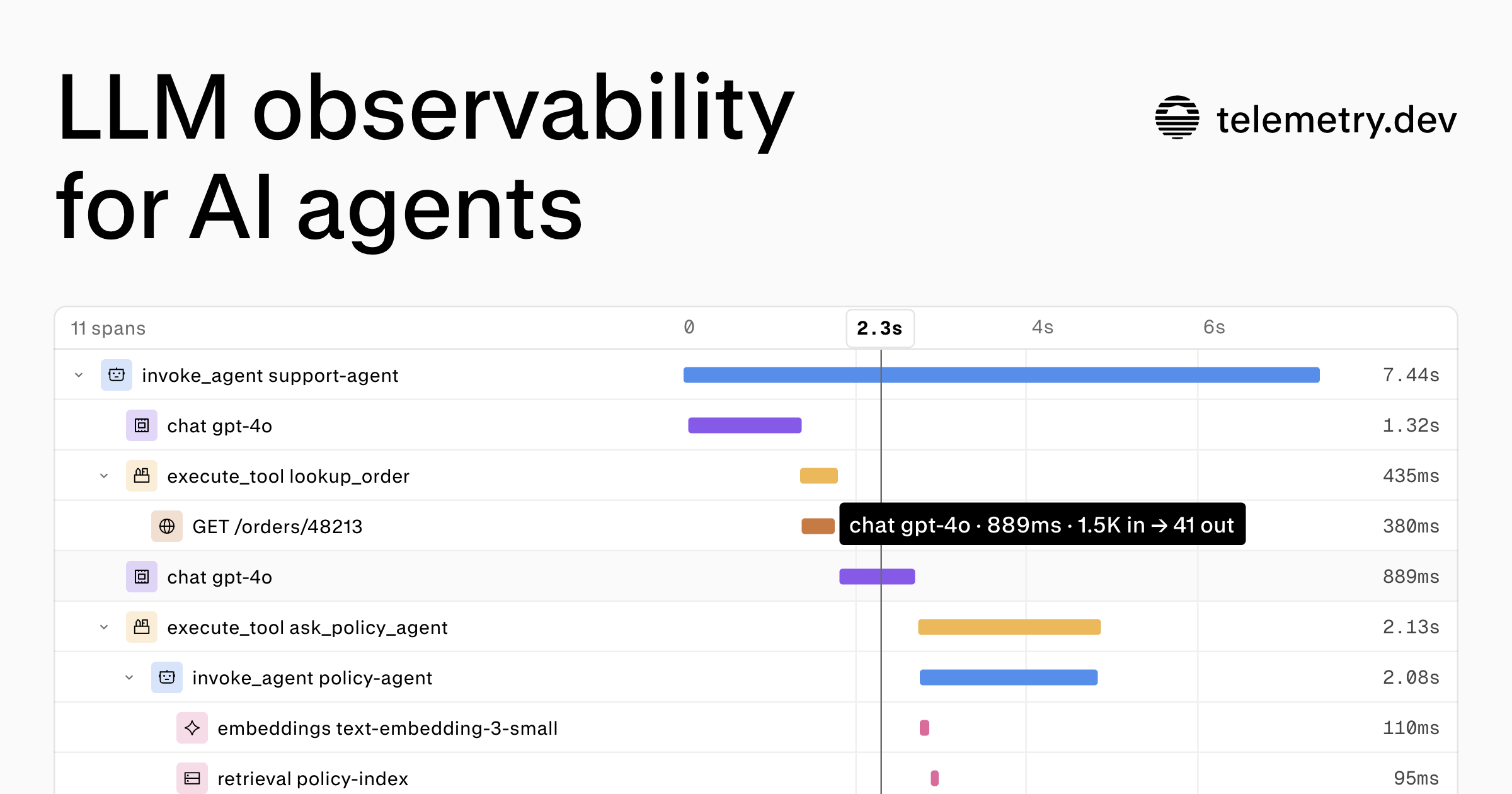
Ranked #3 on Product Hunt on November 1, this LLM observability platform renders every agent run as a trace where each model call and tool call is a span recording latency, tokens, cost, and errors. The new release adds zero-deploy prompt editing, dataset evaluation comparisons, alerts for error pileups and cost spikes, plus a CLI and MCP server so your coding agent can read its own traces to debug issues. Built on OpenTelemetry with TypeScript and Python SDKs covering OpenAI, Anthropic, Vercel AI SDK, LangChain, and more; the free tier requires no credit card, and Product Hunt code PHBU7A47FH grants 1 month of Pro.
💡 Lumo’s take
Once the navigation site's curation agent is running, connecting this kind of tracing should be the first step—see clearly which step is burning tokens before optimizing. Pair it with TokenEconomizer recommended on October 31: one saves tokens, the other shows where tokens go.
07SKI: Give Coding Agents Ears and a Mouth With Fully Local Voice
Image source: Product Hunt
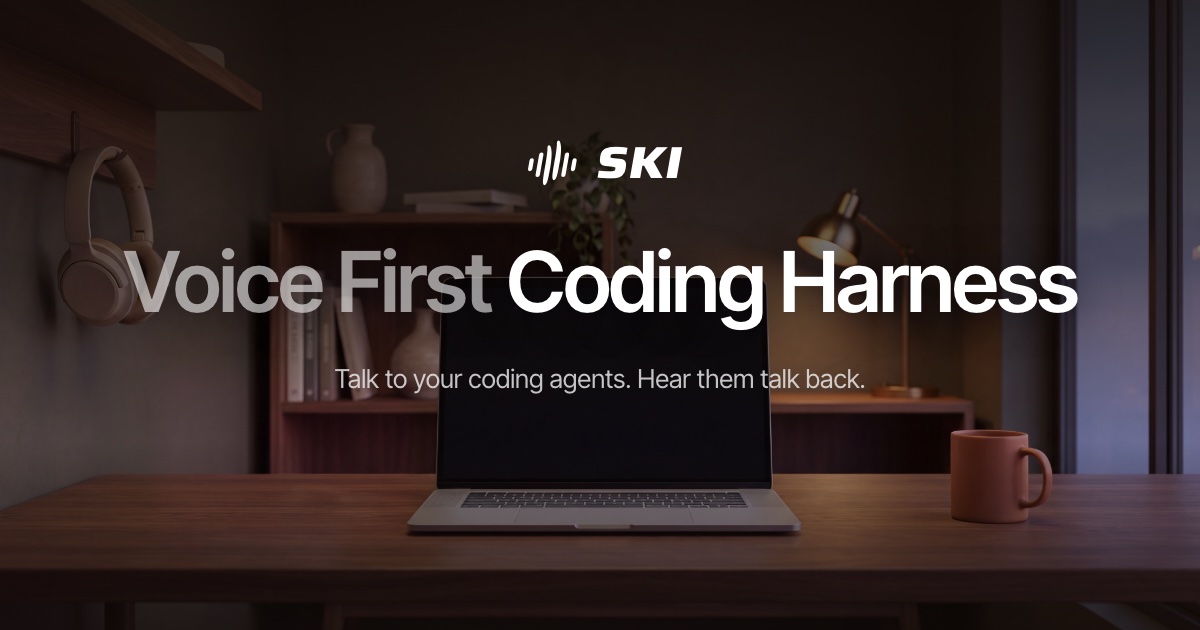
Ranked #2 on Product Hunt on November 1 (new release; initially launched in July), SKI is a free desktop utility that lets you speak instead of type to direct coding agents such as Claude Code, Cursor, Codex, Gemini CLI, and OpenClaw, and hear natural voice responses. Speech recognition and synthesis run completely locally with no audio uploads and full offline capability, supporting full-duplex interruption, distinct voices per project, and docking in the Mac notch. The new version strengthens real-time multilingual voice (the official site lists support for 85+ languages, with Chinese on Mac requiring an additional download) across Mac (Apple Silicon, macOS 14.4+), Windows, and Linux; the core voice loop is free forever, with per-minute billing only for AgentCall when agents join video meetings.
💡 Lumo’s take
When building small products, borrow its skill-file integration pattern—instead of writing hardcoded integrations for every agent, publish a single skill file that all agents understand, cutting integration cost by an order of magnitude.
08ClawsGO Science: An Always-Open Cloud Lab for Research Agents
Image source: Product Hunt
Ranked #2 on Product Hunt on November 2, ClawsGO Science is a long-horizon agent for scientific research: give it a one-sentence question and it runs for hours or even days on an always-on cloud workstation, with multiple Claude and GPT agents working in parallel and cross-checking each other before returning a cited, compilable paper (simultaneously compiled LaTeX source and PDF, with reproducible, editable figures). The lab comes pre-installed with 500+ scientific tools and 90+ datasets (such as GATK, GROMACS, Quantum ESPRESSO, and QGIS across 12 fields), syncs progress across web, macOS, Windows, iOS, and Android, and supports attaching your own GPUs via SSH. Example output: a gut microbiome query produced a 24-page paper with 17 figures, 10 tables, and 59 citations; starts free with 1,500 credits and no credit card required.
💡 Lumo’s take
The navigation site can build a lightweight version of this lab—give the curation agent a persistent environment pre-installed with scraping, parsing, and screenshot tools rather than installing everything on the fly each run. To test long-horizon agent reliability, use the free credits to run a literature review in your own field and verify whether the citations are real and traceable.
09magpie: Collect Scattered Inspiration Into a Visually Searchable Library
Image source: Product Hunt
Trending on Product Hunt on November 2, magpie gathers saved items scattered across Instagram, X, TikTok, Pinterest, YouTube, Reddit, Dribbble, Behance, Are.na, and the web into a single visual library. AI tags entries by visual content and color, letting you search back to original posts with descriptions like "quiet product shot in warm light," while preserving the content in your library even if the original post is deleted; projects can also auto-populate matching saves based on a brief. Free tier includes up to 500 saves.
💡 Lumo’s take
The navigation site's bookmark/inspiration library can borrow two ideas from it: keeping local snapshots after original posts go offline, and searching by visual semantics rather than titles alone. Try collecting AI tool inspiration with it for a week to test whether visual search beats folders.
10Autonomous Driving's Second Wave + Bedrock: Open-Source Models Lower the Barrier to Building Vehicles
Image source: TechCrunch
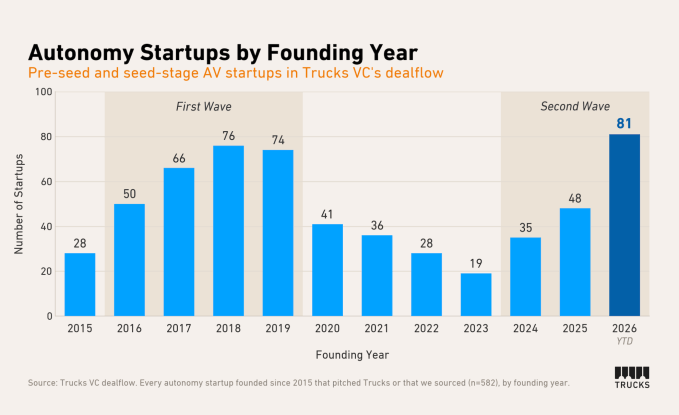
TechCrunch Mobility reported on November 1 that early-stage firm Trucks VC has received pitches from 81 new autonomous vehicle startups so far this year—up two-thirds from last year and surpassing the previous 2016–2017 peak. The firm's thesis is that foundation models provide a viable architecture for end-to-end autonomy, while open-source general vision-language-action models like NVIDIA Alpamayo and Qwen further lower entry barriers—allowing many teams to get running in months on less than $1 million, with a noticeable uptick in robotaxi challengers alongside construction, warehouse, and mining plays. A contemporaneous deal illustrates the trend: Bedrock Robotics (which retrofits existing excavators with autonomous kits and announced a $600 million Series C at a $4.1 billion valuation on October 26, led by CapitalG and Emergence) is already running paid commercial operations across multiple US construction sites rather than pilots.
💡 Lumo’s take
When picking a direction for AI products, look for the combination of open-source models and clear paid use cases: Bedrock didn't build new excavators, it added kits to existing machines—similarly, the navigation site can start by adding a layer on top of existing tools rather than building a platform from scratch.