Google's Neon fills the middle tier as Anthropic prices at $83 for tonight's debut
Today’s highlights
Google ships Gemini 4 Neon: third on the Intelligence Index at 61, 32% cheaper per task than Carbon
OpenAI models improve AMD's flagship GPU design by up to 14%, with some changes sent for manufacturing
Anthropic prices its IPO at $83 and lists on Nasdaq today
Tencent's WorkBuddy passes 10 million daily users; Baidu's AI cloud revenue rises 94%
S.Space and Devin Bots: multi-agent collaboration moves from taking tasks to holding jobs
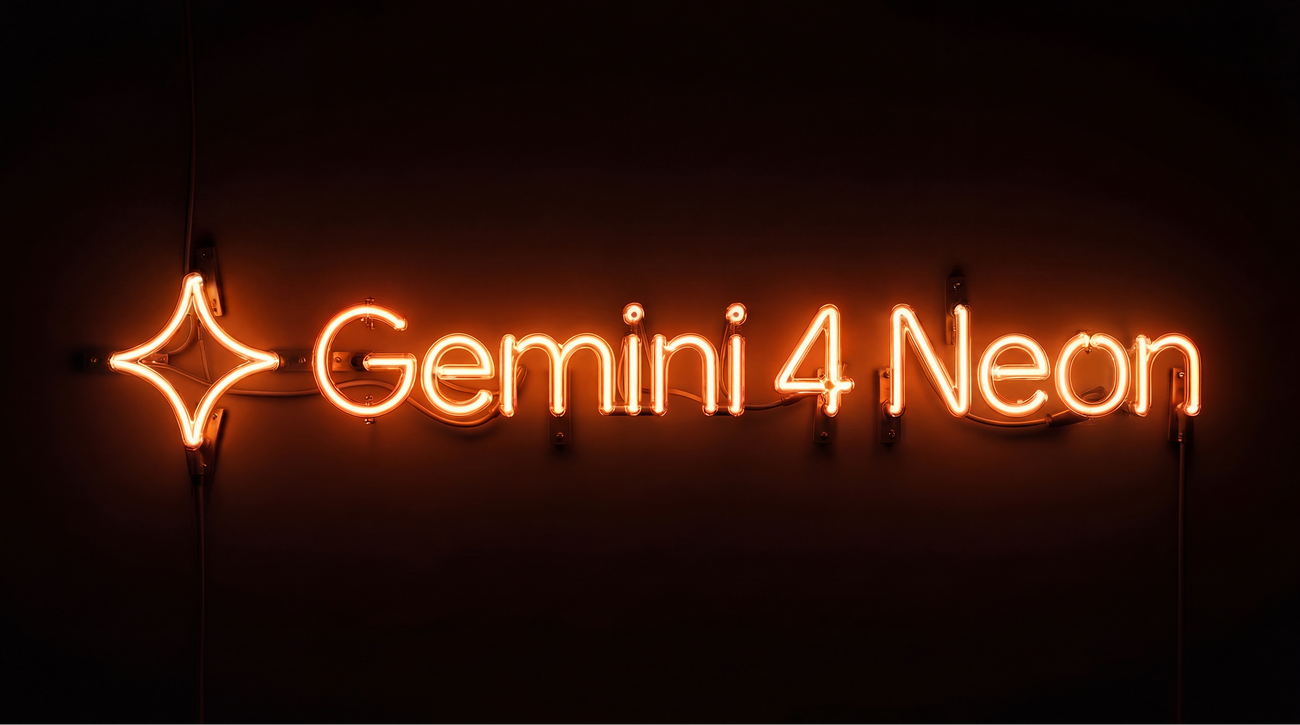
01Google ships Gemini 4 Neon: 61 on the Intelligence Index, 32% cheaper per task than Carbon
Image source: Google official blog
On November 18, Google released Gemini 4 Neon, the third model in the Gemini 4 family, sitting between flagship Carbon and lightweight Hydrogen: built for high-frequency complex coding, analytical reasoning and enterprise workflows, pitched as frontier-level intelligence with fast end-to-end task completion.
On the numbers, Neon scores 61 on the Artificial Analysis Intelligence Index at its xhigh thinking level, ranking third overall behind Claude Fable 5.2 (65) and GPT-6.2 Astra (62); it leads the Coding Agent Index at 58.6 and scores 65.2% on Terminal-Bench 4.1. Pricing is $3 per million input tokens and $15 for output, with cached input at $0.15, a 1 million-token context window and four adjustable thinking levels.
Google is selling cost per task, not just benchmark scores: at its default high thinking level, Neon costs 32% less per task than Carbon, and on the Vals and Agent Arena indexes it runs about 50%-80% cheaper per task than top competing frontier models. It launched the same day in the Gemini API, AI Studio, Antigravity and the Gemini app for Pro and Ultra subscribers.
There is also a cybersecurity variant, Neon for cyber: it leads its class on vulnerability discovery (90.5% on SEC-bench Pro) and penetration testing (51.26% on WebExploitBench v1.2), and will reach trusted defenders through the Fairwind Program.
💡 Lumo’s take
Model selection is shifting from who scores highest to what each finished task costs: a middle tier like Neon — most of the flagship's ability at a third of the task cost — is built for agents running work in bulk. People building small products should re-rank their model list by cost per task, not by who tops the leaderboard.
02OpenAI models rework AMD's flagship GPU design, improving power, performance and area by up to 14%
Image source: OpenAI official blog
On November 18, OpenAI published results from using its models in chip design: after rewriting the SystemVerilog code that describes circuits, the models improved power, performance and area (PPA) on AMD's flagship GPU design by up to 14% against baselines engineers had already spent years optimising. OpenAI calls it roughly a year of progress achieved in less than five months.
This is not a demo result: AMD has already put some of the model-proposed changes into a design sent for manufacturing, with the rest added to production design files for future versions, and verified single-digit percentage PPA gains on key blocks of its next-generation flagship CPU. The same approach was used on OpenAI's own inference chip, Jalapeno, cutting standard-cell area by about 13% in the vector unit and 10% in the matrix unit, verified on real silicon.
OpenAI also published a head-to-head evaluation: on two open-source 32-bit RISC-V cores, PicoRV32 and Ibex, GPT-6.2 Astra scored highest at a comparable budget of about 112,000 tokens per run, across 9,881 scored runs. OpenAI is open about the limits: designing from written requirements, models can omit features from the original design that contribute little to throughput, such as performance counters.
The other half of the partnership is tooling: OpenAI is working with Synopsys to train GPT-Synopsys, a model that drives EDA tools the way expert chip designers do, with customer design data excluded from training and encrypted. Models write circuits, tools verify them, engineers approve — that pipeline is taking shape.
💡 Lumo’s take
AI writing code is crossing into hardware: the payoff from model-edited circuits is not a demo number, it is in a design headed for manufacturing. Chip design is among the most verification-heavy engineering there is, so models holding their own here is hard evidence for the pattern of AI doing high-verification expert work — mechanical design, materials and lab experiments may be next.
03Anthropic prices its IPO at $83, above the range, and lists on Nasdaq today
Image source: The Circuitry
Anthropic has priced its IPO at $83 a share, above its $70-$78 range, Bloomberg and CNBC reported. The share count also grew from 825 million to 980 million shares, raising about $81.3 billion at $83. Trading starts today, November 19, on the Nasdaq under the ticker ANT; the offering is expected to close on November 20, with underwriters holding a 30-day option on a further 147 million shares.
On a fully diluted basis, $83 implies a valuation of about $1.5 trillion; counting only shares outstanding after the offering, it is about $1.08 trillion. Demand drove the increase: when the order book closed on November 17, orders ran to nearly seven times the shares on offer, including several orders above $10 billion.
The prospectus figures were already public: revenue of $33.24 billion for the first nine months, up about 1,200% year over year and driven mainly by coding tool Claude Code, against a net loss of $104 billion that the company attributes largely to accounting adjustments. Up to 20% of the shares are reserved for retail investors.
It is the first AI lab to list at a trillion-dollar valuation. A week after Jensen Huang resigned and Nvidia changed leadership, the capital-market story for AI passes to Anthropic: its model roadmap, revenue and losses now face quarterly public scrutiny.
💡 Lumo’s take
An AI company debuting at a trillion-dollar valuation shows how highly the market prices the coding-agent category. Read the other way, if Claude Code can support tens of billions in revenue, there is still room for vertical tools and workflows built around coding agents — an IPO is not an end point, it is this category's price anchor.
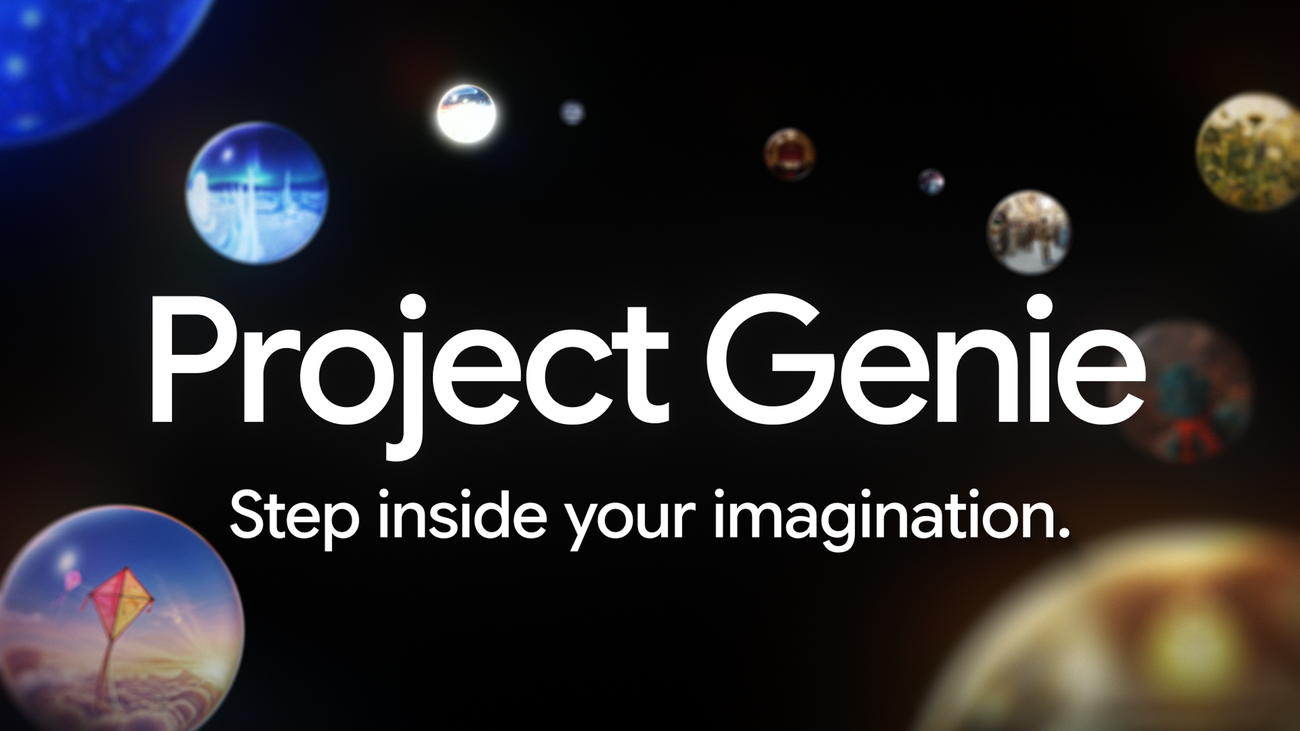
04Google brings Genie 4 to Project Genie: worlds you can edit mid-walk, with native audio
Image source: Google official blog
On November 18, Google moved its world model Genie 4 into Project Genie: eligible Google AI Ultra subscribers can try it in the browser from today, and AI Pro members can join a waitlist. Genie 4 is Google's most realistic and interactive world model yet; since October 27 it had only been open to trusted testers in a research preview, and this is its first step into a paid product.
The biggest change is mid-session editing: type a new prompt while walking through your world and the weather shifts, characters appear and the plot redirects, all in real time. Genie 4 also pairs visuals with real-time native audio for the first time, from ambient soundscapes to character dialogue. Genie 3 gets upgrades too: sessions extend from 60 seconds to 3 minutes, multiple worlds can be chained, and 360-degree panoramas can seed new worlds.
The new Project Genie is more than a model — it is a creation ecosystem. A Project Genie agent builds an interactive world from a natural-language conversation, including a custom soundtrack, and a community gallery lets worlds be published, explored and remixed; Google also worked with creators on showcase worlds such as a gothic-manor mystery and a journey through an ant colony.
Google is open about the limits: camera latency, intricate physical interactions, real-time audio precision and long-term scene permanence remain unsolved, and all generated video and audio carries a SynthID watermark. World models are still some way from reliably shipping games, but they are already close to playable prototypes.
💡 Lumo’s take
The contest for world models has moved: from generating a watchable video to generating a world you can walk into, change and share. For people building small products, the cost of making interactive content is falling from a game engine to a single sentence — figuring out what there is to do inside the world matters more than the graphics.
05Tencent Q3: WorkBuddy passes 10 million daily users as cloud revenue rises 35%
Image source: IT168
On November 18, Tencent reported third-quarter 2026 results: revenue of 207.3 billion yuan, up 8% year over year, with fintech and business services at 63.7 billion yuan, up 9%. AI is the main thread: WorkBuddy has passed 10 million daily active users, consuming over 100 trillion tokens a day — by token usage, the largest AI app in China.
Since its March launch, WorkBuddy has handled 9 billion user task requests across more than 100 major updates; the earnings call put its seven-day annualised revenue above $500 million, more than twice Tencent Meeting's scale after seven years. Xiaowei, the personal assistant inside WeChat, has reached 30 million daily users.
AI demand shows up directly in the cloud business: third-quarter cloud revenue grew 35% year over year, accelerating from 21% in Q2, driven by WorkBuddy and model-as-a-service revenue; quarterly R&D spending rose 42% to 32.4 billion yuan.
The other side is the cost: capital spending stays high and free cash flow turned negative. Tencent's logic is clear — turn compute investment into revenue through apps people actually open every day, then sell that same capability to enterprise customers through cloud and MaaS.
💡 Lumo’s take
China's first AI office product with over 10 million daily users now has earnings-grade numbers: the question of which AI apps people actually use finally has a checkable answer. For teams building office agents, WorkBuddy's path is worth studying — not selling a model first, but getting one concrete scenario, office work, opened by tens of millions of people every day.
06Baidu Q3: AI cloud revenue jumps 94% as online marketing falls below half of sales
Image source: Baidu Q3 earnings call
On November 16, Baidu reported third-quarter 2026 results, and one set of numbers marks a historic turn in its revenue mix: AI cloud infrastructure revenue of 8.2 billion yuan, up 94% year over year and accelerating sharply from 50% growth last quarter, while traditional online marketing revenue fell 22% to 11.9 billion yuan.
Advertising has fallen below half of sales for the first time: online marketing is now 48% of Baidu's core business revenue, down from 62% a year earlier, while AI-powered business reached 13.2 billion yuan, up 37% and 53% of core revenue for a third straight quarter. Total revenue was 30.8 billion yuan, down 1%.
Inside AI cloud, GPU cloud revenue rose 191% year over year and 43% sequentially, and token-call revenue from external customers on the Qianfan MaaS platform jumped 1,159%. The Baidu App's 604 million monthly users are the main ground for its AI search transformation, though the CFO warned advertising will stay under pressure and margins will keep being squeezed.
Baidu is turning from a search company that sells ads into an AI cloud company that sells compute: the extra 4 billion yuan from AI cloud in the quarter roughly offsets the 3.4 billion yuan lost in advertising. Whether the transition outruns the ad decline is the number to watch next quarter.
💡 Lumo’s take
Selling compute passing selling ads for the first time is a clear signal for anyone building AI apps: real demand for model-as-a-service in China is scaling fast, with token-call revenue up 11 times in a year — willingness to pay has moved from trying a model to running a business on one.
07DeepSeek changes API billing: in-model web search and fetching no longer billed separately
Image source: ITHome
On November 18, DeepSeek changed its API billing: from 12:00 Beijing time, server-side search and web fetching triggered during a model call are no longer billed per request — only model token usage counts. The change covers web tools, the web_search tool in the Anthropic API and the web_search tool in the Responses API.
The standalone Search and Fetch APIs launched a month ago still charge the old rate: 5 yuan per 1,000 successful requests. The same job now bills two ways — search triggered inside a model call is free, while calling Search or Fetch directly from your own code still costs per request. DeepSeek Harness searches set to the legacy DeepSeek provider and Claude Code's server-side web search fall on the free side.
The change touches billing only, not models: DeepSeek-V4.1 Flash itself was released on September 10, not November 18. On November 13 DeepSeek had already opened its app's full capabilities as APIs, handing developers web search, deep-thinking search, link reading, file input and voice interfaces.
For small teams building web-connected agents and RAG apps, this is a direct cost cut: search used to be billed per request, and now it folds into the token bill, so an agent can run extra search rounds without worrying about per-call charges.
💡 Lumo’s take
Billing is product strategy: by folding search into token pricing, DeepSeek steers developers to keep search inside the model call instead of routing around it through a separate API. Agent builders should redo their cost math — the billing structure for web access has changed, and caching and retrieval strategies should follow.
08S.Space tops Product Hunt: every team's agents finally share one room
Image source: Product Hunt
On November 18, S.Space — the new product from AutoGen creator Chi Wang — topped Product Hunt's daily chart. It does not build another agent; it builds a shared room for everyone's own agents. Bring Dot, Duet, Grok Bot, Muse, Sutando and others into one room, where agents can ask each other questions and write results into shared Commons documents, tables and boards, with any outward action needing a human's approval.
The beta numbers are hard evidence that multi-agent collaboration is real demand: from October 1 to 28, 372 agents and 134 people posted about 125,000 messages, and 85% of agent-to-agent messages went to someone else's agent. Jobs can be assigned from a phone, Slack, Discord, Telegram or WhatsApp.
S.Space's idea is to build the room and the protocol between agents, not another agent: AutoGen once gave agents inside a single program a group chat, and S.Space extends that chat across people. Its own Mac personal agent, Sutando, runs on Claude Code or Codex and ties everything together.
Mind the timeline: the product launched on X on November 2 (about 842,000 views on the launch video), reached Product Hunt on November 15 and topped the daily chart on November 18 — today's news is that it caught on, not that it launched.
💡 Lumo’s take
Multi-agent collaboration is converging on one shape: Teamily, Pachat and S.Space are all doing the same thing — letting agents owned by different people check each other's work in a shared context, with a human making the call. For teams building agent products, the deciding layer is not the model but the middleware of shared memory and approvals across agents.
09Creatify Max tops Product Hunt: an AI media buyer that runs ads from insight to launch
Image source: Creatify official press release
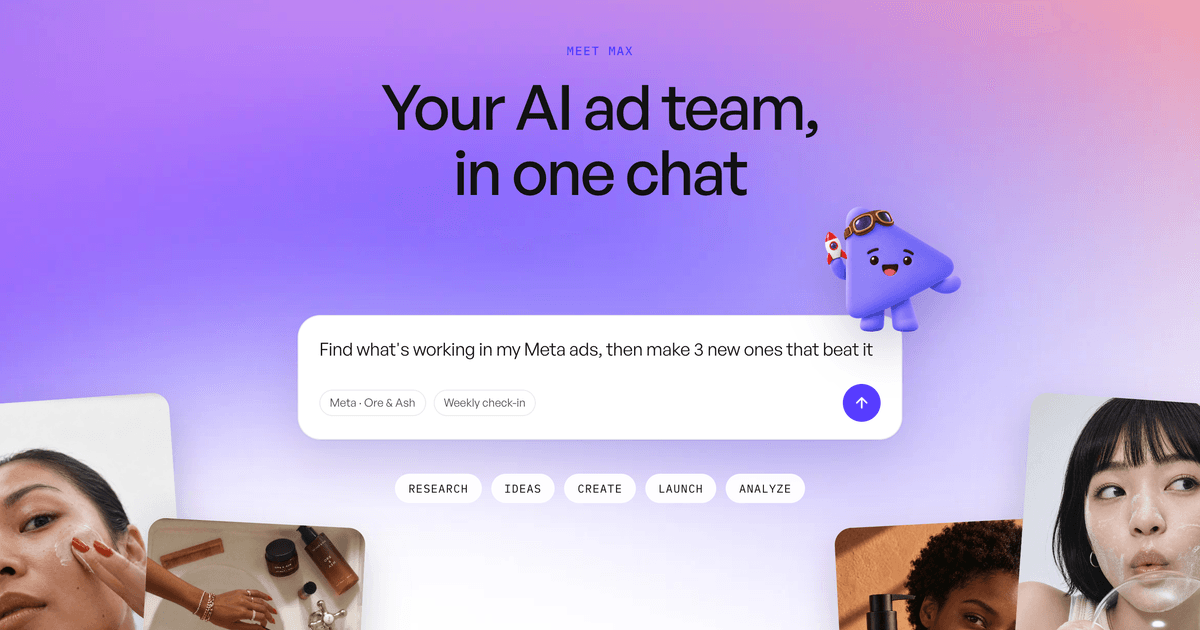
On November 17, AI advertising platform Creatify launched Max, an AI advertising teammate, topping Product Hunt's daily chart the same day with 426 votes and 143 comments; the official release went out on November 18. Give it a product link or a brief and it researches competitors, generates video and image ad creative, builds campaigns on Meta, Google, TikTok and more, adjusts budgets and reads results.
The key design is the approval card: every launch, budget change or pause first sends a card that a human must approve before anything happens. Creatify's own media-buying team already runs Meta, Google and TikTok accounts through Max; coverage also includes Snapchat, Reddit, LinkedIn and OpenAI Ads, usable inside the Creatify app or Slack.
The AI media buyer is becoming a category: rival Maxma took second on Product Hunt on November 10. Max's play is to pack the whole buying loop — insight, creative, launch, review — into one agent instead of automating a single step.
For the ad industry this is not a small upgrade in writing ad copy; the media buyer role itself is being agentised — the human moves from doing the work to approving it, with judgement concentrated in the yes-or-no.
💡 Lumo’s take
The interaction most worth copying when giving agents authority is the approval card: let the agent run the whole workflow, but gate every money move behind a human's yes. Anyone building a product where an agent spends on your behalf can start by copying that card — trust is not built on promises, it is built on one revocable approval at a time.
10Devin Bots: Devin graduates from taking tasks to holding down a job
Image source: Dealroom
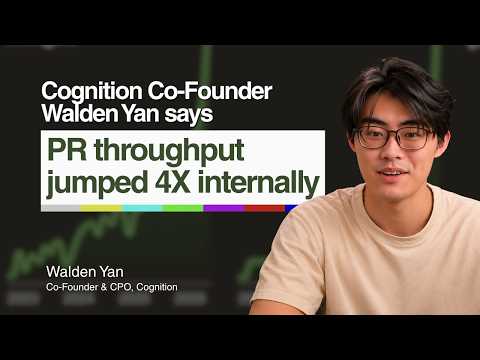
Devin Bots, launched by Cognition in November, turn Devin from an agent that takes a single task and delivers it into one that holds down a job: a bot can own an entire release process or act as chief of staff, working proactively over time instead of waiting for assignments. Co-founder Walden Yan laid out the approach in an interview published on November 18.
The numbers are striking: one beta user runs a games company with 20 dedicated bots, and weekly merged pull requests grew from about 50 to about 1,900; Cognition's Android app was built by a single bot given one instruction — maintain full parity with iOS — merging thousands of PRs, running tests and doing pixel-level comparisons on its own; internally, merged PRs per message sent to bots rose about 4x since bots were adopted.
The groundwork came from acquiring Poke, the iMessage reminder agent: its context-building — linking GitHub, Slack and a user's history to anticipate needs — lets bots proactively spot related work and file cross-cutting fixes instead of only following orders.
Yan's view is that the industry is past vibe coding: next, people and agents build professional, custom tools together, with agents working many threads in parallel and compounding what they learn; humans handle only the decisions that genuinely need a person, while low-risk changes merge automatically.
💡 Lumo’s take
From task agents to job agents is the key shift in how agents are evolving this November: the unit of evaluation is moving from how fast one run finishes to how long a job can be held down. The way to organise agents is worth copying too — assign them by role and responsibility, not by one-off tasks.
11Waldo launches: an agent that does spatial data engineering in plain language
Image source: SiliconANGLE
On November 18, Wherobots launched Waldo, a spatial-data agent, in public preview, reaching fourth on Product Hunt's daily chart the same day. Ask in plain language and Waldo finds the data itself (public sets such as Overture Maps and Sentinel-2 plus team-private data), writes the queries, runs the analysis, produces maps, and saves the result as a production-grade spatial data pipeline on a schedule, outputting to Databricks, Snowflake, AWS Glue and other Iceberg-compatible platforms.
The company says it compresses weeks of spatial data engineering into hours; customer Action Engine says new spatial analysis ships 2-3 times faster than by hand. It comes from the original Apache Sedona team, running on WherobotsDB with 300-plus spatial functions; during preview, Waldo tokens are included in the Professional plan at no extra charge.
Waldo's shape is the point: the agent is not a chat window but a complete data pipeline — find data, compute, visualise, run on schedule. For data product people, that is the most concrete definition of going agentic: the input is a question, the output is a pipeline that runs itself every day.
Agentifying the spatial-data vertical points to a bigger pattern: every vertical with its own data and its own tools could grow its own Waldo.
💡 Lumo’s take
Agentic vertical data is accelerating: first the proprietary data (maps, satellite imagery), then the proprietary tools (300-plus spatial functions), and only then does the agent work. Anyone looking to copy this play should first ask what data and function library they hold that nobody else does — without them, the agent is just a chat shell.
12Netlify unveils a new AI app-building experience as ARR nears $130M
Image source: Netlify official press release
On November 18, Netlify unveiled a new AI app-building experience: people, teams and agents build apps together on one platform, with Agent Runners driving AI-assisted collaboration; a new Netlify Server supports real-time, long-lived and agent or chat apps; and over 150 connectors (Notion, Stripe, Airtable, Linear and more) let agents draw on business data.
The commercial numbers are a benchmark for the AI app-building category: Netlify expects to reach $130 million in annual recurring revenue by the end of 2026, up nearly 130% year over year; daily signups now peak at 100,000, with over 1 million new projects created weekly; users who call themselves new to AI building grew over 400% in six months.
Netlify's own transformation is worth noting too: the company replaced much of its off-the-shelf SaaS with apps built on its own platform. Its support team's custom help desk, Netlidesk, went from first working version in six hours to production in six weeks, cutting the ticket backlog from about 300 to 70 in its first month, with 45 automations handling roughly 80% of routine support work.
The platform money is flowing toward letting people and agents build apps together: prototype and production infrastructure in one place, business users drafting with agents, developers taking over with Git and IDEs, all changes flowing through the same workflow.
💡 Lumo’s take
One more set of hard numbers for the case that AI-built apps are becoming a real business: ARR, growth rate and daily signups all in one release. For people building small apps, the lesson is direct — don't just watch the prototype being generated, watch who takes it over afterwards, how it ships and how it is run. That is where platforms get paid.
13A cleaning robot fights a dumpster lid for 83 seconds — the failure wasn't the AI, it was the human hand
Image source: AI Frontier Post
A video posted to r/singularity last Saturday, November 14, has gone viral: a humanoid cleaning robot in a black uniform spends 1 minute 23 seconds wrestling with the lid of a green dumpster outdoors, its gripper never quite opening it. The post drew 546 upvotes and 211 comments, with coverage following on November 16-18.
The top comment (202 upvotes) supplies the twist: the robot is teleoperated — a human is driving it in real time — and TAU's terms state plainly that the robots are not autonomous but human-controlled. TAU is a San Francisco robot cleaning service that began an invite-only pilot in late July, priced at $50 per robot per hour, falling to $30 with a weekly subscription.
The most-upvoted joke pairs the clip with a picture of Bender from Futurama captioned Origin story. Beyond the joke, the video lands on embodied AI's real bottleneck: models can plan, but end effectors — hands, force control, contact with the real world — are still far behind.
The business model is worth noting too: TAU does not sell robots, it sells robot cleaning by the hour. The first real business in embodied AI may not be selling hardware, but selling robot services with a human standing by.
💡 Lumo’s take
What looks like an AI failure is really a human plus the wrong tool failing. Narratives about embodied AI need to separate two questions: how much of the autonomy in a demo video is real, and how long the hard problem of end-effector execution will take — both matter far more than what the robot looks like.
One-sentence branded mini-worlds for offline shops: a playable AI-generated interactive world that customers open by scanning a code, play for a minute or two, and finish with a coupon to redeem in store. What it does: use a world model like Genie 4 to build a short playable world for a bubble-tea shop, a restaurant or a kids' play centre — a treasure hunt, a queue-time game, an adventure — ending in a discount coupon scanned at the till. Who pays: offline merchants, whose customer-acquisition costs keep rising and who need fresh ways to pull people in; charge 5-10 yuan per redeemed visit, or 499 yuan a month per shop. Why now: Genie 4 has just opened mid-session world editing plus native audio to Ultra users, so world models are moving from demos to deliverable products; building a world used to take a game team, and now it takes a sentence. Smallest MVP: build three demos for three kinds of shop (a bubble-tea treasure hunt, a hotpot queue game, a play-centre adventure), each a one-to-two-minute playable flow ending in a coupon. First validation: take the demos to three nearby shops and ask for a deposit from one before building in bulk; find early customers through local merchant groups and shop-visit creators — the demo world itself is the marketing.