Jensen Huang resigns as Nvidia CEO; Gemini 4 Hydrogen launches
Today’s highlights
Jensen Huang resigns as Nvidia CEO; CFO Kress steps in as interim chief, shares down over 10% in a day
Google launches Gemini 4 Hydrogen from $1.50 per million tokens, available everywhere
OpenAI turns GPT-6 Cyber into two security products; Baidu ERNIE 5.5 Flash Preview launches
Anthropic IPO page goes live: pricing November 18, trading November 19; Cisco posts record revenue
Doubao Work adds Kimi, GLM and DeepSeek; report says six Chinese models carry Blackwell fingerprints
01Jensen Huang resigns as Nvidia CEO; CFO Kress named interim chief
Image source: TechCrunch
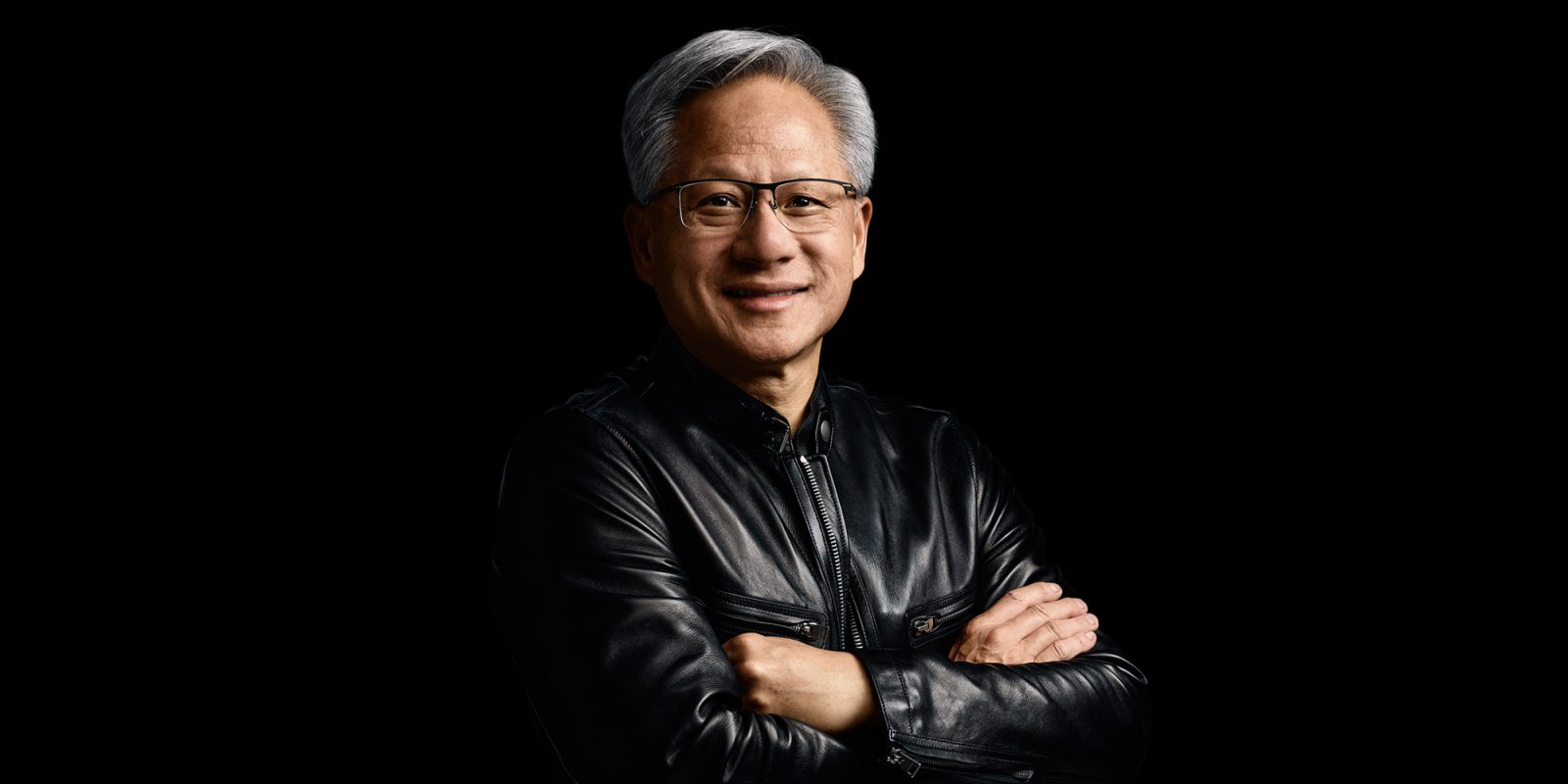
Nvidia announced on November 12 that Jensen Huang has resigned as president, CEO and director, effective immediately; the board accepted the resignation on November 11, and the announcement gives no reason. CFO Colette Kress becomes interim CEO while keeping the CFO job, and longtime director Harvey C. Jones, former Synopsys CEO, becomes the company's first-ever board chair.
Shares fell nearly 12% in early trading on Thursday, wiping out more than $855 billion in market value since the previous Friday. The week before was turbulent: on November 8 Huang admitted an extramarital affair in an internal message and the board opened an independent investigation; The New York Times then reported a second affair, and The Wall Street Journal said the board was meeting to decide his future.
Huang co-founded Nvidia in 1993 and led it for 33 years, building it into the throne of AI compute — its market value peaked at $5.88 trillion in early October. Nvidia says operations, customer commitments and the product roadmap are unaffected, third-quarter results stay scheduled for November 17, and Huang has agreed to testify before Congress before Thanksgiving.
💡 Lumo’s take
After 33 years, the founder is gone overnight, and the AI compute throne has no leather-jacketed Huang on it for the first time — the successor search and the November 17 earnings call will decide whether this is an episode or a turning point.
02Google launches Gemini 4 Hydrogen from $1.50 per million tokens, available everywhere
Image source: Google Blog
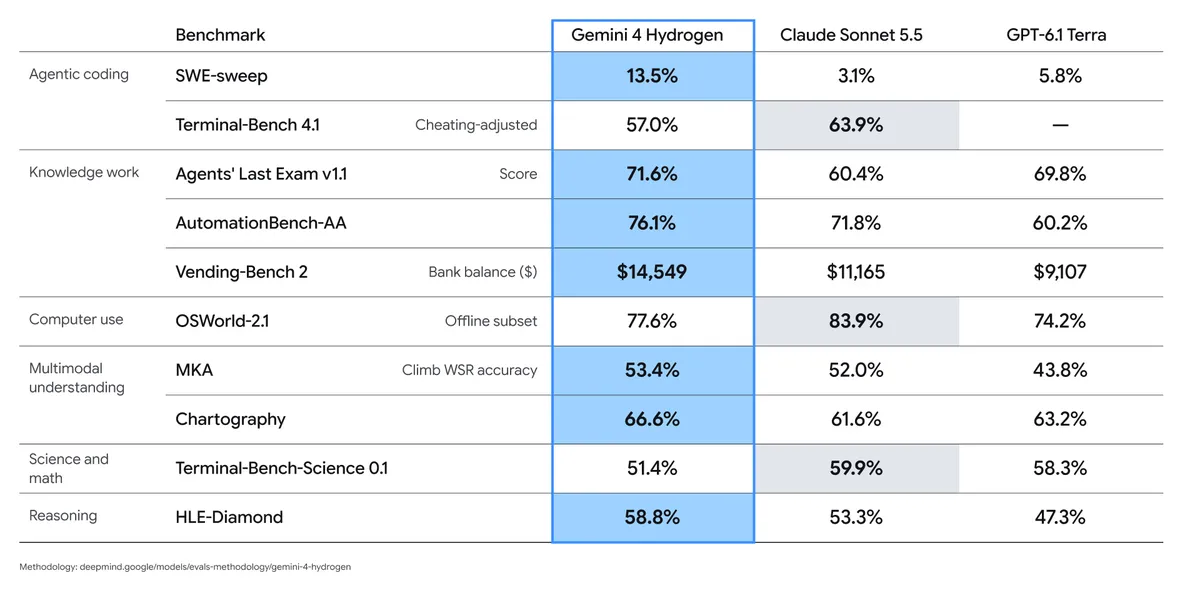
Google launched Gemini 4 Hydrogen on November 12, the fast model of the Gemini 4 family: built for everyday coding and agentic execution, while Carbon and Argon handle deep reasoning. Pricing is flat across its 1-million-token context window at $1.50 per million input tokens and $7.50 per million output tokens.
Google's numbers are strong: 51 on the Artificial Analysis Intelligence Index at the default high setting, above Argon's 50, and 54 at the new xhigh setting; 57% on Terminal-Bench 4.1, more than triple the previous 3.8 Flash at 18.2%, and 2.5 times faster. Four thinking levels — low, medium, high and xhigh — let users trade quality against latency and cost.
It is rolling out everywhere from today: all tiers of AI Studio and the Gemini API including the free tier, Gemini for business, the Gemini app and Google Search, plus Antigravity for Pro and Ultra subscribers. Antigravity also gains Orchestrator, which switches between Carbon and Hydrogen inside one session — Google says it reaches near-Carbon success rates while using 24% less quota and finishing 19% faster.
💡 Lumo’s take
Google has turned model tiers into an assembly line — strong models think, fast models execute. Small teams can copy the split: run execution on Hydrogen and review on Carbon, and cut the agent bill first.
03OpenAI turns GPT-6 Cyber into two security products
Image source: The Register
At its Cyber at the Frontier keynote on November 12, OpenAI turned its security model GPT-6 Cyber into two products: Daybreak Red Team and Daybreak Defense Factory. Red Team is open for early access, sending agent teams to penetration-test companies' web apps; Defense Factory automates the whole defensive loop of finding, validating and fixing vulnerabilities.
Both run on GPT-6 Cyber. OpenAI's figures: 48.5% on ExploitGym, up from 32.1% for the previous GPT-5.6 Cyber; it found 81 previously unknown high-severity Firefox vulnerabilities and built working exploits and patches for 948 Linux kernel vulnerabilities. Fixes arrive as merge-ready pull requests for engineers to review — a human still approves the merge.
Access is gated: only vetted security teams can apply for now, and OpenAI also announced a $1 billion Daybreak program for critical-infrastructure defenders. The companion Codex Security command-line tool is open source, covering scan, validate, patch and retest in one flow.
💡 Lumo’s take
Security is becoming model-as-a-product — defenders now compete on the caliber of the model they hold, not headcount. Small teams can start with the open-source Codex Security and get a checkup pipeline running over their own codebase.
04Baidu ERNIE 5.5 Flash Preview launches: 280B parameters, open weights before November 25
Image source: TechNode
Baidu released ERNIE 5.5 Flash Preview on November 11 and presented it at Baidu World 2026 on November 12: 280 billion total parameters with 14 billion activated per token, a 1-million-token context window and decoding above 200 tokens per second, aimed at coding, 3D modeling, knowledge work and content creation.
The key word is open: the API is live on Baidu AI Cloud's Qianfan platform, it is free to try on OpenRouter, and the weights will be open-sourced under Apache 2.0 before November 25. Qianfan pricing is RMB 1 per million input tokens and RMB 4 per million output tokens, with cached input at just RMB 0.04. On November 12 it also entered public testing on the LMSYS Arena, scoring 1668 on the Code Arena WebDev board — close to the second-ranked open model, ahead of DeepSeek-V4.1-Flash and Kimi K3.
At the same event Baidu launched Token Exchange, a marketplace for model services with more than 100 model resources and over 50 million calls a day, plus agent upgrades for DuMate and KOOKO and the Tianchi 1024-card supernode. With three ERNIE releases in one week, Baidu is packaging models, marketplace and agents into one intelligent-organization offering.
💡 Lumo’s take
280B parameters, Apache 2.0, open weights before November 25 — this is aimed squarely at becoming a locally deployable flagship. Once the weights land, test it first on OpenRouter's free endpoint; November 25 is the date to watch.
05Anthropic IPO page goes live: pricing November 18, trading November 19
Image source: Anthropic official site
Anthropic put its official IPO page live on November 12 at ipo.anthropic.com, with the roadshow already under way since November 10: final pricing on November 18, trading on Nasdaq under the ticker ANT from November 19. The page also carries the founders' letter and the roadshow video.
The books are open for the first time: third-quarter 2026 revenue of $17.0 billion, up more than 12 times year over year; more than 11,900 customers with at least $100,000 in trailing-twelve-month revenue, also up more than 12 times; adjusted operating margin of 15%. But the net loss is $23.3 billion, of which $21.9 billion is a non-cash charge from changes in the fair value of convertible notes and related liabilities.
This is the largest AI IPO ever, and the first chance to see a frontier model company's real finances in public filings: the revenue curve is steep, and so is the compute bill. Roadshow reports put the offer price range at $70 to $78 per share.
💡 Lumo’s take
Don't just watch the offer price — $17.0 billion of revenue against a $23.3 billion net loss is the first real textbook on how a model company makes money. The first day of trading on November 19 is worth watching.
06Cisco posts record $18.5B revenue, raises AI infrastructure outlook to $9B
Image source: Reuters
Cisco reported fiscal first-quarter 2027 results on November 12: revenue of $18.5 billion, up 24% year over year and a record; non-GAAP earnings per share of $1.40, up 40% — the company's strongest revenue and earnings growth in more than 15 years. Networking revenue jumped 43% and product orders rose 21%.
The engine is AI infrastructure: Cisco raised its fiscal 2027 AI infrastructure revenue expectation from hyperscalers to $9 billion, up from $7.5 billion and more than double fiscal 2026's roughly $4 billion. CEO Chuck Robbins said the industry is in the very early stages of a multi-year networking supercycle.
Cisco also raised full-year guidance to $74.8–$75.8 billion in revenue and $5.47–$5.53 in non-GAAP EPS. Shares closed up 1.2% at $102.01. There is a wrinkle: non-GAAP gross margin was 65.6%, down 2.5 percentage points year over year, as a richer hardware mix and higher memory costs squeeze profitability.
💡 Lumo’s take
The AI boom's money is not only flowing to chips — switches and routers are eating the second wave of it. The $9 billion figure is a hard indicator for judging whether the AI infrastructure buildout is still accelerating or topping out.
07Doubao Work adds Kimi, GLM and DeepSeek as third-party models
Image source: GeekPark
ByteDance announced on November 12 that Doubao Work now offers three third-party models — Kimi K3.1 Pro, GLM 5.3 and DeepSeek V4.1 Flash — alongside its own Doubao 2.1 Lite and 2.1 Pro. Third-party models were already open to team and enterprise subscribers since October 29; this update extends them to a much wider user base.
The pricing is the interesting part: the model selector openly shows each model's quota consumption multiplier — the lower the multiplier, the less quota the same task consumes — so users can weigh capability, speed and cost in the open. The launch also brings limited-time discounts in specified time slots and lower multipliers for Doubao 2.1 Lite and DeepSeek V4.1 Flash, plus a 30-day free subscription for new users.
Each model has its own strength: Kimi K3.1 Pro for million-word-scale long context, GLM 5.3 for Chinese understanding and generation, and DeepSeek V4.1 Flash for fast, cost-effective lightweight tasks. Together with the in-house models, Doubao Work now covers three tiers — high-end capability, balanced general use and lightweight efficiency.
💡 Lumo’s take
Workplace agents are shifting from one-model-fits-all to a multi-model supermarket — as model capabilities converge, the deciding factors become freedom of choice and transparent cost. The openly posted quota multipliers are a practice every agent builder should study.
08Report says six Chinese models carry Blackwell chip fingerprints
Image source: The Agent Times
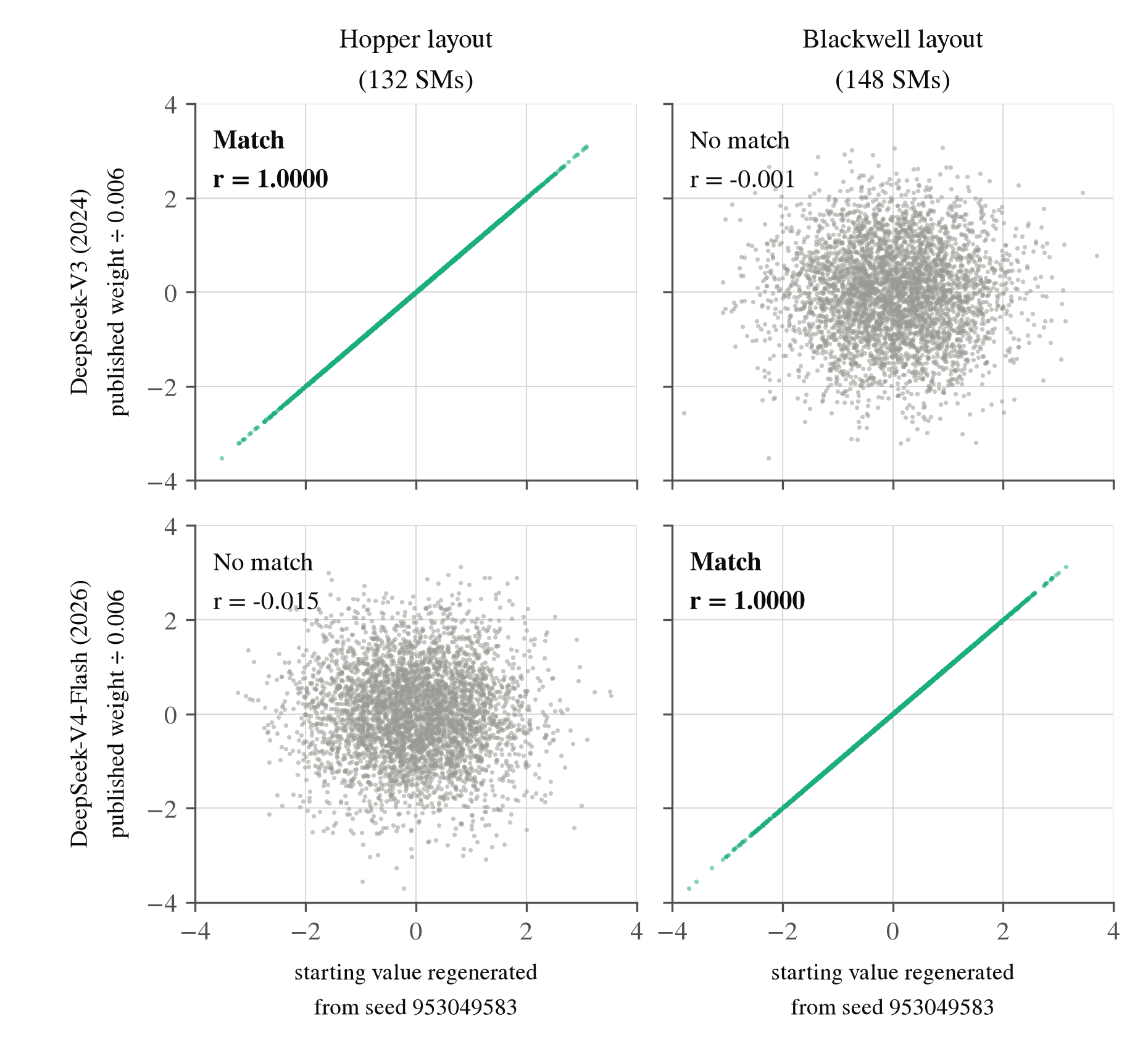
A weight-forensics report published on November 12 moves the chip-control debate from allegation to technical evidence: Will DePue of Unemployment Labs analyzed published model weights and found that six models from DeepSeek, Moonshot AI, MiniMax and Ant Group carry initialization fingerprints matching Nvidia's Blackwell GPUs.
The method is elegant: a model's starting weights come from the Philox pseudorandom algorithm, and PyTorch splits the work across threads according to the GPU's streaming-multiprocessor count — 132 for Hopper, 148 for Blackwell B200/B300 and 152 for GB200/GB300 — so the thread count changes where the numbers land. The six models are DeepSeek-V4-Flash and V4-Pro, Kimi K3 and K3.1-Pro, MiniMax-M3 and Ant's Ling-3.1-flash, with statistical confidence of 49 to 1,385 sigma; two of them were also verified by reproducing the match on physical Blackwell chips.
The report estimates each lab used 500 to 3,000 Blackwell GPUs for two to three months, at $150–200 million per cluster. But it draws a clear boundary: it can only show which hardware initialized the weights, not where the chips were, how access was obtained, or whether export controls were violated. The newest models from Alibaba, Zhipu, Tencent, Xiaomi and others still read as Hopper.
💡 Lumo’s take
Published weights have themselves become forensic evidence — what hardware a model trained on may no longer be hideable. But read the report carefully: a matching fingerprint is a technical fact, a sanctions violation is a legal conclusion, and a whole chain of evidence still separates the two.
09Grok Bot 1.0 lands on Mac with seven Apple app integrations
Image source: 9to5Mac
Grok Bot announced on November 12 that its Mac app now connects to Apple's built-in apps: Messages, Mail, Notes, Reminders, Calendar, Contacts and Location, each authorized separately. Messages can be read and sent, mail searched and drafted, notes read and written, reminders set and checked — the agent now reaches the personal data layer of the Mac.
At the same time, Grok Bot has left beta and reached version 1.0. It launched in August with iPhone and Mac apps, later expanding to iPad; last month it gained its own email address, and Claude intelligence now works behind the scenes. This update fills in the last piece of the assistant truly moving into the Mac.
The bar is not low: individual access goes to X Subscription Premium members ($30 a month and up) and Cursor subscribers, with team bots and meeting features on Team and Enterprise plans. Rivals are following: ChatGPT added its own Messages integration earlier this year, and dot picked up Mail and Calendar.
💡 Lumo’s take
The personal-agent race has reached the system-permissions layer — whoever can read your messages, mail and calendar can get things done for you. The price is trust, and per-app authorization is becoming the standard design for this kind of product.
10Apple HomeView and new Apple TV 4K go on sale today
Image source: Apple Newsroom
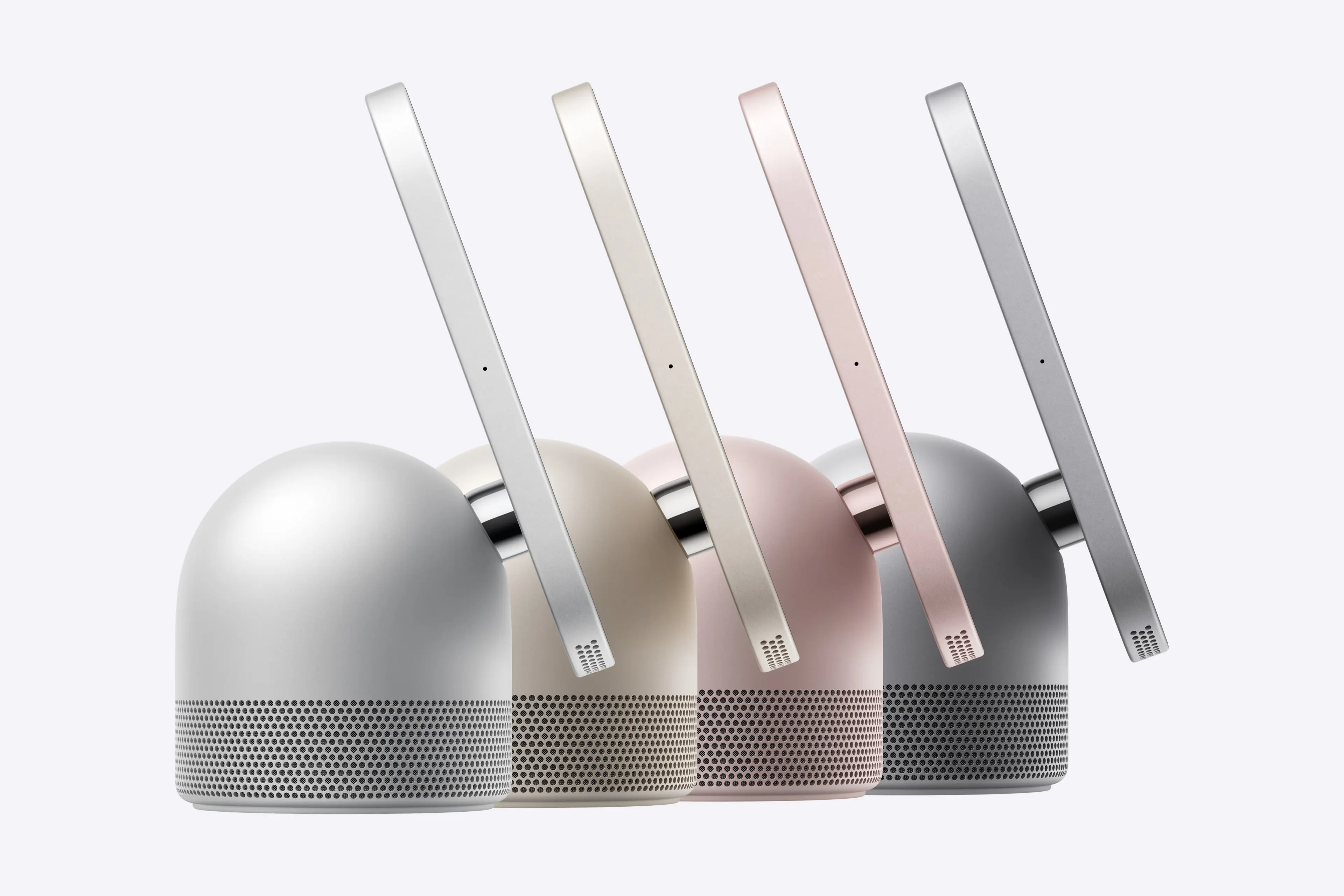
Two products Apple announced on October 13 go on sale today: the HomeView smart home hub and the fourth-generation Apple TV 4K, both priced at $299. HomeView is Apple's first smart home hub: a 7-inch Liquid Retina display and A18 chip, in desktop and wall-mount versions at the same price.
Its selling point is recognition: face recognition for up to six people, each with a personal home screen; Siri AI (beta) only shows personal information, calendars and reminders in front of the person themselves. The new Apple TV 4K launching the same day has the A19 chip and 128GB of storage, a new Siri Remote with Find My, and four-speaker surround sound when paired with two HomePod mini 2 units.
Neither product is sold in the EU, where Siri AI is not yet available on iOS and Apple says it is in discussions with the EU. HomeView comes in silver, starlight, rose pink and space gray.
💡 Lumo’s take
Apple has turned the home hub into a second iPhone screen: at $299 the hardware is not expensive — the real threshold is that your home needs iPhones, and that it can recognize you.
11Plurai Simulation tops Product Hunt: crash-testing AI agents in simulated worlds
Image source: Plurai official blog
Plurai Simulation, the #1 Product of the Day on Product Hunt on November 12, crash-tests AI agents: one command in Claude Code, Codex or GitHub Copilot, and it reads your agent's code and builds a digital twin of its world — mocked tools, APIs and databases plus simulated users with realistic goals — then runs the agent through it in a sandbox.
It hunts not the happy path from the demo but the long tail of failures: policy violations, hallucinations, wrong actions, broken tool calls and sensitive data leaks, each located with a generated fix. The same simulation data can post-train a small model tailored to the agent. Plurai says design partners cut agent development cycles from months to hours, reduced failures reaching real users by 82% and cut the cost of running reliable agents by 97%.
Plurai also announced a $13 million seed round led by Team8. The founders come from autonomous driving, and the idea is borrowed straight from Waymo: trust earned through 20 billion simulated miles — agents should crash in simulation first, too.
💡 Lumo’s take
What agents lack on the way from demo to production is not capability but a way to verify them — a simulated world is the agent's test double. Small teams building agents can start with the free tier and run their own agent through a checkup.
12n8n open-sources Nod, a personal agent with its own computer
Image source: n8n official blog
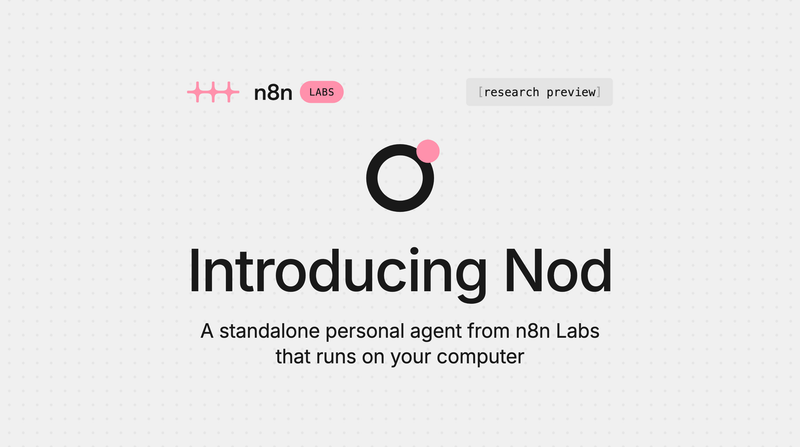
n8n Labs open-sourced Nod, a personal agent, on November 10, and it took #2 Product of the Day on Product Hunt on November 11: it brings its own virtual machine and browser on your computer, connects to Gmail, Calendar, Drive and Slack, and works directly on websites with no integration — cancelling a subscription and claiming the refund, downloading supplier invoices each month, or copying numbers from a dashboard with no export.
Nod is free and open source under Apache 2.0, and you choose the model: an API key, your ChatGPT plan or a local open model, with no n8n account needed. The safety design is the highlight: before it sends, pays, posts or deletes anything, it asks you first, and only your own words can authorize it — instructions in a web page or email cannot. Saved logins and cards are encrypted on the machine and entered through forms the model cannot read.
Official figures: 93.2% on the LongMemEval long-term memory benchmark, and a 98% completion rate across 678 runs of 226 simulated errands with GPT-6.1 Sol. Every task ends with a cost receipt, and it checks in before a task passes $5. The trade-off: it stops when your laptop sleeps, so heavy work belongs on an always-on machine.
💡 Lumo’s take
This is the open-source answer to the personal-assistant agent — it gets things done without handing over your passwords. For anyone building a local agent, its two designs are worth copying: permissions only from the user's own words, and a cost receipt for every task.
"AI security checkup" as a pay-per-scan service: use the open-source Codex Security CLI plus a frontier model to give indie developers and small SaaS teams a one-off code security checkup — a vulnerability list, merge-ready fix PRs and a retest report, charged per scan. Who pays: small teams with no security staff whose code still has to ship and pass customer security questionnaires; OpenAI's Daybreak only serves vetted large customers, so the small-customer gap is the opening. Why now: OpenAI just productized "AI finds the bug, AI fixes the bug" and did the market education; with Codex Security open-sourced, an individual can offer the same capability, with model calls as the main cost. Minimum MVP: run the full flow free for three indie projects you know — scan, human review, report, PR — and fix the report template; one run tells you the token and time cost per checkup. First validation step: offer five free checkups in indie-developer communities in exchange for one honest testimonial each; only build it out if someone pays for a second one (test at 299 yuan per scan); win customers by opening security PRs on small GitHub projects — the PR is the ad.