Qwen4-Max preview goes live; Anthropic's roadshow valuation could hit $1.5 trillion
Today’s highlights
Qwen4-Max preview is live: million-token context, retiring Nov 25
Anthropic's IPO roadshow valuation could reach $1.5T; OpenAI's Q3 revenue tops $10B for the first time
Samsung × Google AI glasses open for preorder today; Huawei Xingmang and Apple HomeView follow
Yao Qizhi × Yang Zhilin set TCSExam; Kimi breaks a graph theory record
Pachat pulls rival agents into one group chat to cross-check each other
01Alibaba's Qwen4-Max enters preview: million-token context, thinking on by default
Image source: Qwen Studio
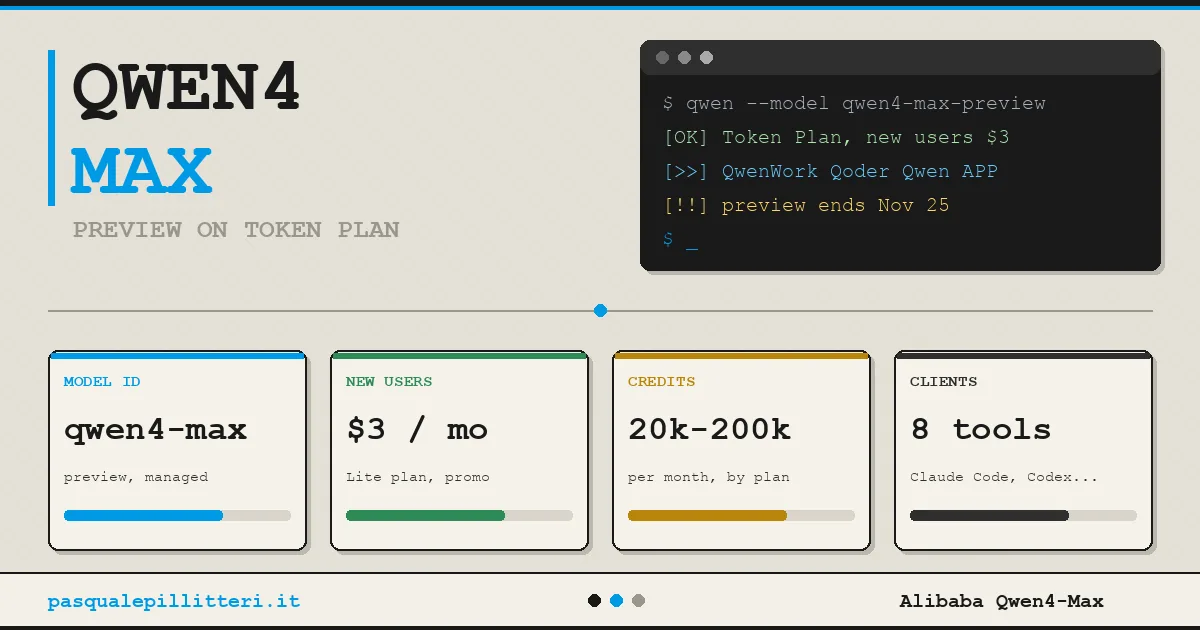
At 10 a.m. Beijing time on November 11, Alibaba's official Qwen account announced that Qwen4-Max-Preview is officially open for preview. It is the flagship tier of the Qwen4 series: a 1-million-token context window, up to 393,216 output tokens, and text, image, and video can all be fed in directly.
Thinking mode is on by default, with low, medium, and xhigh levels, defaulting to xhigh. The model is rolling out simultaneously to the Qwen App, Qoder, QwenWork, and QwenStudio, and developers can use it through QwenCloud's Token Plan subscription.
The preview runs until 24:00 on November 25 (UTC+8), after which the model is retired; during the preview, credit consumption is as low as 20% of the standard rate, and as low as 8% between 22:00 and 08:00. The personal Lite plan starts at $6/month, from $3 for the first purchase, with offers through November 30.
What it doesn't provide is equally notable: no benchmark scores, no parameter count, no model card, and no public per-token pricing. How strong it really is will have to wait for hands-on tests over these two weeks.
💡 Lumo’s take
The preview window is only two weeks — a good chance to run real tasks through its long context and multimodal input rather than trusting the official pitch. Also worth watching: Qwen pulling its flagship model into subscriptions is another signal that top-tier models are becoming a monthly service.
02Anthropic kicks off IPO roadshow: priced at $70–78, banks may lift valuation to $1.5 trillion
Image source: FT (via MLQ)
On November 10, Anthropic filed an S-1/A with the U.S. SEC and kicked off its IPO roadshow. It is offering 825 million Class A shares at a $70–78 price range, raising up to about $64.35 billion; underwriters hold an additional 123.75 million-share overallotment option.
On a fully diluted basis, the valuation sits between $1.26 and $1.41 trillion. The Financial Times, citing five people familiar with the matter, reports that first-day demand was strong and banks are considering raising the price range, which could push the valuation above $1.5 trillion and total proceeds past $100 billion — though this part has not been confirmed by the prospectus.
The locked-in numbers in the prospectus are striking enough: seven strategic investors have committed a combined $26 billion in private placements, NVIDIA plans to add about $10 billion after the IPO, and the company's committed compute and infrastructure spending totals roughly $900 billion. CNBC says pricing is set for November 18, with a Nasdaq listing on November 19 under the ticker ANT, and a retail allocation target of about 20%.
The seven co-founders are each selling 3,378,378 shares, about $1.75 billion combined; up to 316 million shares may be sold on day one.
💡 Lumo’s take
This is the largest IPO in AI history, and the first time a top model company's real books can be read in a public prospectus. The valuation will move, but the $900 billion compute commitment and the 20% retail allocation are worth keeping an eye on.
03OpenAI's Q3 revenue tops $10 billion for the first time, losses widen to $10.9 billion
Image source: Reuters
According to The Wall Street Journal via Reuters, OpenAI's revenue for Q3 2026 was about $10 billion — past the ten-billion mark for the first time, up roughly 50% quarter over quarter, an annualized run rate of about $50 billion.
But the burn is accelerating too: the quarterly operating loss was $10.9 billion, up from $10.1 billion in Q2; the adjusted operating margin was -109%, versus -150% in Q2 — the loss ratio is narrowing while the absolute number keeps growing.
Structurally, there is a turning point: enterprise revenue doubled quarter over quarter and is now roughly on par with the consumer business, no longer carried by subscriptions alone. Weekly active users stand at 1.2 billion, with over 100 million paid subscribers.
💡 Lumo’s take
The revenue curve and the loss curve are steep at the same time — that is the real financial picture of today's AI giants: growth is not the problem; the problem is how large a compute bill that growth takes. Read alongside Anthropic's $900 billion compute commitment, the ledger of the compute race is coming into the open.
04OpenAI acquires travel agent Odessia: 27 days from public launch, 8-person team joins wholesale
Image source: TechCrunch
TechCrunch reported on November 10 that OpenAI has acquired AI travel concierge Odessia; terms were not disclosed, the standalone service has shut down, and founder Francis Davidson has joined OpenAI. Davidson is a co-founder of short-term rental company Sonder.
Odessia's form factor was light: an AI travel concierge reached by text message. It debuted in June 2026, opened to the public on October 14, and had a team of just eight people, with a $6 million pre-seed led by Sequoia. By the official account, its planned travel volume had already exceeded $60 million annualized — that is planned volume, not revenue.
An OpenAI spokesperson confirmed the hire to TechCrunch but announced no travel product or timeline. Combined with ChatGPT's entry point of 1.2 billion weekly users, a native 'plan my trip' capability has plenty of room to imagine.
💡 Lumo’s take
A new exit path has appeared for vertical agents: don't stay an independent product — get built into a major platform. Going from public launch to acquisition in 27 days is a signal in itself: small teams building agents should first figure out who would most want to buy them.
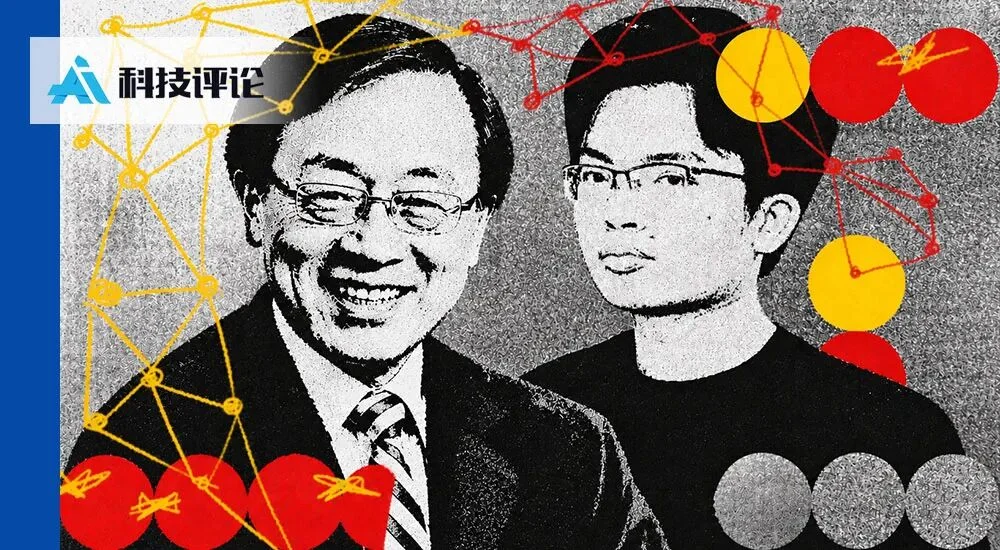
05Yao Qizhi × Yang Zhilin set TCSExam: Kimi adds one edge to break a graph theory record, GPT-6 Astra proves 14 theorems
Image source: arXiv / AI Tech Review
On November 11, Turing Award laureate Andrew Yao's team at Tsinghua and Yang Zhilin's team at Moonshot AI jointly released TCSExam (arXiv 2611.07962): 100 PhD-level theoretical computer science research tasks across four tracks — theorem proving, solver engineering, mathematical constructions, and open conjectures — verified with Lean 4, program checkers, and a checkpoint mechanism, so answers can be machine-rechecked.
The most eye-catching moment came in a graph theory construction task: Kimi K3 produced 630 edges in a 124-vertex triangle-free, quadrilateral-free graph construction, beating the 629-edge reference record, verified by program.
On the theorem-proving side, GPT-6 Astra completed 14 of 20 research-level theorems, extending the known proof range of the Alon–Jaeger–Tarsi conjecture over the five-element finite field from 8 to 9 dimensions, with the contradiction certificate for a 143-equation construction independently rechecked across 71 Lean modules. Kimi K3 completed at least 3, 4, and 7 theorems under the Bare, Ladder, and Guided difficulty settings respectively; DeepSeek V4.1 Flash 0910 managed 0, 2, and 6. The remaining 28 open conjectures have no complete solutions yet.
💡 Lumo’s take
This is the hard yardstick for 'AI doing research': not chat answers, but proofs Lean can recheck and constructions programs can verify. PhD-level problems are becoming a routine exam hall for models, and the capability boundary of research agents is moving every year.
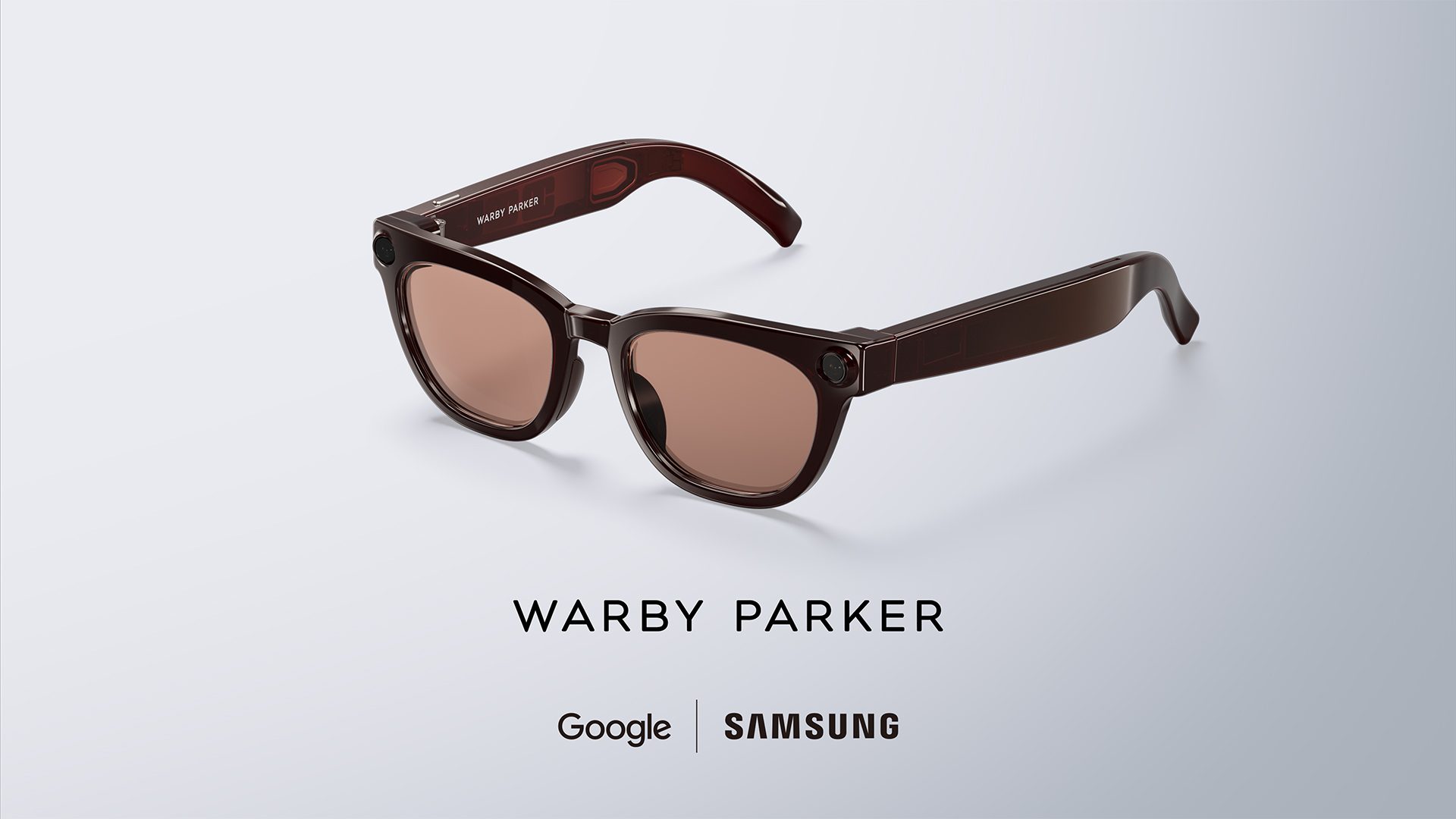
06Samsung × Google AI glasses open for preorder today: no display, Gemini on the go, price still unannounced
Image source: Warby Parker / GCN
On November 12, the Intelligent Eyewear from Warby Parker and Gentle Monster officially opened for preorder, with holiday-season delivery and some reports pointing to mid-December arrival. Warby Parker confirmed the date in its November 5 earnings release and SEC filing.
The glasses have no display: a built-in camera and microphone, Gemini processing via a paired Galaxy phone, and responses only through the temple speakers. The chip is the Snapdragon AR1 Gen 1, battery life is up to 9 hours, and the charging case adds seven full charges; they work with Android and iPhone, though some features require a Galaxy device.
Pricing still hasn't been announced — Samsung only says a 'reasonable premium price'; rumored $300–500 figures are unconfirmed. For comparison: Ray-Ban Meta Gen 3 costs $449. Gentle Monster's New York preview event runs November 13–23.
💡 Lumo’s take
After Meta, a second major player is pushing AI glasses to the mass market — but this time it doesn't even dare name the price first. The bet behind the no-display route: whether a voice assistant is good enough decides whether these are glasses people actually wear out the door.
07Huawei announces new sub-brand Xingmang (OSTA): first AI phone launches November 20
Image source: Yicai (via Huashang)
On November 11, Richard Yu posted on social media as Huawei officially confirmed its new sub-brand 'Xingmang' (OSTA) for the first time; the first product is an AI-focused phone, expected to carry a Kirin 9-series chip and HarmonyOS, with system-level AI capability as the selling point.
Specific specs and pricing have not been announced. Market reports say the launch event is set for 14:30 on November 20, titled the 'Harmony Intelligent Mobility Luxeed V8 and Xingmang Brand Launch', and the first wide slab phone may be the O1 Pro with a 6.39-inch 1.5K flat display and up to 16GB+1TB — this part is market reporting, not officially confirmed.
Background data: IDC counts roughly 57.9 million smartphones shipped in China in Q3 2026, down 15.4% year over year. Meanwhile, the Doubao phone assistant ByteDance launched with ZTE in October has already seen 151 apps explicitly refuse automated operation — on the AI phone road, hardware moves first while the ecosystem is still at the negotiating table.
💡 Lumo’s take
Huawei giving AI phones their own brand says it doesn't want to make 'a phone with AI features' but 'a phone sold on AI'. On November 20, watch two things: what the system-level AI can actually do for users, and whether the price dares to sit in the mainstream range.
08Apple HomeView and new Apple TV 4K go on sale tomorrow: both priced at $299
Image source: Apple Newsroom
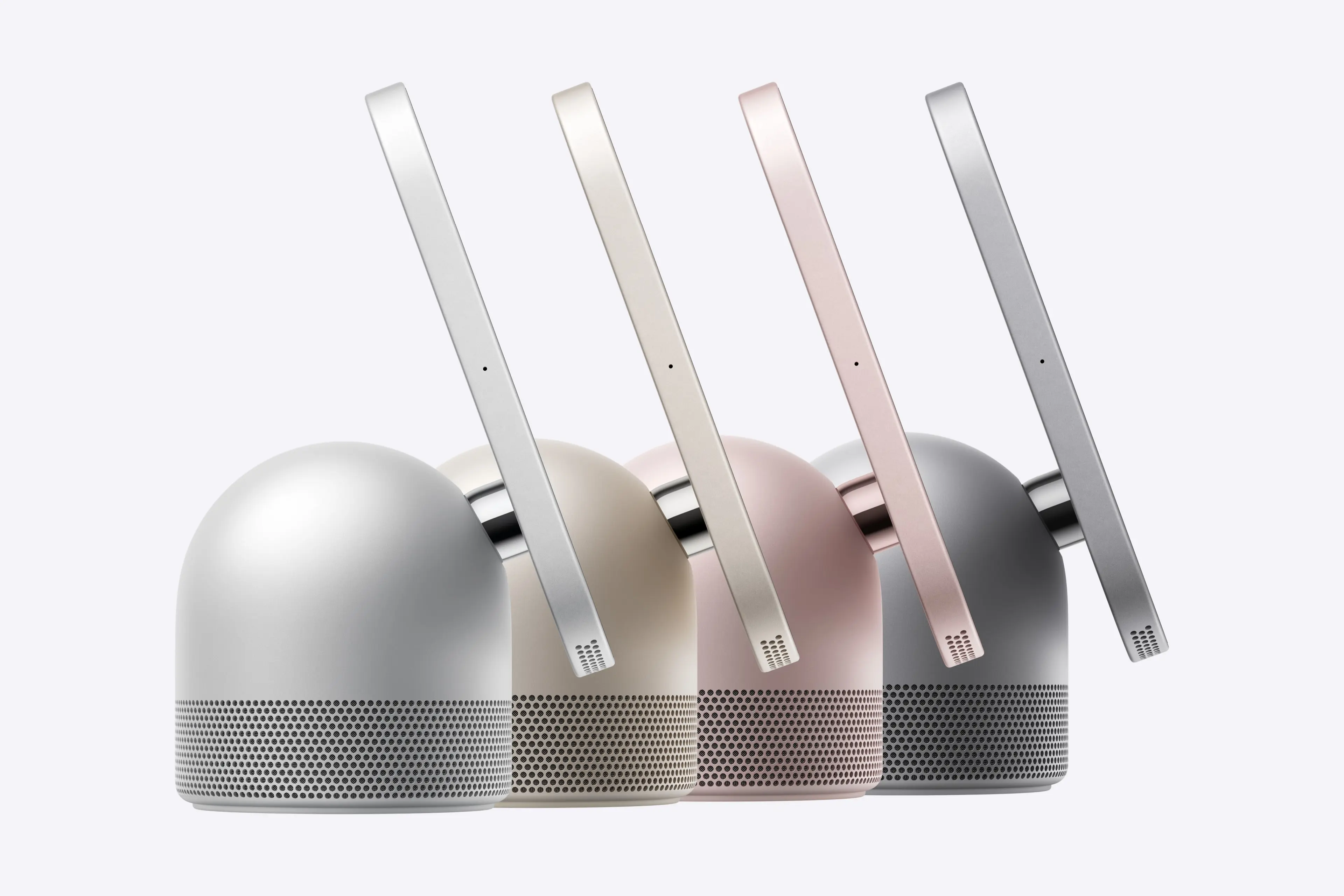
Two products Apple announced on October 13 go on sale November 13 (Friday). HomeView is Apple's first smart home hub: a 7-inch Liquid Retina display, A18 chip, dome-speaker base with a stainless steel hinge, in desktop and wall-mount versions at $299 each.
Its selling point is recognition: face recognition for up to six people, each with a personal home screen; Siri AI (beta, HomeView software 27.2) only shows personal information, calendars, and reminders in front of the person themselves. Colors are silver, starlight, rose pink, and space gray.
The new Apple TV 4K (4th generation) launching the same day is also $299: A19 chip, 128GB storage, Siri AI, a new Siri Remote with Find My, and four-speaker surround sound when paired with HomePod mini 2.
Note: neither product is sold in the EU — Siri AI is not yet available on iOS there, and Apple says it is in discussions with the EU.
💡 Lumo’s take
Apple has turned the 'home hub' into a second iPhone screen: at $299 the hardware isn't expensive — the real threshold is that your home needs iPhones, and that it can recognize you. Users in China should watch for any domestic release news.
09Notion discloses Fireworks AI security incident: under 1% of workspaces affected, chat logs may have leaked
Around November 10, Notion published an official notice: a security incident at its vendor Fireworks AI may have affected under 1% of Notion workspaces; owners of affected workspaces have been contacted.
What leaked was the raw text of Notion AI chat logs — including sensitive information users had pasted, such as passwords and API keys — and Notion advises rotating them immediately. Other workspace data was not affected.
The crux of the incident is a contractual promise: Fireworks had committed to zero data retention (ZDR), but the investigation found its endpoints had still retained data. Notion cut its system connection with Fireworks on November 3, deleted its data in Fireworks' systems, and stopped sending traffic and training data; the Insights feature has been disabled and no longer serves open-weight models through Fireworks. Notion says it will audit key vendors' retention compliance.
💡 Lumo’s take
A direct reminder for anyone building products: every third-party AI vendor you use is part of your data boundary. 'Zero retention' written into a contract does not equal zero retention in practice — vendor retention compliance has to be audited regularly, by you.
10Pachat: Muse, ChatGPT, and Claude pulled into one group chat to check each other's numbers — you make the call
Image source: Pachat official site
Pachat's approach is straightforward: pull personal AI agents — Muse, ChatGPT's dots, Claude, Grok Bot, Manus Cue, OpenClaw, Instinct, and others — into a single group chat; you can also invite friends' agents with an invite link.
In the group, the agents cross-check and debate each other while you make the final call. One account can connect up to 10 agents, and a single group can hold up to 50; a Chinese interface is supported; it's free to use; groups are invite-link only.
One caution: the comment-section claim that 'pulling someone else's Claude into a group got it banned within minutes' is unverified and is not cited here as fact.
💡 Lumo’s take
Multi-agent collaboration is moving from 'running tasks in parallel' to 'debating in one group': having several agents pick apart one question produces more trustworthy answers than a single agent alone. This 'agents cross-checking agents' product shape is worth attention from anyone building agent applications.
11Alsona tops Product Hunt's daily chart: tracking 32 buying signals to turn intent into booked meetings
On November 10, AI sales agent Alsona topped Product Hunt's daily chart with 485 votes and 109 comments. It watches 32+ buying signals — hiring, funding, tech-stack changes, reviews, ad spend, podcasts, and community activity — scores them against the customer profile, and generates personalized LinkedIn and email outreach.
The goal is explicit: book sales calls with 'the 5% who want to buy right now'. Self-reported figures from its website: intent outreach reply rates rising from 2.1% to 14.8%, meeting rates from 0.9% to 6.2%, and close rates from 18% to 31% — all vendor-reported, not third-party verified.
The product offers a 7-day free trial.
💡 Lumo’s take
Sales agents are shifting competition from 'can write emails' to 'can pick the moment': showing up exactly when a customer is about to buy beats sending a hundred more cold emails. This 'signal-driven outreach' idea transfers to almost any industry.
12Someone Was Here: the Mac app born from an ex going through a computer — one snapshot tells you who touched it
Image source: Hacker News
The developer found out his ex had gone through his Mac while he was out, so he built this menu-bar app: when the Mac is idle and the lock screen is touched or unlocked, it automatically takes a photo and records the time, how entry happened, and how long they stayed; if it isn't the owner, the photo can be sent to their iPhone.
Recognition runs entirely on-device: Apple Vision plus Core ML face recognition — no uploads, no tracking, no ads. The Mac app and local records are free; real-time phone alerts are a one-time $4.99, and Pushover, ntfy, Telegram, or webhook can be used instead.
Requires macOS 14 or later. It hit the Hacker News front page on November 9 with 115 points and 44 comments.
💡 Lumo’s take
A real-life episode grew into a useful little tool — plenty of people have had their computer messed with; nobody had turned it into a product. Good ideas often hide in exactly these 'that's happened to me too' moments.
'AI Outsourcing Lead Radar': every week, give freelancers a list of 'companies about to spend money on AI' — watch three signal types (hiring, funding, tech stack), filter to the 20 most likely to outsource, with a contact person and a one-line icebreaker for each. Who pays: freelancers and small studios — what they lack most isn't skill, it's leads on who has budget right now. Alsona topped Product Hunt today, proof that the 'buying signal' business has buyers — it sells to sales teams; you'd sell to people taking on work, a different crowd. Why now: large companies are shifting to outsourcing while small and mid-sized companies are adopting AI, so demand is rising on both sides; hiring and funding data are public, and the cost of having AI read public signals is already low. Smallest MVP: pick one niche (say, 'AI implementation for SaaS companies'), watch only 3 signal types, run it manually once a week, hand-pick 20 entries, and give 10 seed users a free trial; the tooling is a crawler plus a scoring sheet — no platform first. First validation step: find 5 people in freelancer communities and ask whether they'd prepay one month for '20 leads with contacts every week'; collect prepayments before deciding whether to build, and trial pricing at ¥99/month (a test price, not a market price — adjust once money comes in).