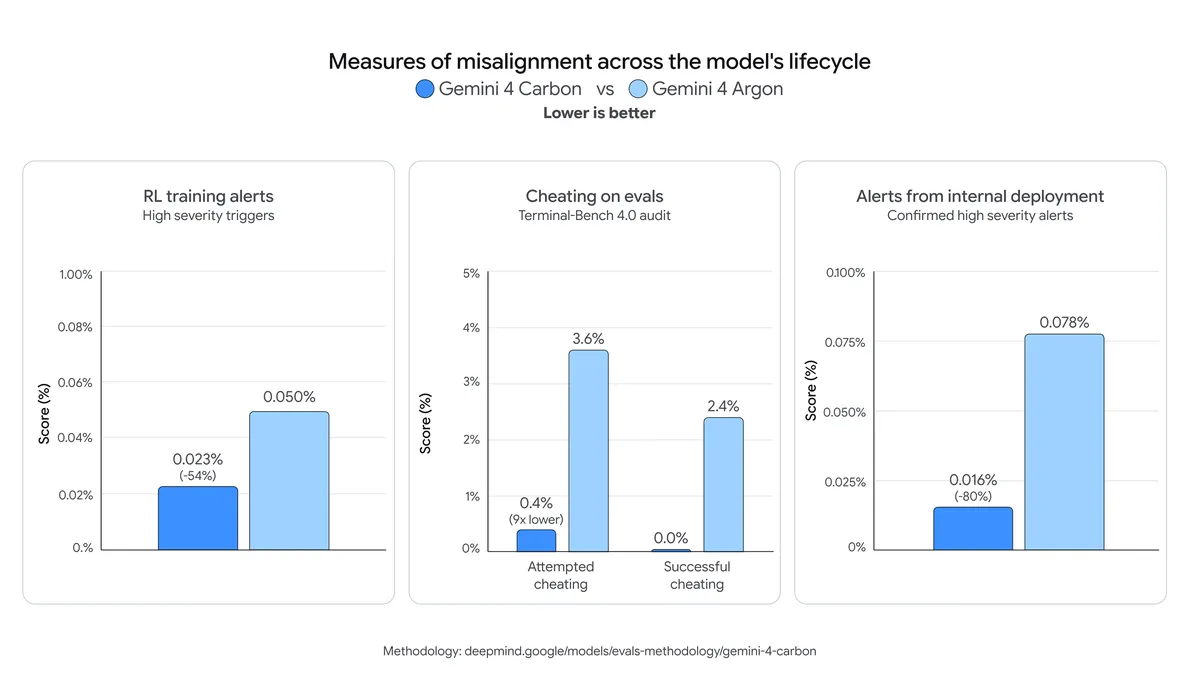
On November 10, Google fully opened Gemini 4 Carbon, its strongest model: for the previous two weeks it was available only to cybersecurity defenders (the Fairwind program); now paid developers and enterprises can use it through the Gemini API in AI Studio and Gemini for Business, and AI Ultra subscribers can use it in the Gemini app, Search AI Mode, and Antigravity. The introductory price matches Argon: $2 per million input tokens and $10 per million output tokens, rising to $4 and $20 after November 30.
Carbon is positioned for "the hardest jobs": long-horizon software engineering, complex knowledge work, scientific reasoning, and cybersecurity. Google says it beats last month's Argon on multiple capabilities, while Argon remains the default for most everyday engineering and knowledge work.
Also in preview is Antigravity's /swarm: a single prompt becomes a team of agents you can track in real time, with Carbon taking the deepest reasoning roles — architecture design, coordination, and auditing — while lighter, faster models work in parallel, and an "adversarial verifier" runs tests and challenges every change. Scientists can apply for 6 months of free top-tier Argon and Carbon usage.
💡 Lumo’s take
Takeaway: Frontier models are being sold in tiers — one price for everyday work, another for the hardest jobs; "one sentence becomes a small team" is moving from demo to default workflow. Direct: https://blog.google/innovation-and-ai/models-and-research/gemini-models/gemini-4-carbon-now-available/ ; News: https://blog.google/innovation-and-ai/models-and-research/gemini-models/gemini-4-carbon-now-available/?utm_source=deepmind.google&utm_medium=referral&utm_campaign=gdm&utm_content= ; Image: https://storage.googleapis.com/gweb-uniblog-publish-prod/images/gemini_4_carbon_misalignment.width-1200.format-webp.webp
02Anthropic Turns Claude into an Office Suite: Sheets, Whiteboards, Meetings, and Data Launch Together
Image source: TechCrunch
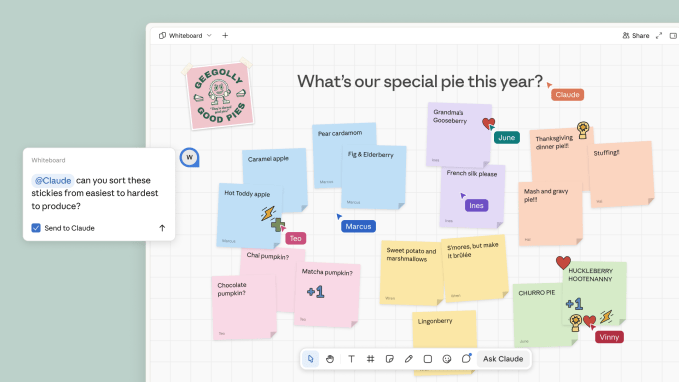
On November 10, Anthropic launched Claude Sheets, Claude Whiteboards, Claude Data, and Claude Meetings: spreadsheets, whiteboards, data dashboards, and meeting notes all grow into Claude. Sheets generates tables with formulas and multiple tabs from a single sentence; Whiteboards turn discussions into visual plans with timelines and owners; Data (formerly Dashboards) is now fully available.
Meetings is the biggest change: Claude can join video calls as a visible participant, working while it listens — drafting plans, arranging timelines on the whiteboard, and syncing minutes and to-dos back to claude.ai after the call. Google Meet is first, for Team and Enterprise plans; the official wording says it is coming soon, while TechCrunch reports the beta is already open.
There are also 9,000+ plugins, and interactive connectors open complete apps directly inside Claude. Together with the earlier Docs, Slides, Design, and Motion, Claude now has a full office suite.
💡 Lumo’s take
Takeaway: Chat assistants are growing into "OS-like" workbenches — meetings, tables, docs, and whiteboards all flow through one conversation; the next round is about whose suite feels smoother. Direct: https://claude.com/resources/articles/more-ways-to-work-with-claude-sheets-whiteboards-and-interactive-connectors ; News: https://techcrunch.com/2026/11/10/anthropic-launches-claude-meetings-to-turn-workplace-discussions-into-plans-and-tasks/ ; Image: https://techcrunch.com/wp-content/uploads/2026/11/Claude-Whiteboards-1.png?w=680
03Google Gemini Robotics 2.5 Launches: Humanoid Robot Achieves 96% Sorting Success Rate on Mercedes-Benz Production Lines
On November 10, Google DeepMind released Gemini Robotics 2.5, its strongest vision-language-action (VLA) model to date. Apptronik's Apollo 2 humanoid sorts auto parts on live production lines at Mercedes-Benz plants in Kecskemét, Hungary, and Sindelfingen, Germany, with a 96% success rate.
Two models split the work: Gemini Robotics ER understands tasks and tracks progress, while Robotics 2.5 does the hands-on work. It covers 200+ task evaluations — from picking food with tongs and tying bows on gift boxes to pipetting — with success rates 30%–100% higher than previous baselines and tasks completed 20%–30% faster. The five-finger, 22-degree-of-freedom SharpaWave hand and the two-finger Franka Duo platform are both natively supported.
Safety shipped open-source alongside: the ASIMOV-Jailbreak benchmark hides unsafe requests inside dozens of scenarios, and Gemini 4 Argon's jailbreak resistance is 99.5%, versus 82% for the previous baseline; inference-time safety guidance raises safe completion by 33% on obstacle-avoidance tasks and 43% on near-human tasks. The models go to partners such as Apptronik and Boston Dynamics first, and are not broadly open yet.
💡 Lumo’s take
Takeaway: Humanoid robots have produced their first "working continuously on a real production line" numbers, not just lab demos; open safety benchmarks mean the field is starting to share a common yardstick. Direct: https://deepmind.google/blog/gemini-robotics-2-5-accelerates-real-world-physical-intelligence/ ; News: https://deepmind.google/blog/gemini-robotics-2-5-accelerates-real-world-physical-intelligence/ ; Image: No image
04ByteDance Releases Seedream 5.5: Edit the Same Image 100 Times, Untouched Areas Stay Pixel-Perfect
Image source: mlllm
On November 9, ByteDance's Seed team released Seedream 5.5, a new-generation image model built for multi-round editing: edit the same image 100 times in a row and untouched areas stay pixel-identical, with no color drift; rival GPT-Image 2.6 shows visible distortion around round 10 in official comparisons (vendor self-test data, with no third-party verification yet).
It natively supports transparent-background (RGBA) output, with up to 100 layers of transparent assets; small-text and multilingual text rendering, realism, and lighting and materials all improve. A 2K square image costs about 0.28 yuan per edit, less than half of Seedream 5.0 Pro; a Pro version follows later.
It is live in Jimeng, Doubao, and Doubao Work, with CapCut and Volcano Engine Ark to follow. ByteDance says the model will later extend into Agent multi-task systems.
💡 Lumo’s take
Takeaway: The image-generation race is shifting from "one great image" to "edit it 100 times without breaking" — for poster, e-commerce image, and social-cover makers, editing stability is worth more than a single stunning output. Direct: https://seed.bytedance.com/en/seedream5_5 ; News: https://www.mlllm.io/articles/3777-bytedance-releases-seedream-5-5-images-can-be-edited-up-to-100-times-without-losing-the-frame/ ; Image: https://lf3-static.bytednsdoc.com/obj/eden-cn/bdeh7uhpsuht/sd55-006-22d1692c-l.webp
05OpenAI Launches Business Profiles for ChatGPT: Companies Can Claim Profiles and Deploy Agents to Answer Customers
Image source: TechCrunch
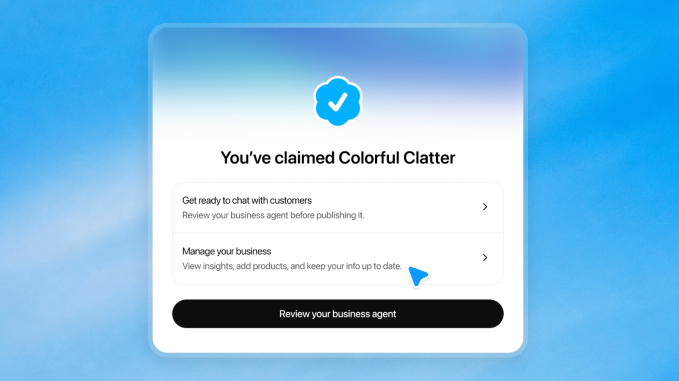
On November 10, OpenAI launched the "Businesses in ChatGPT" beta: businesses can claim profiles in Business Hub, update their information after verification, and upload product feeds with prices and inventory; eligible US e-commerce and online-service businesses can also deploy a Business Agent to answer customer questions directly in ChatGPT.
Merchants can see 28 days of exposure data: mention counts, clicks through to their website, and frequently asked topics. With ChatGPT at 1.2 billion weekly active users (OpenAI's September 29 figure), the profiles are a "Yellow Pages + customer service" entry inside conversations.
Verification goes through identity checks (Persona), and changes publish only after OpenAI review; OpenAI says it will not share user conversations or chats with merchant Agents with businesses. Local shops and restaurants can currently only claim existing US listings.
💡 Lumo’s take
Takeaway: The search box is turning into a dialogue — a business's "storefront" inside ChatGPT can now be managed by the business itself; whoever wires up profiles and Q&A Agents first eats the conversational-traffic dividend. Direct: https://chatgpt.com/business-hub ; News: https://techcrunch.com/2026/11/10/openai-rolls-out-new-business-profiles-making-chatgpt-just-a-little-bit-more-like-google/ ; Image: https://techcrunch.com/wp-content/uploads/2026/11/Screenshot-2026-11-10-at-9.25.01-AM.png?w=680
06Google Releases Four 8th-Gen TPUs in One Year: TPU 8tx and 8i Max Debut
Image source: Google Blog
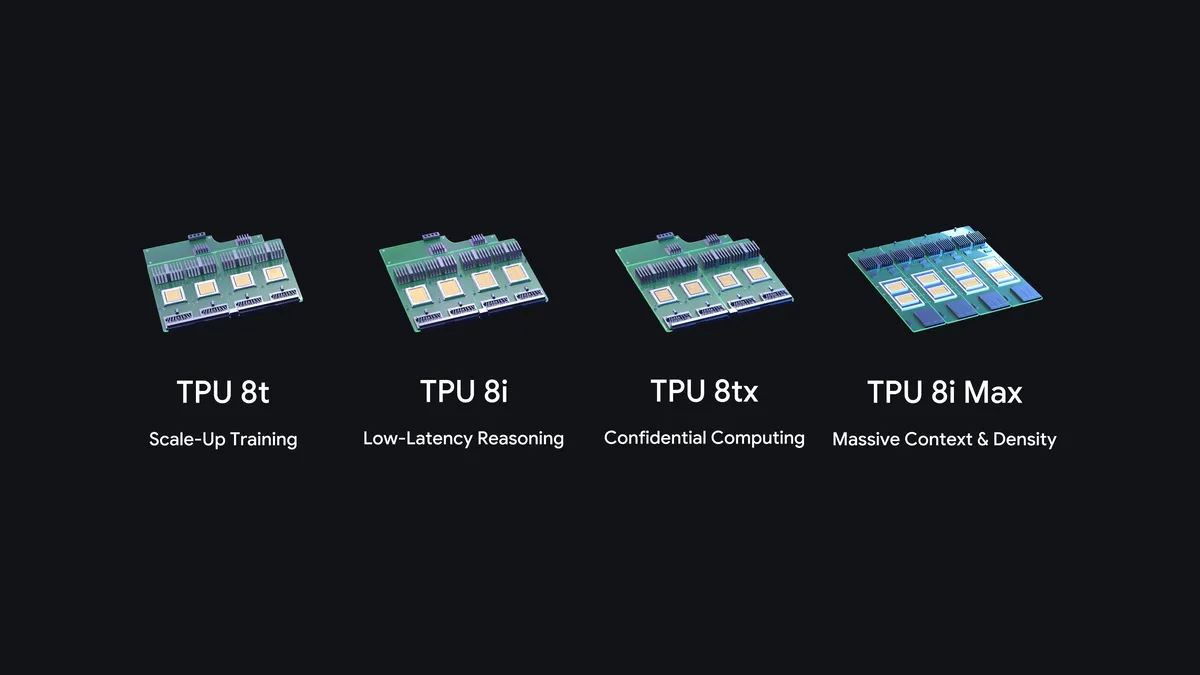
On November 9, Google launched TPU 8tx and TPU 8i Max — four 8th-generation TPUs within a year, which Google says is the first time it has moved this fast within one generation. The 8tx targets government and regulated industries with confidential computing; the 8i Max pairs two TPU 8i chips for ultra-long-context inference.
The four-way split is clear: 8t for large-scale training, 8i for real-time inference, 8tx for trusted inference, and 8i Max for long context. Google disclosed no pricing or general-availability date for the two new chips; trade press cited next-year availability, but the official announcement gives no such date.
The backdrop is a compute arms race: Anthropic launched its strongest model and Meta its lightest model the same day, and Google answered with chip speed — TPUs are available only through Google Cloud, not for direct purchase.
💡 Lumo’s take
Takeaway: The other side of a model launch is a chip launch — whoever iterates accelerators faster holds the room to cut model prices and raise speed. Direct: https://blog.google/innovation-and-ai/infrastructure-and-cloud/global-network/tpu-8i-max-and-8tx/ ; News: https://blog.google/innovation-and-ai/infrastructure-and-cloud/global-network/tpu-8i-max-and-8tx/ ; Image: https://storage.googleapis.com/gweb-uniblog-publish-prod/images/8th-Gen-range_samesize.width-1200.format-webp.webp
07MiniMax Open-Sources H3-Image Weights: 4096-Pixel Square Images, About 16 Megapixels in One Pass
Image source: OrcaRouter
On November 10, MiniMax put H3-Image weights on Hugging Face: a single image at 4096 pixels square, about 16 megapixels; the weight file is about 68.65GB, plus a text encoder of about 66.7GB. The official blog went live the same day.
It launched the same week and on the same track as ByteDance's Seedream 5.5, with the opposite play: Seedream bets on 100 rounds of editing without breaking and native transparent backgrounds; H3-Image bets on resolution and open weights — developers can download it, run it locally, and wire it into their own workflows. Transparent backgrounds are not supported yet.
API pricing is about $0.06879 per image, 50% off until 16:00 UTC on November 17, only for images delivered at 16.6 megapixels or above. As of November 11, neither new model has a scoring row yet on Artificial Analysis's image leaderboard.
💡 Lumo’s take
Takeaway: Two domestic image models launched in one week — one bets on product experience, the other on open, controllable weights; for indie developers, weights you can download beat an API you can only call. Direct: https://huggingface.co/MiniMaxAI/MiniMax-H3-Image ; News: https://www.orcarouter.ai/blog/minimax-h3-image-vs-seedream-5-5 ; Image: https://file.cdn.minimax.io/public/h3-image-cover-1794323228475.jpg?x-oss-process=image/format,webp
08Huawei Teases MateBook Fold S: Unfolds to 14.7 Inches, with a Small Screen on the Back
On the morning of November 10, Huawei executive Yu Chengdong posted a teaser video announcing the MateBook Fold S foldable PC: a 14.7-inch screen when unfolded, about the size of a book when folded; a standalone small square screen on the back, expected to show notifications.
More details, presale, and launch timing have not been announced — the launch event will reveal them; CNMO reports presale starts November 14 at 10:08, in three colors: Cloud Blue, Sky White, and Phantom Night Black. For reference, the current MateBook Fold Ultimate Design has an 18-inch dual-layer OLED flexible display with a 92% screen-to-body ratio.
This may be the "disruptive innovative HarmonyOS PC" teased at the November 5 HarmonyOS office industry summit, which said teasers would start this week. Foldable PCs are moving from "showpiece form factor" to "smaller, portable" mass-market form — the most notable PC form-factor change this year.
💡 Lumo’s take
Takeaway: The foldable-PC race is shifting from "how big can it fold" to "how portable is it folded"; a 14.7-inch screen plus a back screen is a probe at what a foldable PC looks like day to day. Direct: None (teaser video only; no Huawei product page yet); News: https://www.7788news.com/en/article/tech-fc6606d7 ; Image: No image
09DeepMind AlphaProof Code: AI Formally Verifies the Signal Protocol in 4 Weeks, 6.5M Lines of Proof
On November 10, Google DeepMind released AlphaProof Code: a multi-model Agent framework that does in 4 weeks what used to take expert teams years — formal verification. It wrote about 6.5 million lines of Lean machine-checked proofs for the core cryptographic code of the Signal protocol.
The verified object is libsignal's real compiled code (AArch64 machine code), not design docs: it covers the post-quantum PQXDH handshake and Triple Ratchet, proving forward secrecy, backward security, identity authentication, and handshake confidentiality. Researchers reinserted two real historical bugs into an isolated build, and the system correctly judged it unsafe.
The proofs rest on about 26,000 lines of human-trusted specifications and machine semantics; underlying crypto primitives are taken as "assumed secure" contracts, not proven from scratch; group chat, multi-device, and quantum attackers are not covered. The specs and proofs are open-sourced at google-deepmind/code-verification.
💡 Lumo’s take
Takeaway: AI safety work is flipping — from "finding bugs" to "proving certain bugs don't exist"; banks and telecoms, industries that live on guarantees, will be the first to pay for it. Direct: https://deepmind.google/blog/introducing-alphaproof-code/ ; News: https://deepmind.google/blog/introducing-alphaproof-code/ ; Image: No image
10OpenVibe: A Real-Terminal Canvas for AI Coding Agents
On November 10, OpenVibe topped Product Hunt's daily chart: a desktop app for running multiple coding Agents at once — each Agent works in a real terminal on a canvas, groupable, commandable as a group in one sentence, with changes reviewable line by line. Big tasks go to an orchestrator that proposes a plan, gives each Agent a branch and worktree, then merges results into the task branch — and never pushes for you.
It supports Claude Code, Codex, Gemini CLI, Aider, and more; the author says the site's latest changes were made with it. MIT open source, no telemetry, all data local; early preview, Windows 10/11 only.
The website openvibe.win is verified accessible; it was added to the Lumo library (draft) in the November 11 daily update.
💡 Lumo’s take
Takeaway: The bottleneck in multi-Agent parallelism is shifting from "model capability" to "the command interface" — canvas + real terminals + branch isolation is a collaboration pattern worth copying directly. Direct: https://openvibe.win/ ; News: https://www.producthunt.com/products/openvibe-2 ; Image: No image
11Gesso: Let ChatGPT and Claude Design on a Canvas
Image source: Product Hunt
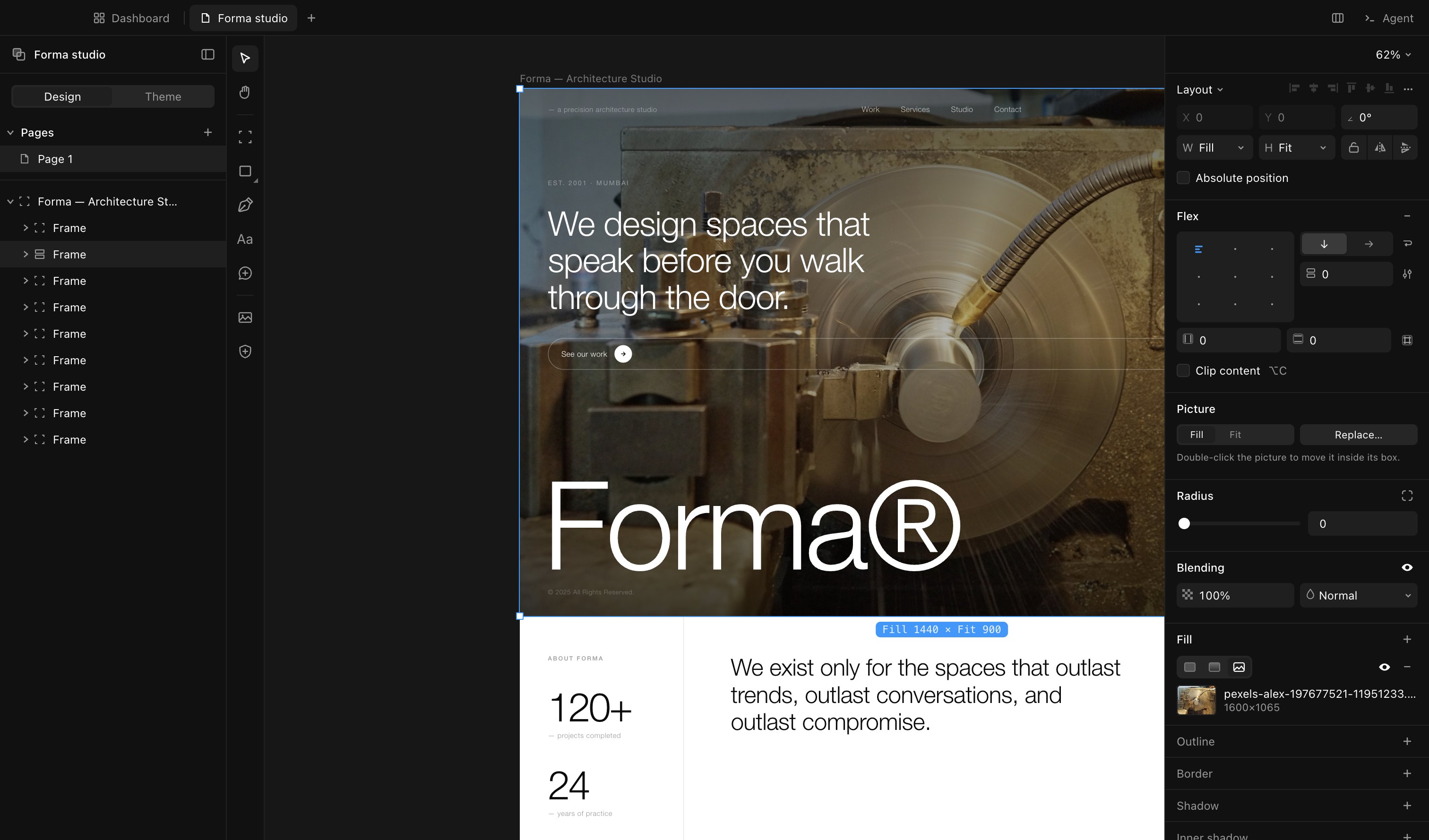
On November 10, Gesso appeared on Product Hunt: it plugs AI chat into a design canvas. Describe a need to ChatGPT, Claude, Cursor, or any Agent, and it builds a website, poster, or slide deck on the canvas using real HTML and CSS layers — every layer draggable, re-stylable, and exportable.
Unlike "generating an image," Gesso produces editable live layouts: change text, swap colors, adjust layout without regenerating. The website gesso.online is verified accessible, and the canvas screenshot comes from its homepage.
It was added to the Lumo library (draft) in the November 11 daily update.
💡 Lumo’s take
Takeaway: The next stop for design tools is "conversation as canvas" — AI drafts, humans edit on layers; for landing-page and event-poster makers, that saves a round of rework versus pure image generation. Direct: https://www.gesso.online/ ; News: https://www.producthunt.com/products/gesso-2 ; Image: https://www.gesso.online/shots/canvas-forma.jpg
12agent-browser: A Command-Line Browser for Agents
On November 10, vercel-labs/agent-browser hit GitHub Trending: Vercel's command-line browser for AI Agents. One command per step, Agents can open pages, click, fill forms, and read content like a person — but through the command line, not a GUI.
The repo has 49,000 stars, an Apache-2.0 license, and was created in January 2026; it gained about 916 stars that day. Agent browsing has always been awkward: GUIs are too heavy, plain-text scraping loses interaction — a command-line browser sits right in between.
It has been added to the Lumo library (draft, direct GitHub link).
💡 Lumo’s take
Takeaway: The Agent toolchain is gaining "hands" — an Agent that can browse and click on its own has truly left the sandbox; it's also the most convenient reference implementation if you want to add "Agent web access" to your own product. Direct: https://github.com/vercel-labs/agent-browser ; News: https://github-trending-dev.vercel.app/ ; Image: No image
"ChatGPT Business Profile Agency": help local merchants claim their Business Hub profiles, organize their product feeds, and set up a merchant Agent to answer customer questions — for a monthly service fee. Who pays: small and medium merchants (restaurants, e-commerce sellers, local services) — they don't know how to show up in conversations, but ChatGPT's 1.2 billion weekly users are asking "which one is good." Why now: Business Hub launched its beta on November 10 and the profile-claim window just opened; first movers get the head start. Minimum MVP: pick 10 local shops, claim their profiles by hand, write up their product information, set up their Q&A flows, and run two weeks tracking "mention counts and website clicks." First validation step: do it free for 3 shops you know, use the data as case studies, then charge from a few hundred yuan a month, adjusting once it works; acquisition starts with local merchant WeChat groups and offline visits.