Fei-Fei Li's team brings real-time AI world roaming to the browser, while Meta rolls out Active Memory to everyone
Today’s highlights
Fei-Fei Li's team launches Frameboy: the Atlas world model enables 15fps real-time roaming in the browser
Meta rolls out Active Memory and Active Focus to all users, cutting critical information forgetting by 2.4x
Chinese large models account for about 65% of OpenRouter token usage, while Xiaomi robots finish an 8-hour factory shift
Apiiro: Claude Code wrote secrets into 1,122 public files; Doubao Work removes its 5-hour quota limit
FreeToken runs full DeepSeek V4 Flash on a single RTX 5090; freellmapi aggregates 34 free model providers
01Frameboy: Fei-Fei Li's team lets users roam AI worlds in real time inside a browser at 15fps with keyboard controls
Image source: World Labs Official Blog
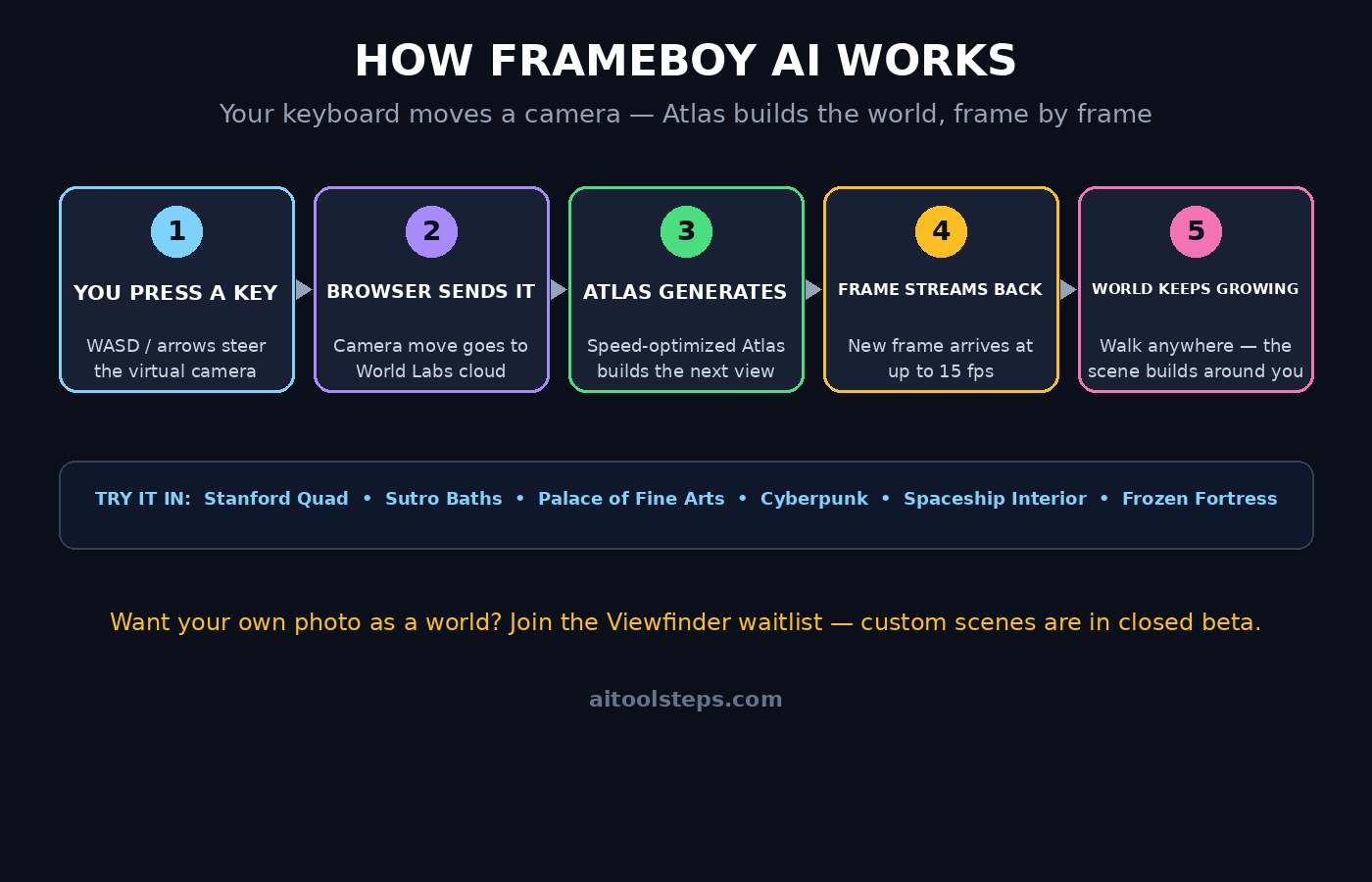
On November 5, World Labs released the Frameboy research preview: the Atlas world model runs on cloud GPUs and streams frames to the browser at up to 15fps, letting users control a virtual camera with a keyboard to roam AI-generated worlds in real time.
Released on September 1 this year, Atlas is a world model that generates frame-by-frame worlds with precise camera control from a single image, capable of outputting one-minute 1440p videos along with depth and point-cloud data; Frameboy uses a speed-optimized lightweight version in exchange for near-instant feedback.
The public demo is free with no registration required, though exploration is limited to 6 preset official scenes (such as the Stanford Quad, Cyberpunk, and Ice Fortress); generating worlds from personal photos awaits Viewfinder, currently in closed beta. The cost is stated openly: every frame requires large cloud GPUs, making it "not cheap" at this stage.
💡 Lumo’s take
For product builders, the takeaway from Frameboy lies not in the 15fps number, but in putting generation inside an interactive loop—site selection, property tours, game levels, and robot simulations can all start with a rough, walkable world before chasing polish. Once Viewfinder opens up, the first practical use case may well be online property and interior renovation tours rather than gaming.
02Meta brings Active Memory and Active Focus to all users, cutting critical information forgetting by 2.4x
Image source: i-scoop
On November 6, Meta announced it has distilled two capabilities from its flagship Muse Wonder model—Active Memory and Active Focus—into lightweight dedicated models and rolled them out to all Muse and Meta AI users.
Active Memory enables the assistant to retain key details, distinguish temporary from long-term information, and proactively recall context when past topics become relevant again; Active Focus allows it to find alternative paths on its own rather than giving up when a task hits a snag midway.
Meta shared four internal benchmark figures: accurate usage of key context in memory tests rose from 76% to 90%, forgetting of critical information dropped by 2.4x, the Personal Superintelligence Index increased from 38% to 47%, and completion rates for daily tasks encountering obstacles improved by 67%. Note that all figures come from Meta's own testing without independent replication, and the company did not specify which regions will get the rollout first; the Muse app is currently limited to adults in the United States.
💡 Lumo’s take
AI product builders should think clearly: once every assistant can remember users, differentiation shifts from remembering everything to remembering accurately, remembering less, and letting users delete easily. The stronger the memory, the more valuable the deletion and error-correction experience becomes.
03Chinese large models accounted for about 65% of token usage on OpenRouter from October 5 to November 1
Image source: Qilian
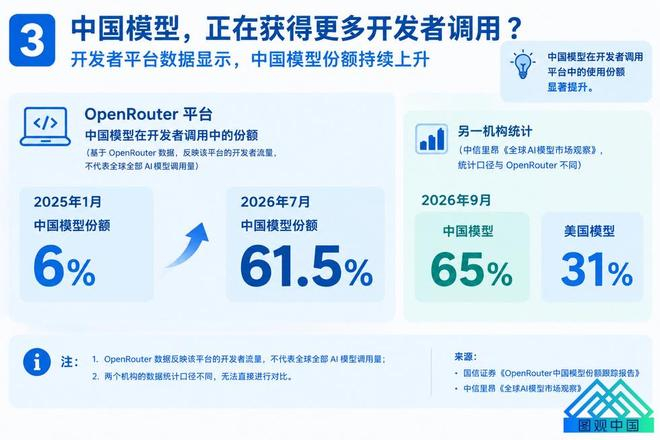
According to OpenRouter platform statistics, Chinese large models accounted for roughly 65% of token usage on the platform from October 5 to November 1. Models from DeepSeek, Kimi, Zhipu, and MiniMax continue to enter global coding and agent workflows, with several maintaining high call volumes months after release.
For comparison, a September CLSA research report showed Chinese models accounting for about 65% of platform token usage but roughly 30% of dollar spend, a 35-percentage-point gap driven by pricing roughly 80% lower than US peers.
The same breakdown noted that Chinese models captured a 66.8% call share over the past 30 days—about 2.1x that of US models (31.5%)—and briefly reached 71% in an individual week. One caveat on scope: these figures come from a single developer platform, reflecting choices among global independent developers rather than the entire market.
💡 Lumo’s take
For product builders, the flip side of this number merits closer attention: once Chinese models become the default choice for global developers, businesses building tooling, gateways, and evaluations around them gain a solid foundation—the traffic is already there, and what is missing is the service layer that turns traffic into revenue.
04Xiaomi humanoid robots complete an 8-hour, 5-minute factory shift and perform over 50 tasks in a 30-minute home trial
Image source: The Robotics Media
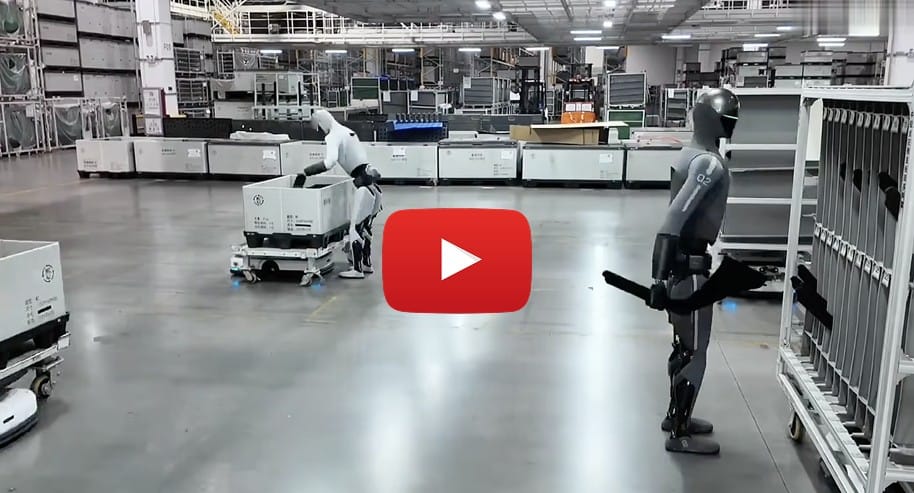
At the World Internet Conference on November 3, Xiaomi disclosed that two CyberOne 02 humanoid robots worked continuously for 8 hours and 5 minutes at the center-console side-panel sorting station in its EV factory, fulfilling a full day's production demand while self-correcting anomalies and coordinating with production-line systems.
The same model also began a home "trial operation" at Xiaomi Youth Apartments, completing over 50 tasks across 3 rooms over more than 30 continuous minutes. Both trials ran on Xiaomi's embodied foundation model, Xiaomi-Robotics-1, pretrained on 100,000 hours of real-world manipulation data, which Xiaomi says ranked first on the RoboCasa365 and RoboDojo benchmarks (July results).
An open question remains: Xiaomi did not disclose how many parts were processed, the error rate, or how often human intervention was required—whether the 8 hours represents a true operational milestone or a carefully rehearsed day still requires third-party verification.
💡 Lumo’s take
Builders of robotics-related products should shift focus from spec comparisons to "continuous intervention-free duration"—a robot that can independently finish a full shift and one that can only run a three-minute demo represent two completely different businesses.
05Apiiro: Claude Code's "don't ask again" prompt exposed secrets in 1,122 public GitHub files
Image source: MadRobot (based on Apiiro research, also reported by The Hacker News on November 7)
Security firm Apiiro published research on November 5 showing that when developers click "Yes, and don't ask again" in Claude Code, the tool saves the full verbatim command—including passwords and tokens—into the project's .claude/settings.local.json file; once committed and pushed, those secrets become public.
Scanning public GitHub repositories between November 1 and 3, Apiiro found 1,122 out of 104,185 such files contained real secrets, totaling 1,379 unique secret values; including commit histories, shared config files, and agent conversation logs, the total reached 2,539 secrets across 1,994 repositories and 63 organizations. Exposed credentials included 379 database passwords, 122 Supabase service keys, 43 SSH accounts, and 23 AWS keys.
Popular scanners also missed many cases: gitleaks caught only 564 files and TruffleHog caught 643, while 215 files were missed by both. Apiiro warns that simply deleting the file is not enough because secrets remain in Git history, forks, and external clones; the proper fix is to rotate the credentials first, run git rm --cached, and add the file to the project's .gitignore. Anthropic has not yet commented on the findings; a similar issue was reported on GitHub back in August 2025.
💡 Lumo’s take
Every team using Claude Code, Cursor, or Codex should do one thing today: search their organization's repositories for .claude/settings.local.json and audit their .gitignore files. The price of convenience is often a single line of credentials written quietly to disk.
06Doubao Work Personal Edition removes its 5-hour usage cap, leaving only a weekly quota limit
Image source: 21jingji
Starting November 6, ByteDance's agent product Doubao Work removed the 5-hour usage cap for its Personal Edition: users are now governed solely by a weekly quota, allowing them to decide whether to concentrate or spread out usage across the week, while weekly quota sizes and other subscription rules remain unchanged per plan tier.
Previously, rolling 5-hour and 7-day quotas ran concurrently, pausing access whenever either limit was hit—barely noticeable for casual Q&A, but a hard ceiling for one- to two-hour tasks such as industry research or building small applications.
Across the industry, providers are moving in different directions: Anthropic recently renamed its $200 Claude tier to Ultra and dropped the 5-hour cap, whereas OpenAI reinstated a five-hour limit on ChatGPT Plus and plans to merge ChatGPT and Codex quotas starting in December.
💡 Lumo’s take
For agent product builders, quota design is itself product positioning—the tighter the short-term throttle, the more a product is confined to lightweight Q&A; platforms willing to lift caps on long-running tasks are the ones genuinely aiming to take on heavy workloads.
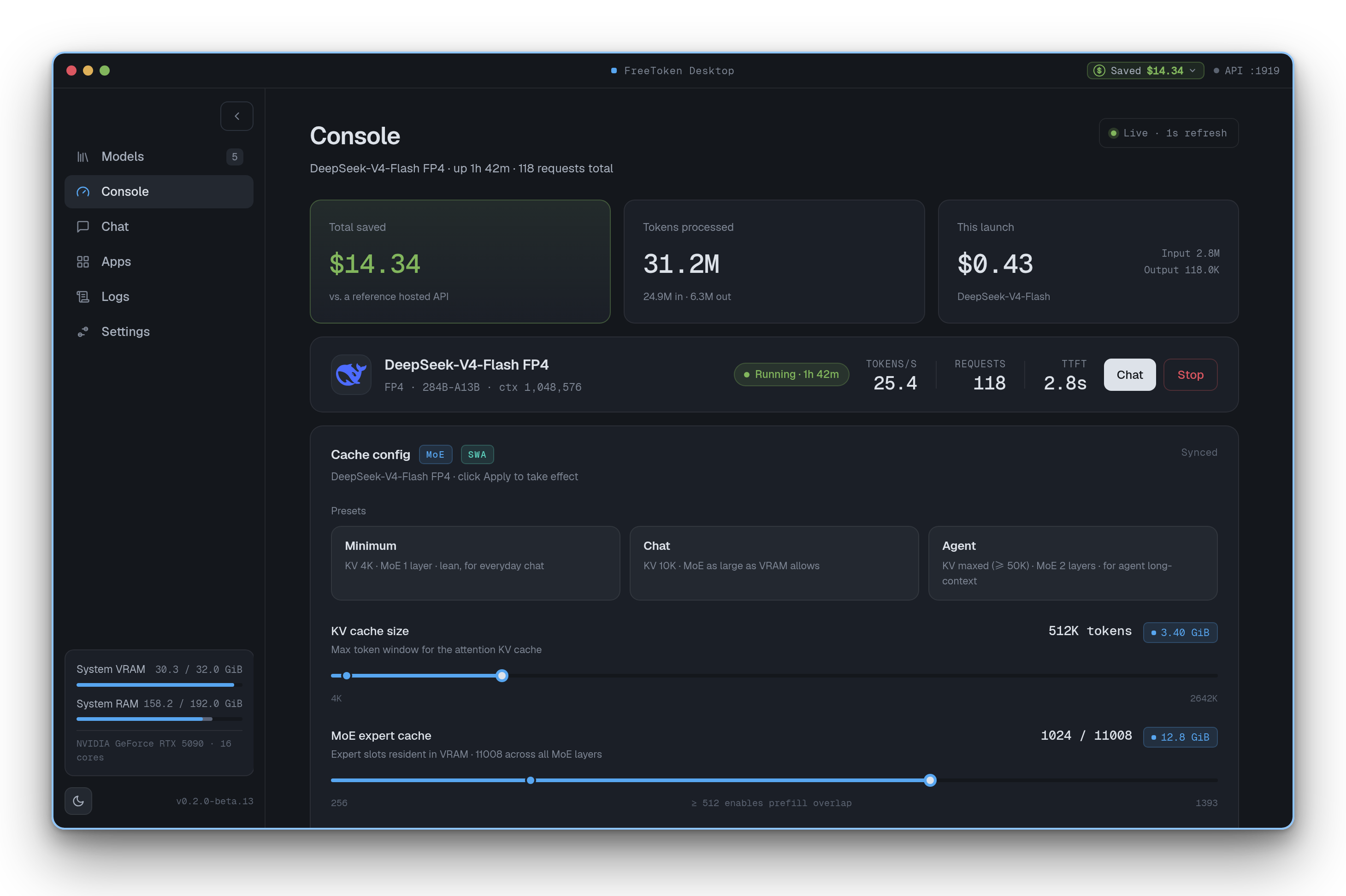
07FreeToken: Full 284B DeepSeek V4 Flash runs on a single RTX 5090 as edge inference goes open source
Image source: GitHub
A team from UC Berkeley, MIT, and other institutions open-sourced FreeToken, an edge Mixture-of-Experts (MoE) inference system that gained traction in the AI community from November 6 to 8: a single RTX 5090 (32GB VRAM) can run the full 284B-parameter DeepSeek-V4-Flash model, while a laptop RTX 4060 can run Qwen3.6-35B at 39.3 tokens per second.
The approach relies on full-stack co-design: bandwidth-adaptive CPU–GPU cooperative execution, semantics-aware KV caching, and elastic VRAM management, with support for MXFP4, NVFP4, and FP8 quantization formats plus Anthropic/OpenAI-compatible APIs for direct connection to coding agents like Codex, Claude Code, and OpenCode.
Licensed under Apache-2.0, the repository has surpassed 16,000 stars and offers Windows/Linux desktop apps alongside a one-line CLI installer. Hardware caveats remain: the expert pool takes roughly 140GB, and running DeepSeek V4 Flash reliably still requires at least 192GB of system RAM—lowering the barrier from a data center to a high-end gaming PC, though not yet to everyday machines.
💡 Lumo’s take
AI application builders can now seriously consider a "local-first" architecture where sensitive tasks run on-device and the cloud serves only as a fallback—when a 284B model fits onto a consumer gaming GPU, the math around privacy and cost changes fundamentally.
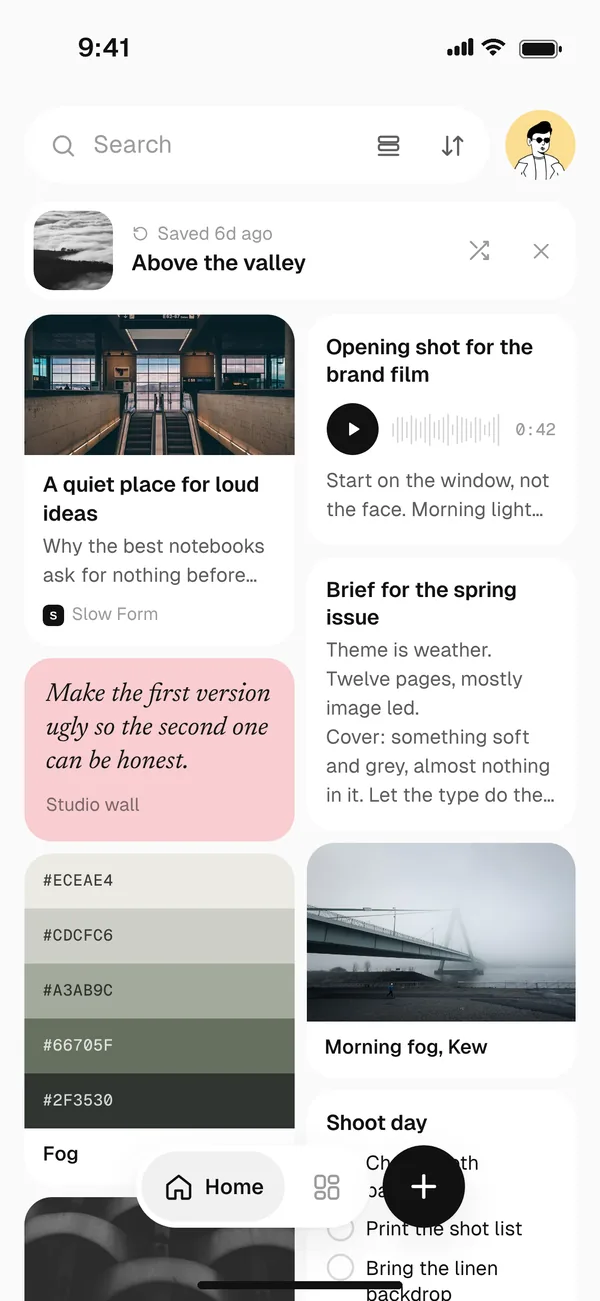
08Fleeep: Free inspiration inbox logs over 120 sign-ups on launch day, putting notes, photos, links, and voice memos in one place
Image source: Product Hunt
Built by indie developer Lydia, Fleeep launched on Product Hunt on November 7 as a free inspiration inbox for creators—letting users drop notes, checklists, photos, links, color palettes, quotes, voice recordings, and sketches into a single inbox with offline support, voice-to-text transcription, color filtering, no ads, and no data selling.
It recorded over 120 sign-ups on launch day and, according to a third-party roundup, finished first on Product Hunt's daily leaderboard on November 7. Built since August, the product takes a restrained approach: perfecting frictionless capture first rather than rushing to become another bloated note-taking suite.
💡 Lumo’s take
Fleeep's model of funneling every content type into one entry point and filtering by color offers a clear lesson for productivity tool builders: let users capture ideas at zero friction first, and leave organization for later.
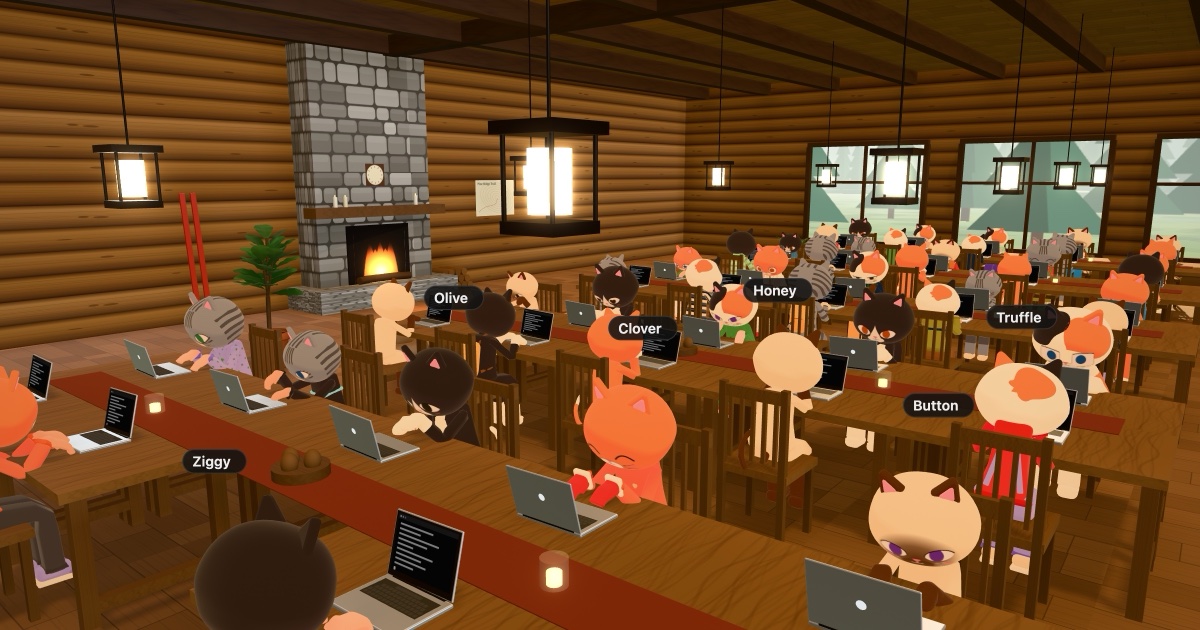
09Agent Clan: Summon a coding agent squad with a fist gesture and direct Claude Code and Codex via hand motions
Image source: Product Hunt
Launched on Product Hunt on November 8, Agent Clan turns Claude Code and Codex into an on-screen 3D squad controlled by hand gestures: make a fist to summon the menu, pinch and drag to select an agent, and speak aloud to assign tasks; swipe right to approve or left to deny permission requests, or circle anything on screen to hand it to an agent.
Gesture and voice recognition both run locally on-device, with mouse controls also supported and safeguards to prevent false triggers when multiple people gesture nearby. The free tier supports 1 project and up to 2 agents with gesture and voice controls; a Pro tier is listed at a $19 one-time purchase including 1 year of updates (not yet open for sale). Users must supply their own Claude Code or Codex accounts, with model usage billed separately.
💡 Lumo’s take
Builders of agent tools should consider that the next interaction layer may not be a better chat box, but a more natural summoning mechanism—solve how users call the agent out before worrying about what tasks to assign.
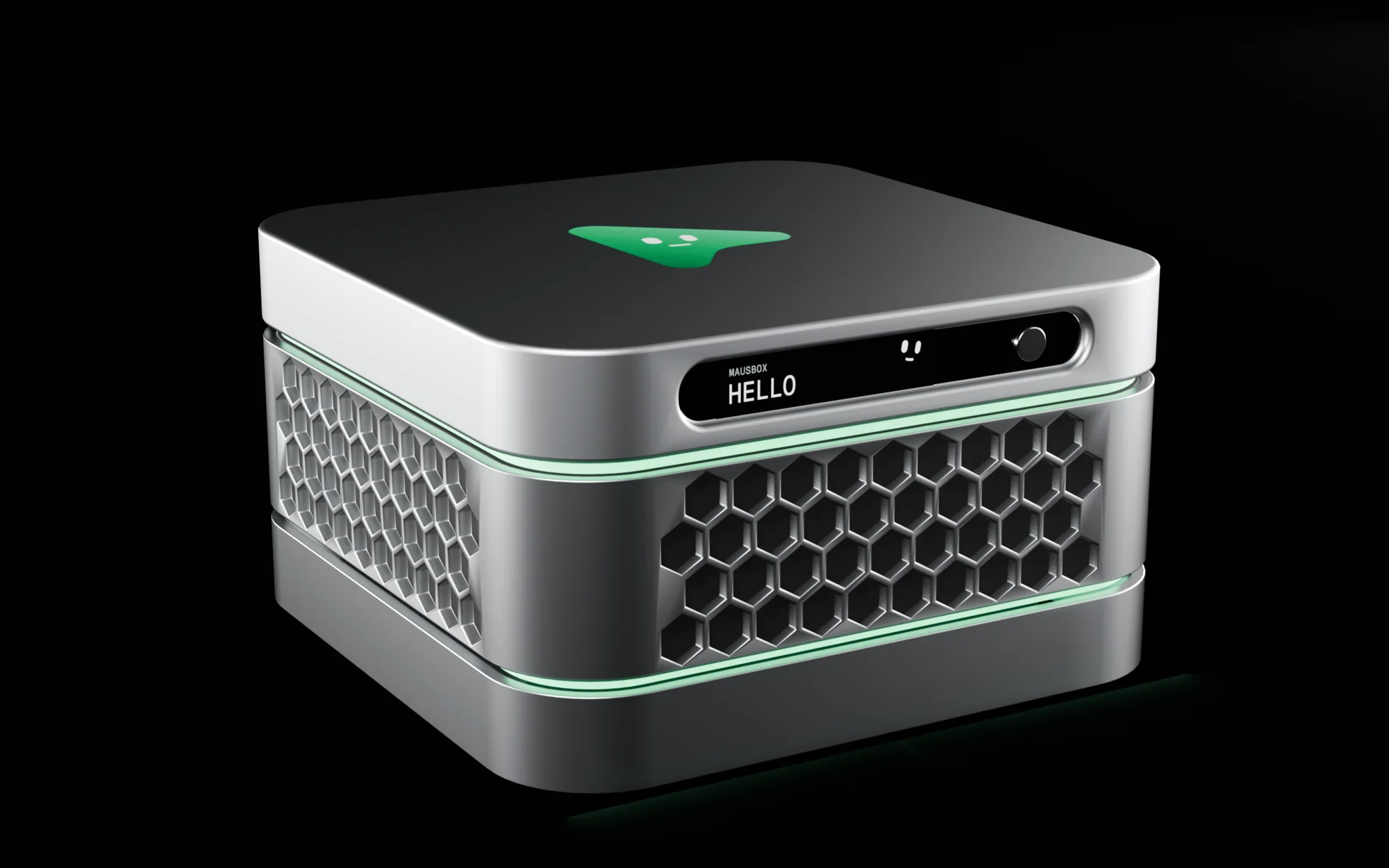
10OpenMausBot: Open-source Grok Bot alternative hits 18,000 stars, giving each bot its own computer
Image source: GitHub
Created on August 11, the open-source project OpenMausBot has surged on GitHub to over 18,000 stars by replicating Grok Bot's workflow in open source—giving every bot its own "brain" and "computer" so users can run multiple bots concurrently on a local machine and manage agents like chat contacts.
Each bot can be assigned a cloud Linux desktop, an isolated local virtual machine, or direct local machine access, connect to engines such as Claude Code and Codex, integrate with over a hundred apps including Gmail, Slack, GitHub, and Notion, and hold real-time voice phone calls. Free and open-source under Apache-2.0, it uses the user's own AI accounts or API keys with model costs billed separately.
💡 Lumo’s take
An agent's "body" (the computer executing tasks) and "brain" (the underlying model) are decoupling; whoever makes "one computer per bot" cheap first will secure the entry ticket to multi-agent collaboration.
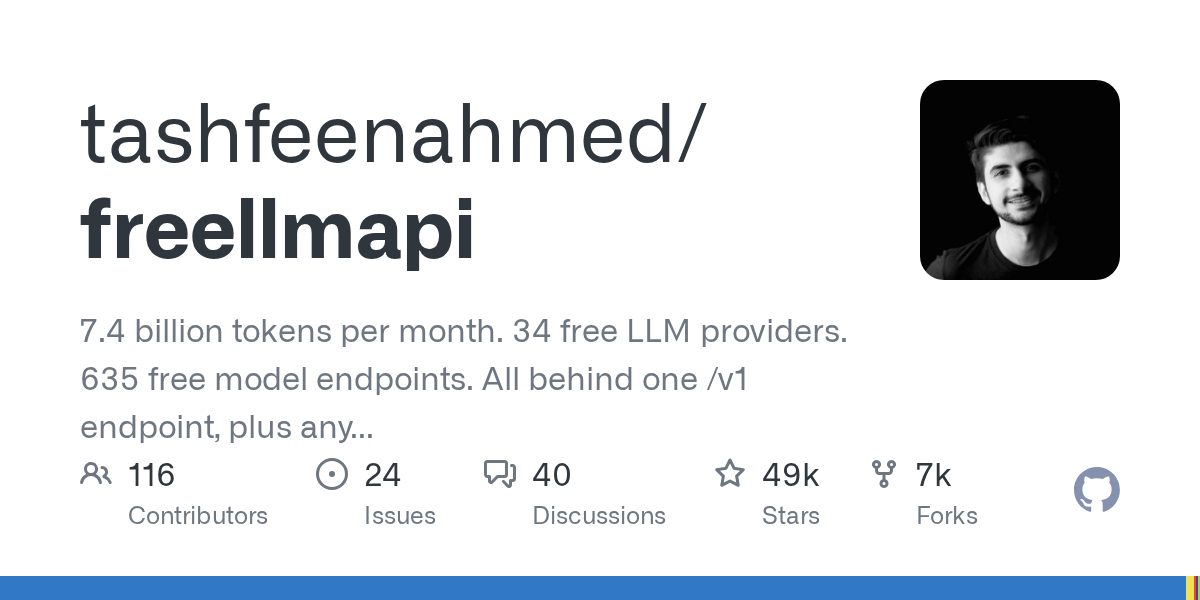
11freellmapi: 34 free model providers and 635 free endpoints unified into one local /v1 interface
Image source: GitHub
Launched in April, the open-source project freellmapi added roughly 4,000 stars over the past week to reach 49,000 stars total: it aggregates free tiers from 34 providers into a single OpenAI-compatible local /v1 endpoint, offering a theoretical ~7.4 billion free inference tokens per month across 474 model families and 635 free endpoints.
Its router automatically selects the fastest available model, fails over upon hitting rate limits, tracks per-key usage to prevent overages, stores API keys locally in SQLite with AES-256 encryption, and configures directly into coding tools such as Claude Code, Codex, and Cursor.
Key caveats apply: it is restricted to personal experimentation and non-production use; the free catalog is a monthly snapshot lagging live directories by about 30 days, while live directory access requires Premium ($19/year or $49 lifetime).
💡 Lumo’s take
For builders of small products, this illustrates the right playbook for the cold-start phase: validate user demand on free tiers before paying for reliability—exhaust the free pool before burning cash.
12Vercel AI Gateway launches DeepSeek V4.1 Flash 1017 Ultrafast with generation speeds exceeding 1,000 tokens per second
Image source: Vercel Changelog
Vercel AI Gateway recently rolled out DeepSeek V4.1 Flash 1017 Ultrafast: powered by Fireworks' accelerated endpoints, it delivers generation speeds exceeding 1,000 tokens per second with a 1-million-token context window in public preview with no waitlist.
Listed under model ID deepseek/deepseek-v4.1-flash-1017-ultrafast, it connects to Claude Code, Codex, and Cursor via npx vercel ai-gateway setup. Positioned as an ultra-fast tier for agent and coding workflows, it trades price for speed—third-party model listings put input pricing at roughly $2.40 per million tokens, 8x the standard version.
💡 Lumo’s take
For agent product builders, this means cost structures can be split by workflow stage—use cheaper models for planning and switch to ultra-fast tiers for execution sprints rather than applying a one-size-fits-all budget.
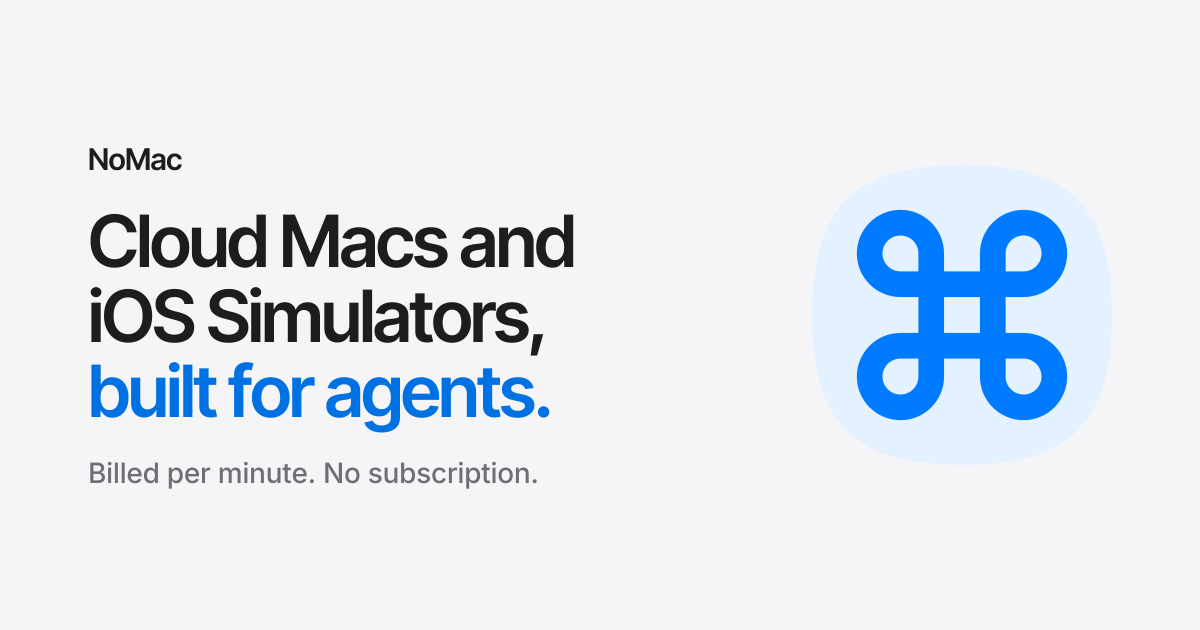
13NoMac: Cloud Macs for agents return at $0.90/hour billed by the minute, now adding an iPhone simulator
Image source: Product Hunt
NoMac relaunched on Product Hunt on November 8, giving AI agents their own cloud Mac—because Claude Code, Codex, and Cursor often run on Linux or Windows and cannot compile iOS apps, NoMac lets agents connect to a cloud Mac via a single command in about 30 seconds, pre-installed with Xcode 27 on M6/M5 Pro chips to handle builds, iPhone simulator runs, and TestFlight or App Store submissions via tool calls.
Pricing is $0.90/hour billed by the minute, with a $10 minimum top-up, non-expiring balance, and no subscription. This update also introduces NoMac Simulator, a cloud iPhone/iPad simulator at the same rate.
Note that this is a relaunch rather than a debut—NoMac first launched on Product Hunt on July 10 and returns now with simulator support; benchmark numbers cited in the launch post come from the team's own testing: 25 seconds to spin up, 11.4 seconds to complete a build, at a cost of 3 cents.
💡 Lumo’s take
For indie app builders, this closes the loop on the agent delivery pipeline—from writing code to shipping on TestFlight without touching a local Mac; per-minute cloud Macs effectively serve as dedicated cloud workstations for agents.
"AI Coding Secret Checkup": Build a pre-commit security checkup specifically for AI coding users—scanning .claude/settings.local.json, .mcp.json, AGENTS.md, and Git history inside repositories to catch passwords, tokens, and secrets inadvertently written by agents, and providing a remediation checklist to rotate keys first, clean up files second, and add ignore rules third. Who pays: Individual developers and small teams using Claude Code, Cursor, or Codex, especially those spooked by Apiiro's findings. Why now: Apiiro just published real-world data showing 1,122 public files and 2,539 exposed secrets, putting security anxiety at a peak, while agents still write full commands into config files by default, leaving a window of at least a few months. Minimum viable product (MVP): An open-source CLI that runs a scan automatically before git commit, blocking the commit and outputting a rotation checklist if a match is found; a free tier scans local repositories, while a team tier starts at $29/month with organization-wide scanning, CI integration, and key rotation reminders. First validation step: Release the CLI on GitHub and Hacker News tonight using Apiiro's public data as a demo—anyone whose own repo flags an issue becomes a first-wave user; start by offering free trials to 10 Claude Code developers in exchange for real scan feedback.