DeepSeek opens its full app toolkit as APIs, while Gemini moves into wallets and cars
Today’s highlights
DeepSeek opens its app's search, file and voice tools as APIs, with search at $0.75 per 1,000 calls
Gemini plugs into Google Wallet for spending analysis and lands on Apple CarPlay
DeepMind's AlphaGenome 2 predicts DNA variant effects cell type by cell type
Huawei Cloud's first Ascend-native world model, CloudRobo-WM1.2, launches this afternoon
Open-source tools Plannotator, Modern Web Guidance and Rakazo; Ant's Ling-3.2-flash stays free for three more days
01DeepSeek opens its full app toolkit as APIs, letting developers rebuild the whole app with a few parameters
Image source: IT Home
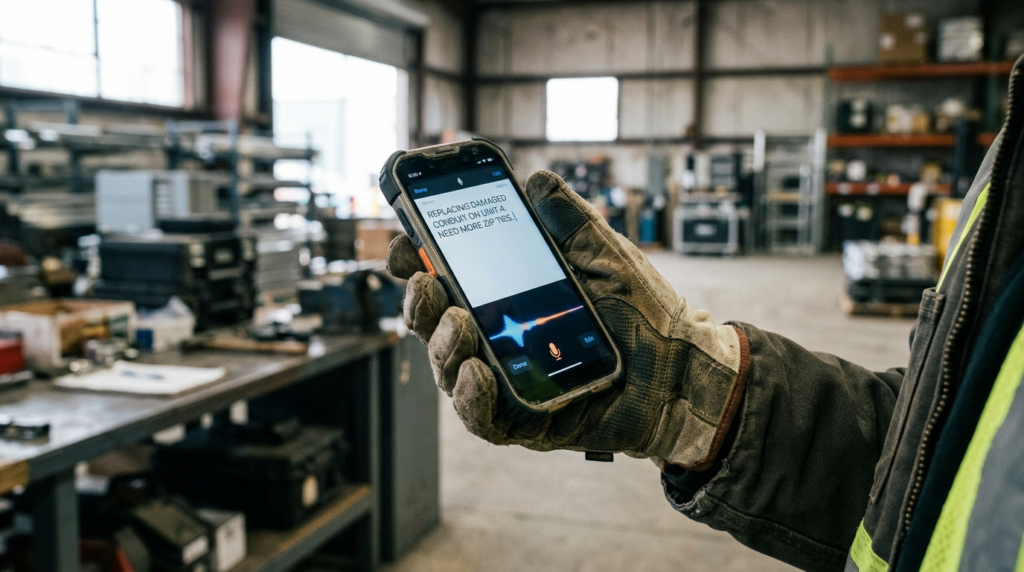
On November 13, DeepSeek announced in its official API changelog that the full toolkit behind the DeepSeek App is now open to developers: add a few parameters to deepseek-flash (V4.1-Flash-1017) and you get web search, deep-thinking search, file input, URL reading and model safety checks, with tool calls and context assembly handled server-side across the Messages, Responses and Chat Completions APIs.
The price is the other half of the story: search and web fetch cost $0.75 per 1,000 calls each (5 yuan per 1,000 on the China site), a fraction of the $10 per 1,000 that OpenAI and Anthropic charge for similar tools; file parsing and OCR run $0.225 per 1,000 pages, and speech recognition and synthesis are half price for a limited time. Model tokens are unchanged at $0.30/$1.20 per million at peak hours, half that off-peak.
The underlying capabilities can also be bought separately as standalone Search, Fetch, OCR, ASR and TTS APIs. DeepSeek also open-sourced chat-demo, a backend-free web client that can import a user's DeepSeek chat history — effectively handing developers the scaffolding to rebuild the DeepSeek App itself.
For developers building small products, this means no longer stitching together three separate services for search, OCR and voice; one API brings app-grade conversational ability into your own product. Public-facing services must turn on the safety checks and take on content moderation and AI-labeling duties.
💡 Lumo’s take
When an app's capabilities become APIs, rebuilding the DeepSeek app stops being an engineering project and becomes a few parameters. At $0.75 per 1,000 searches, even small products that could never afford web search before can now make it a default feature.
02Gemini plugs into Google Wallet: ask it what you spent and which subscriptions quietly raised prices
Image source: Google official blog
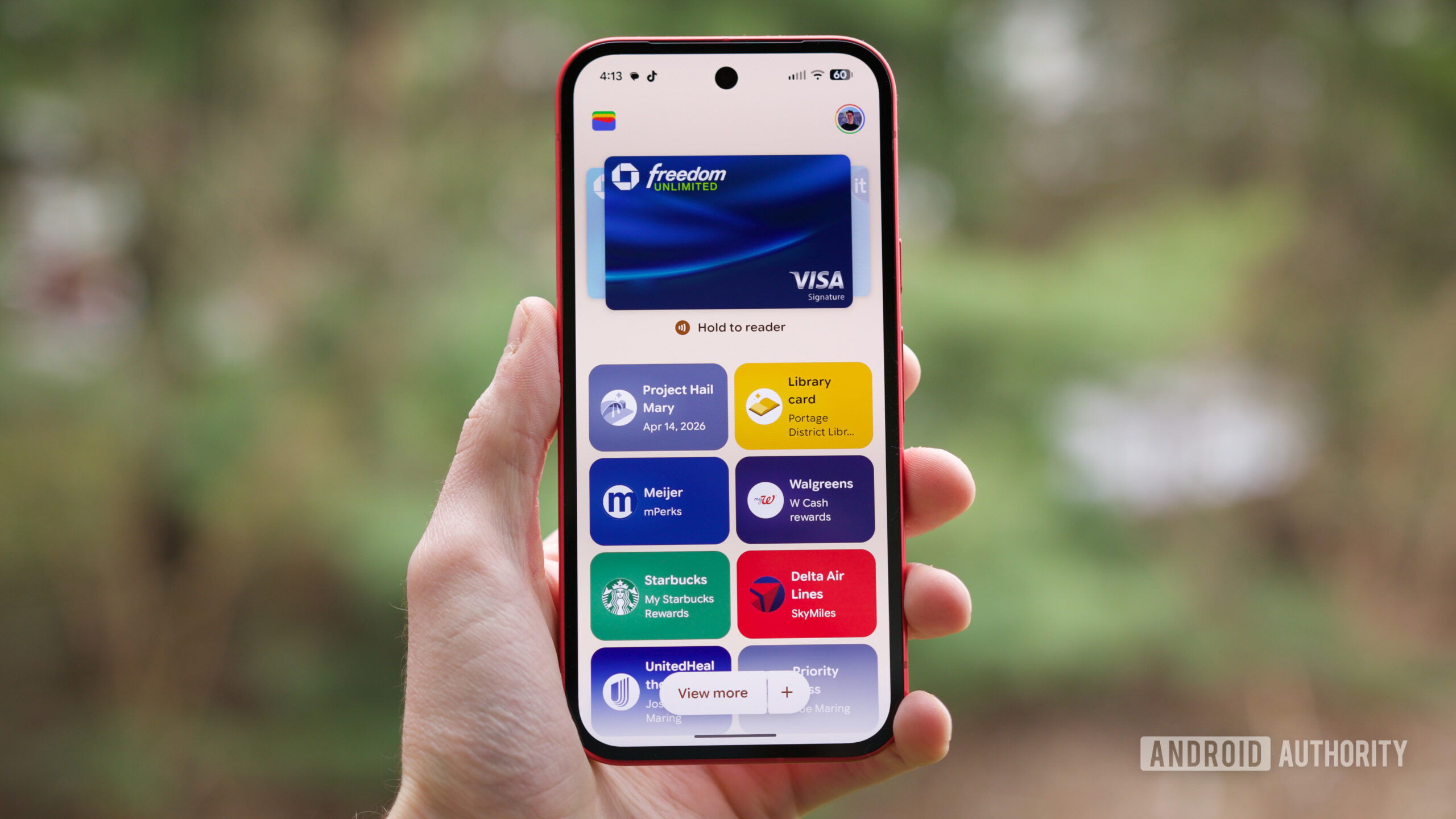
On November 13, Google announced on its official blog that Gemini's Personal Intelligence now connects to Google Wallet: users in the US can link Wallet inside Gemini and ask @Google Wallet about their own spending.
The uses are concrete: review spending by quarter, generate cash-flow and budget charts right in the chat, find subscriptions still charging and flag which ones raised prices, and set this year's holiday budget from last year's gift and travel spending. Bank and credit-card accounts can be linked through Plaid for deeper transaction detail.
The boundaries are drawn just as firmly: read-only access — Gemini can look but cannot move, transfer or invest money; connecting is fully optional and can be switched off at any time; raw Wallet data is not used directly to train models. The feature covers web, Android and iOS, and is limited to US users for now.
💡 Lumo’s take
Assistants are moving from answering questions to watching your money, and the whole bet rests on a trustworthy read-only connection. Teams building budgeting or subscription-management products can copy this read-only, revocable permission design.
03Gemini lands on Apple CarPlay, so the commute can cover email and calendar by voice
Image source: Google official blog
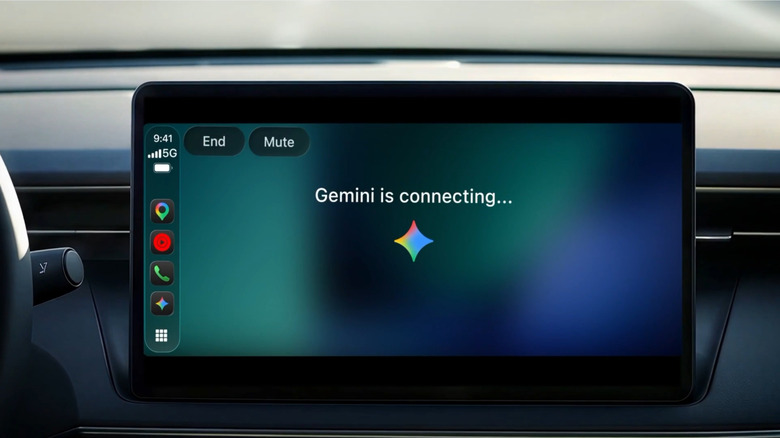
On November 11, Google announced that the Gemini app is now on Apple CarPlay: iPhone users can tap the Gemini icon on their car's display and hold hands-free Gemini Live conversations, rolling out globally to all Gemini users on iOS across every language Gemini Live supports.
The pitch targets the hour-long commute: ask about today's schedule and when to leave, hear the Daily Brief, have unread emails read out and long threads summarized, find a lunch spot along the route, or rehearse a presentation. Everything said in the car syncs back to the Gemini app on the phone, waiting in chat history when you park.
Three requirements: update the Gemini app on the iPhone, allow microphone access, and use Gemini Live on the phone at least once. Daily Brief and some personalization features are unavailable to users under 18 and in the European Economic Area and Nigeria. Gemini previously reached CarPlay only through Google Maps; now it has its own icon.
💡 Lumo’s take
This is the last piece of Gemini's in-car puzzle after Android Auto. ChatGPT and Claude are already in cars, and the dashboard is becoming the next battleground for every assistant.
04DeepMind releases AlphaGenome 2, predicting DNA variant effects cell type by cell type
Image source: Google DeepMind official blog
On November 11, Google DeepMind released AlphaGenome 2, a next-generation DNA sequence model that predicts how DNA variants affect specific human cell types. It was trained on more than 107 million individual cell profiles across 68 tissues.
The key change is conditional prediction: feed in a million-letter DNA sequence plus one cell type or state, and the model predicts for that condition alone, instead of producing parallel outputs for all tissues like its predecessor. On the TenK10K dataset of 28 primary immune cell types, causal-variant detection rose from 16% to 30% and directional gene effects from 23% to 43% — nearly double.
The model is available now for non-commercial research via the AlphaGenome API, with commercial research in private preview. It is for research use only and has not been validated or approved for clinical or diagnostic use. Interactive Colab tutorials and a 78-page preprint were released alongside, and AlphaGenome 2 Skills will come to Google Antigravity later.
💡 Lumo’s take
AI in life sciences is moving from averages to single cells. The same conditional-prediction idea applies to any product that needs to model different audiences or scenarios separately.
05Huawei Cloud's first Ascend-native world model, CloudRobo-WM1.2, launches this afternoon
Image source: IT Home
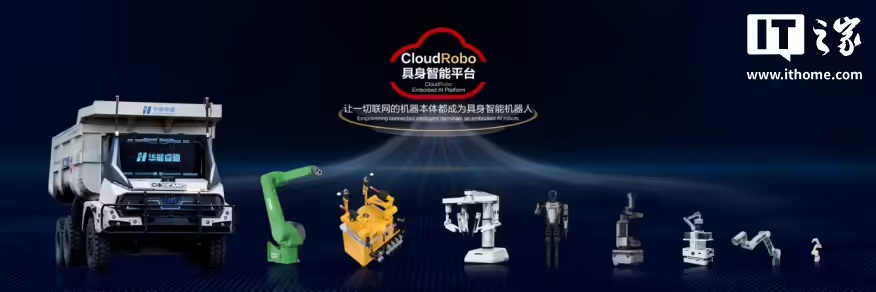
Huawei Cloud will unveil its CloudRobo embodied world model in a livestream today (November 16) from 14:00 to 15:30, launching CloudRobo-WM1.2, the first Ascend-native world model from its Industry AI Dream Factory platform.
The positioning is clear: the model and platform run end-to-end on Ascend compute, and Huawei Cloud repeats that it will not build robot hardware — partners build the bodies, Huawei Cloud provides the cloud world model and platform, aiming to turn every connected device into an embodied-intelligence robot.
Parameter count, training data and benchmark scores were not disclosed before the event and will be revealed in today's livestream, which also includes an architecture deep dive and ecosystem signings. It is the platform's first world model since its four zones — smart healthcare, embodied intelligence, smart manufacturing and scientific computing — went live in June 2026.
💡 Lumo’s take
World models are turning from papers into product lines. Whether domestic compute can support the full training-and-inference loop for embodied AI makes this launch one of the most telling tests of the year.
06Plannotator gains 860 stars in a day, adding a review desk for multi-agent coding
Image source: Blockchain.News
On November 15, open-source project Plannotator surged on GitHub Trending, gaining 860 stars in 24 hours to reach 11,523 stars and 1,016 forks. It is a local-first, browser-based workspace built for managing collaboration between multiple AI coding agents.
At its core is an Inbox: agents leave messages, questions, files and items for review there, and humans annotate plans, specs, HTML artifacts and code diffs directly, sending feedback back to the agent to act on. It supports Claude Code, Codex, Copilot CLI, Gemini CLI, OpenCode and others, plus personal assistants such as Grok Bot and Muse, and integrates with Git, GitHub, GitLab, Perforce and Jujutsu.
The project is Apache-2.0 open source, created on December 28, 2025, and collects no usage telemetry. Its README is candid about limits: small shared links are unencrypted, larger shares use AES-256-GCM encryption, and the team plans to replace link sharing with hosted workspaces.
💡 Lumo’s take
When several agents code together, the missing piece is not the model — it is where a human gets to say one sentence. This inbox pattern is worth copying for anyone building agent-collaboration products.
07Ant's Ling-3.2-flash stays free for three more days: a 560B multimodal model to try before it starts charging
Image source: FreakyJolly
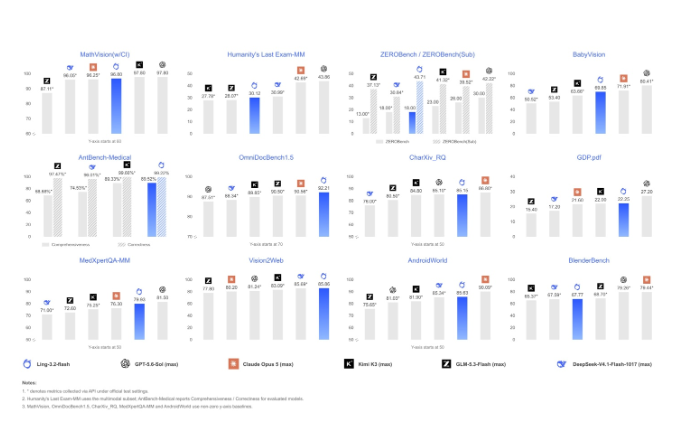
Ling-3.2-flash, launched by Ant Group's Ling team on November 5, is the family's first native multimodal model: 560B total parameters with only 25B active per token, a 1M-token context window, and text, image and video inputs fed straight into the same model. Ant's pricing page says it is free for the first two weeks after launch — counting from November 5, the window closes around November 19, leaving about three days.
Ant's three reported vision benchmarks all beat Claude Opus 5 (max): OmniDocBench 1.5 at 92.21 vs 90.56, Vision2Web at 85.86 vs 80.20, and ZEROBench (Sub) at 43.71 vs 39.52 — but these are vendor-reported and no third party has reproduced them yet. On DesignArena's image-to-frontend board it sits around 10th with an Elo of 1238.
Access is friendly: chat at chat.ant-ling.com, an API compatible with both OpenAI and Anthropic protocols, and it can be dropped into Claude Code as the model. The limits matter too: videos cap at 30 seconds, one per request, sampled at a fixed 2 fps up to 32 frames; a global rate limit of 2 requests per second; and no post-promo price has been published, with Ant warning users to watch their account balance once the free window ends.
💡 Lumo’s take
A free window is a trial period for developers: screenshot-to-code, PDF-to-code and drawing-to-3D work is free to test now, and billed per use after November 19.
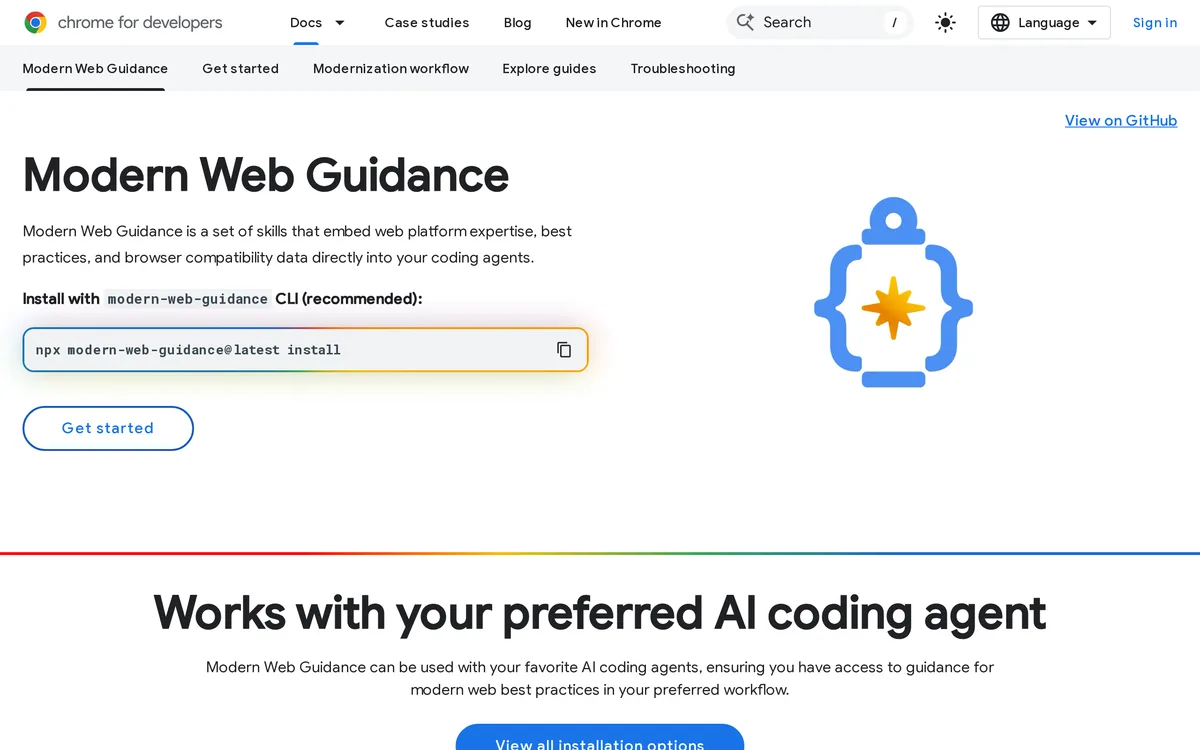
08Google's Modern Web Guidance tops GitHub Trending, teaching coding agents to stop writing 2019-era web code
Image source: Kai Finds
Modern Web Guidance from Google's Chrome team (source repo modern-web-guidance-src) topped GitHub Trending on November 15, gaining about 1,200 stars in a day; total stars passed 7,100 by November 16, up roughly 4,900 in a week. Version 1.0.0 was released on November 10.
It is a skill pack for coding agents on modern web development: it feeds current browser-vendor practices and compatibility data straight into an agent's context, covering 250 modern web features — container queries, subgrid, oklch, the Popover API, Anchor Positioning, View Transitions and six core disciplines — so agents write less bloated JavaScript and use more native browser capability.
The backing is heavyweight: the Chrome, Edge, Firefox and MDN teams steward it together, under Apache-2.0. One command installs it — npx modern-web-guidance@latest install — and you can try search, retrieve and legacy-scan first to scan your own project for outdated patterns without installing.
💡 Lumo’s take
The stronger the model, the more convincing its outdated code looks — this skill pack fixes the stale-training-data problem. Teams building front-end agent products can adopt it as their default knowledge base.
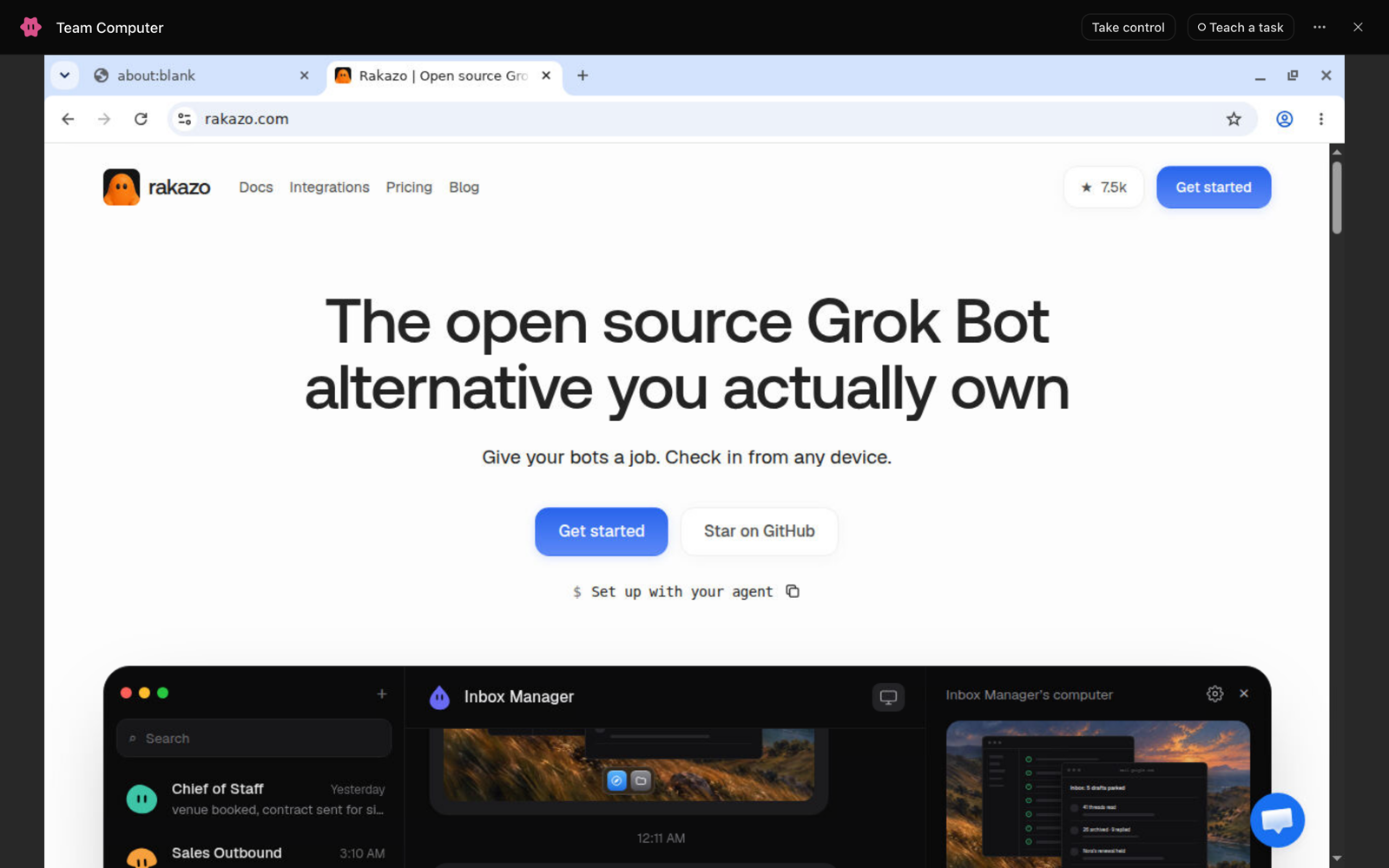
09Rakazo takes third on Product Hunt: an open-source Grok Bot alternative where every bot gets its own computer
Image source: Product Hunt
On November 15, Rakazo took third place on Product Hunt's daily leaderboard: an open-source, self-hosted alternative to Grok Bot. Every bot gets its own memory, routines and a real computer (a Docker sandbox or a cloud machine) — it can browse, run a terminal, edit files, spawn peer bots and collaborate in groups.
The biggest difference from Grok Bot is bring-your-own-model: it connects to Claude, ChatGPT, OpenRouter and xAI, or a local Ollama server, and each bot can use a different model. It is Apache-2.0 open source with more than 8,600 stars; v0.8.0 shipped on November 4; web, desktop, iPhone and Android clients all exist.
The hosted plan starts at $15 a month (one cloud computer plus an allowance of computer hours); self-hosting is free, but you pay the model bill yourself — the homepage puts it bluntly: 'Rakazo does not pay the model bill.' It is still in beta, and the authors warn that the desktop sandbox mode runs with local user permissions and should not be used on public servers.
💡 Lumo’s take
Personal agents are shifting from one chat box to a squad of bots. The open-source, bring-your-own-model route is exactly right for developers who refuse to be locked to a single vendor.
"AI research briefing" subscription: track the companies you care about and get a one-page, sourced briefing every day, built on DeepSeek's cheap search and file-parsing APIs. What: subscribers pick 3–5 companies; after market close each day the service pulls announcements, filings, news and research, reads PDF filings with DeepSeek's file parsing, and produces a one-page briefing with cited sources — what happened today, what it could mean for the stock, and what to watch next. Who pays: retail investors, small brokerage and fund teams, and finance creators — their most expensive cost is the hours spent digging through filings; charge 29–49 yuan per company per month, minimum three companies. Why now: DeepSeek just opened its full search, file and voice toolkit as APIs, with search priced at a fraction of OpenAI's; earnings and annual-report season is near, so filing volume is peaking. Minimum viable product: hand-run the pipeline for three popular companies once — DeepSeek API pulls filings and writes the briefing, delivered by Feishu or email — then post it in investor groups and see if anyone will pay 29 yuan a month for next month. First validation step: tonight, use DeepSeek's chat-demo approach to produce one company's briefing, screenshot it into two investor groups, and only start building after 20 people say they want to subscribe.