Duolingo Deep Dive: Language Learning Broken into a Few Gamified Minutes a Day
Positioning and Maker
Duolingo is a language-learning app for a general audience, built mainly around gamified teaching, with courses covering English, Japanese, French and more. It breaks language learning into short lessons of a few minutes each, so users can finish one in a spare moment, and uses a daily streak mechanism to turn learning into a fixed daily habit.
In recent years it has added AI conversation practice and other intelligent features, letting learners hold situational conversations with AI characters inside the app to practise speaking. As of 2026-11-24, the Lumo library lists 2,338 tools, including 77 in the learning category; within that category, Duolingo is positioned as a lightweight entry point and daily practice tool for ordinary learners. Its courses are organised by topic, and learners work through them in order, seeing their progress change with each lesson completed.
Core Features
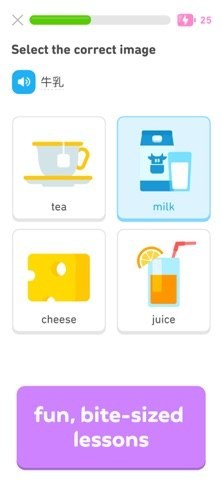
Its core features are organised around separate listening, speaking, reading and writing practice: vocabulary study, listening choices, speaking repetition and writing fill-in-the-blanks, arranged into learning paths by topic and difficulty. Beginners start from basic vocabulary, while more advanced learners can take a placement test first and skip what they already know to enter content at the right level.
Beyond practice, there are two supporting systems: review and motivation. Vocabulary review and mistake review help consolidate memory, while leaderboards and friend challenges push users to keep going through gamification. Situational conversation with AI characters is a speaking-practice format added in recent years, letting learners speak the target language in simulated scenarios.
How It Compares with Similar Tools
Compared with dictionary- or textbook-based learning tools, Duolingo stands out by cutting practice into very small pieces: each lesson takes a few minutes, can be started at any time and stopped at any time. This design fits spare moments, but it also means the app leans toward consolidating basics and daily practice rather than a systematic language course. This short, quick rhythm also makes it a good daily warm-up: a few minutes of practice first, then on to more systematic study material.
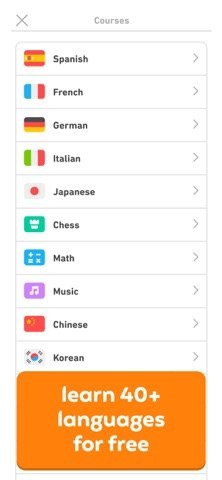
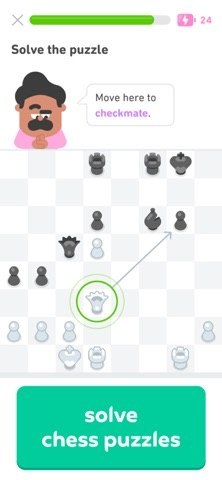
Compared with other language apps, its gamification is more pronounced: daily streaks, leaderboards and friend challenges are all designed to bring users back each day. Its course list also extends beyond languages, with chess, maths and music courses listed in the official app.
Who It Suits and Typical Scenarios
It suits people learning a language in spare moments, for example students building a foundation before exams, travellers brushing up on everyday phrases before a trip abroad, or office workers practising speaking on the commute. Learners who find self-discipline hard benefit in particular from its reminders and streak records: a visible day count makes it easier to keep going. Opening the app for a few minutes a day is enough to finish one lesson.
It also suits people who want to build language learning into a long-term habit: one small lesson a day sets a modest goal, which is easier to sustain. But if the goal is a demanding exam or working-level proficiency, it works better as supplementary practice than as the only preparation tool.
Access and Pricing
In terms of access, Duolingo is directly accessible in China, both on the web and in its mobile app. After signing up, users can start learning right away, beginning from basic vocabulary or taking a placement test to skip what they already know.
Pricing follows a freemium model: core courses are free, while a paid tier adds ad-free use, unlimited practice and AI conversation features. Exact prices are as listed on the official website. Whether to subscribe depends on how much the user wants the ad-free and advanced features; basic learning does not depend on paying.
Tools mentioned

Sources
This article is compiled from the public sources above and does not reproduce the originals in full; see the official sources for details.