Doubao Deep Dive: ByteDance's Consumer AI Assistant for Everyday Q&A and Writing
1. Positioning and Developer
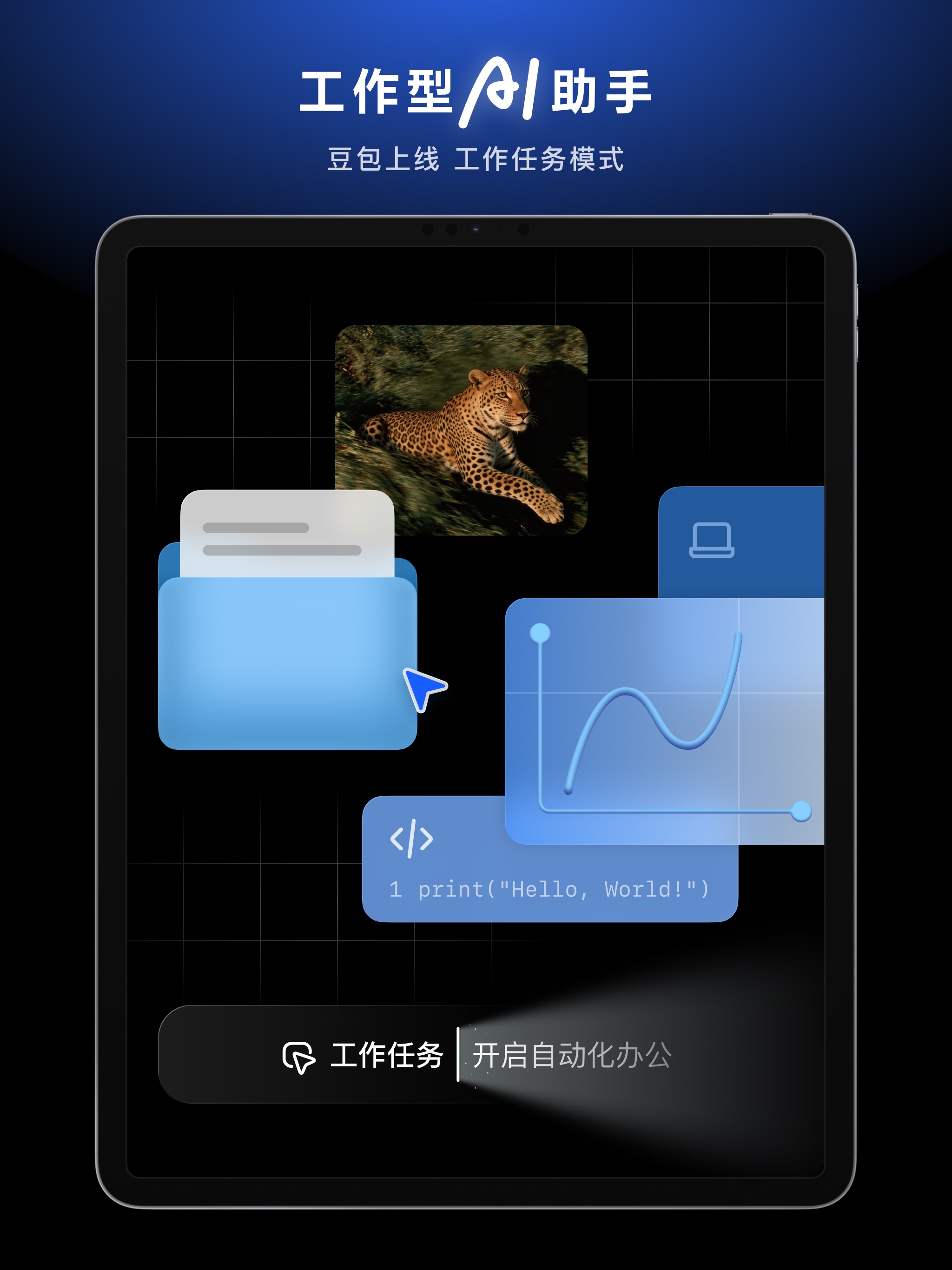
Launched by ByteDance and backed by ByteDance's proprietary large models, Doubao is positioned as a comprehensive conversational product for everyday consumer use, spanning mobile apps, desktop clients, and the web. Its target users are not a specific group of professionals, but "everyone": students, newcomers to the workplace, and everyday users can all pick it up directly.
Unlike tools that focus on a single vertical capability, Doubao's strategy is to bring high-frequency needs together into one entry point: Q&A, writing, image recognition, voice, and translation are all handled within the same chat window. For many users, it is the starting point for using AI in earnest—learning to chat with it first, and then gradually discovering what else AI can do.
2. Core Features
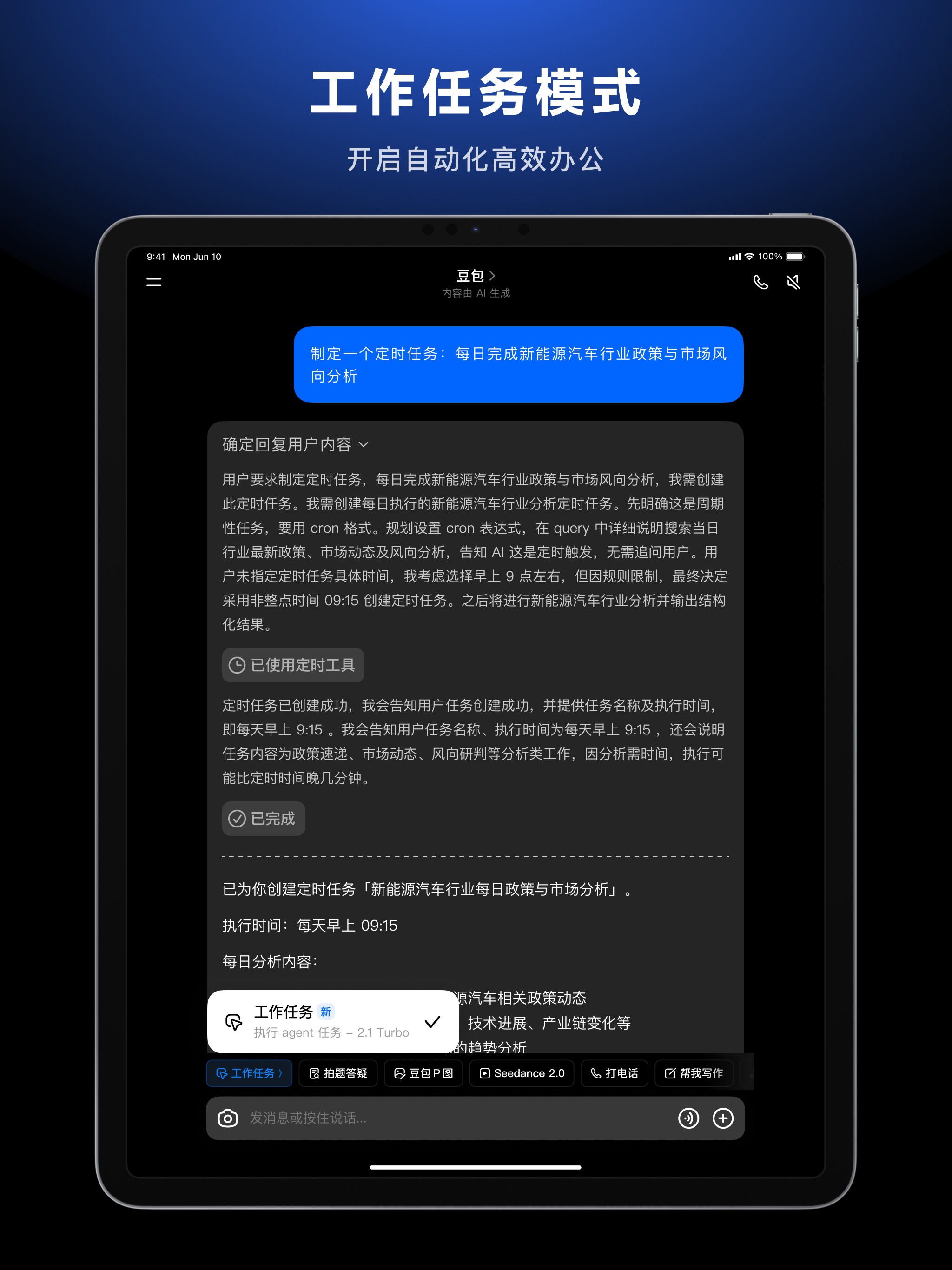
Its feature coverage is broad: everyday conversational Q&A, article and copywriting, photo recognition and image generation, voice calls and voice input, document summarization, and translation are all integrated into the same entry point. Users can ask it in colloquial language to draft outlines, revise text, or explain concepts, and can also upload files for it to extract key points, handling routine study and office tasks.
Voice is one of its signature capabilities: it supports voice calls and voice input, allowing users to speak directly while driving, cooking, or walking. Photo recognition turns "ask about whatever you see" into a daily habit: snap a photo of a dish to ask for the recipe, a homework problem to ask for the approach, or a document to ask for key points, without having to type the content out first.
3. Characteristics Compared with Similar Tools
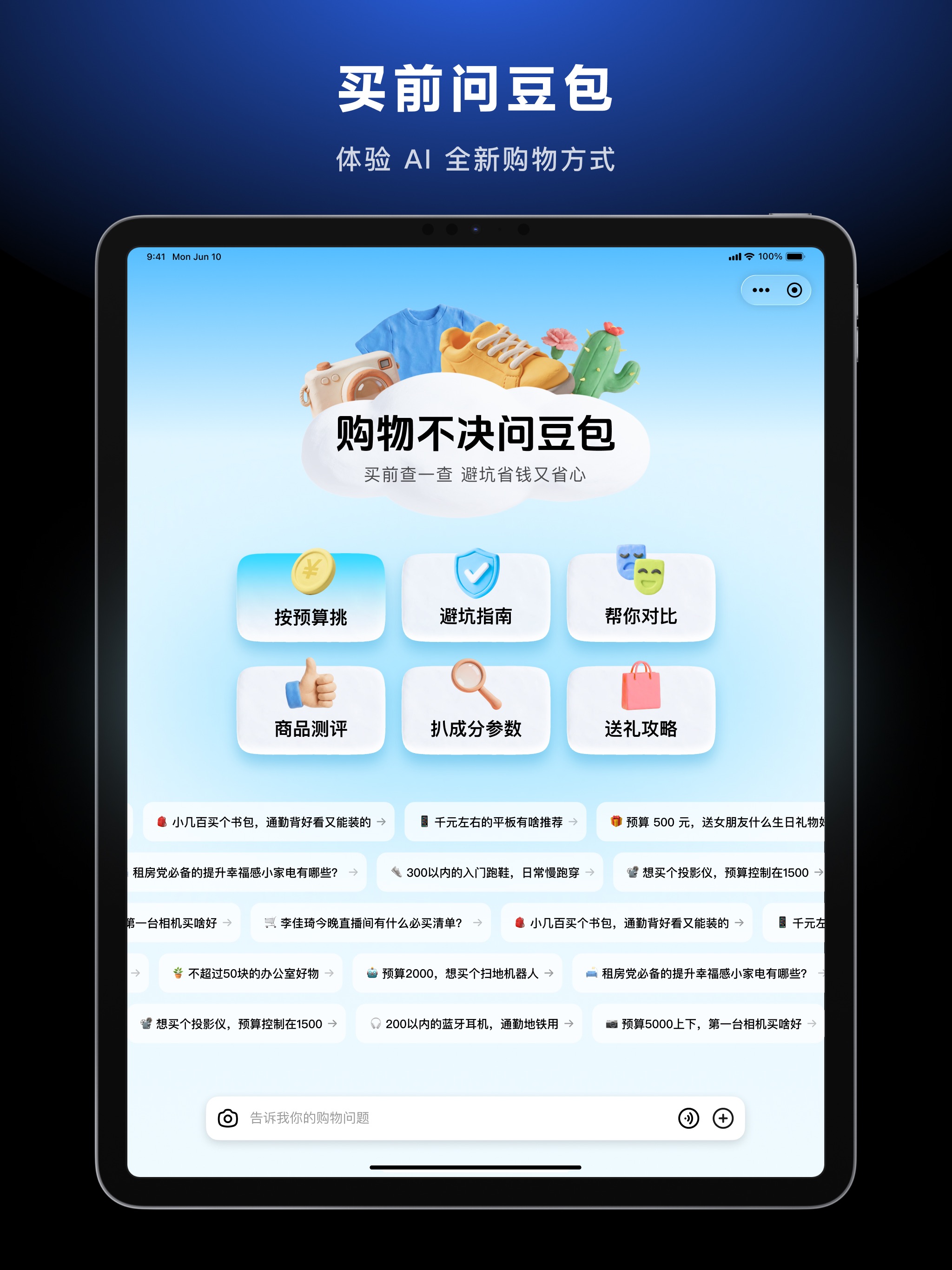
Doubao's strengths lie in Chinese-language context and localized scenarios: backed by ByteDance's proprietary large models, it has undergone extensive refinement in Chinese expression and everyday local scenarios, so when handling practical tasks like travel planning, recipe lookups, homework tutoring, or interview preparation, prompts can be very conversational without needing to be structured into "standard queries" first.
The trade-off is that it is not necessarily the strongest in deep specialized scenarios: working through ultra-long documents is less seamless than with Kimi, which specializes in long-context processing; conducting sourced research retrieval is less rigorous than Perplexity; and collaborative coding is less in-depth than Claude Code in the terminal. Its positioning makes it better suited as an "everyday helper," leaving specialized tasks to dedicated tools.
4. Target Audience and Typical Scenarios
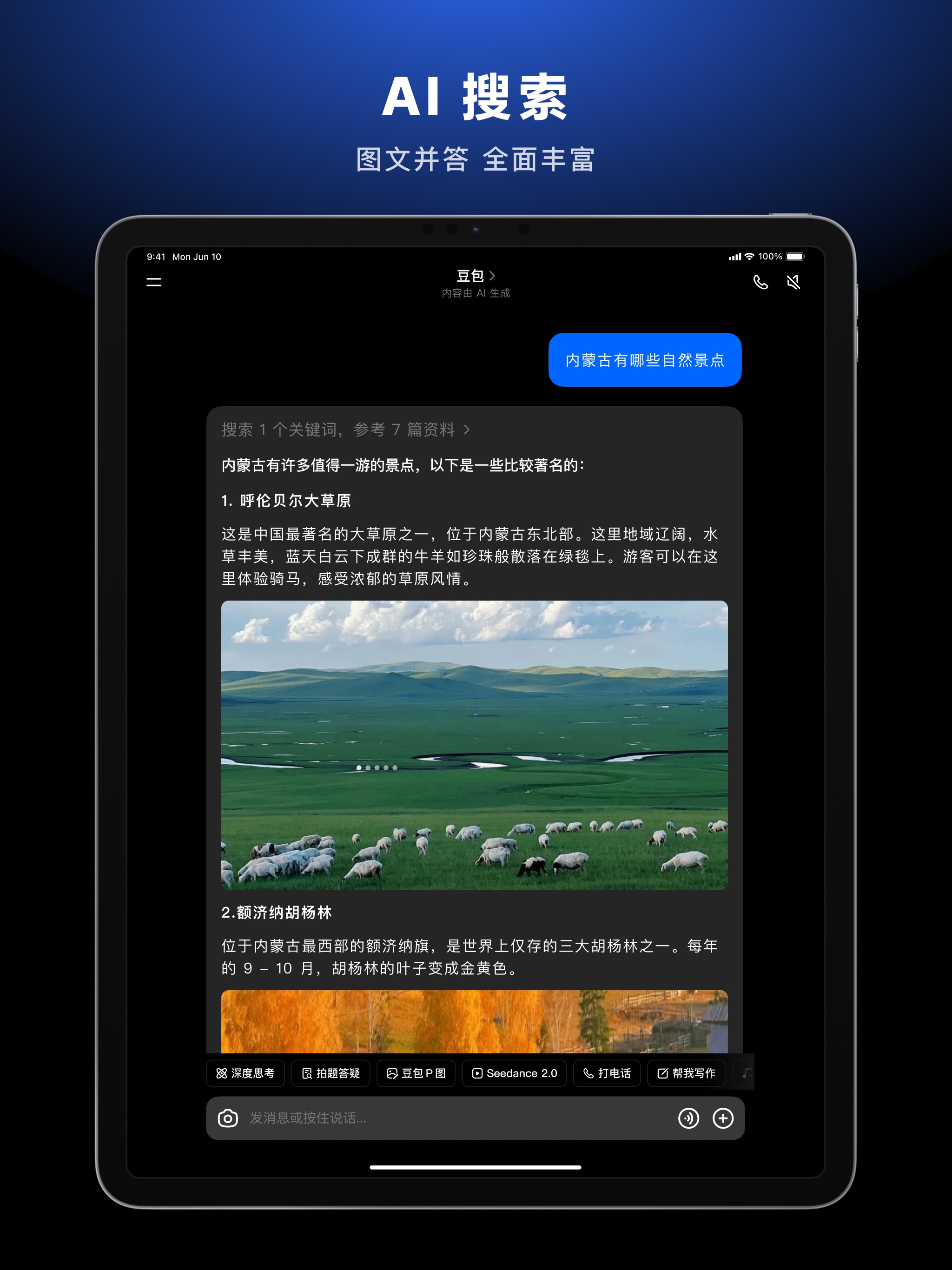
It is suited for users who treat AI as an everyday helper: students and early-career professionals who need to look up information and write text on the fly, as well as everyday users who are less familiar with complex tools. Using it for lifestyle scenarios such as travel planning, recipe lookups, homework tutoring, and interview preparation has a very low learning curve.
Typical usage is asking and writing on the spot: checking the weather and outfit suggestions in the morning, having it draft an outline when writing an email, or snapping a photo to ask about an unfamiliar concept. For people who already use it, the dividing line is not the number of features, but frequency of use: it is the entry point they open every day.
5. Access and Pricing
In terms of access, Doubao can be accessed directly in China without additional network configuration, with entry points available across mobile apps, desktop clients, and the web.
In terms of pricing, it is currently free to use, with commonly used features such as everyday conversation, voice calls, and image generation incurring no charge; should paid capabilities be introduced later, the official website's terms shall apply.
Tools mentioned

Sources
This article is compiled from the public sources above and does not reproduce the originals in full; see the official sources for details.