Which AI Music Tool Should You Use? Five Tools for Songwriting and Scoring

Songwriting: From a Lyric to a Finished Song
Suno offers the shortest path to a song among the five: type a text description and it generates a complete song with melody and vocals, which suits hearing a finished version before deciding on a direction. Library data places it in the audio category, with a freemium pricing model and restricted access in China, so confirm the current way to reach it before use.
Udio follows the same songwriting route, also in the audio category, directly accessible in China, with its pricing model left to its official site. The difference between the two is not whether they can produce a song, but how you refine the result: if you like hearing a full arrangement once and then tweaking it, try Suno; if you prefer generating several arrangements and choosing slowly, Udio can join the same round of comparison.
Scoring: Background Music for Video and Podcasts
For background music in videos and podcasts, Soundraw is the more direct fit. It sits in the audio category, is directly accessible in China, and uses a paid pricing model, with its purpose being on-demand scoring: pick a mood and a length, and it generates a track that can go straight onto an editing timeline, saving time spent searching music libraries.
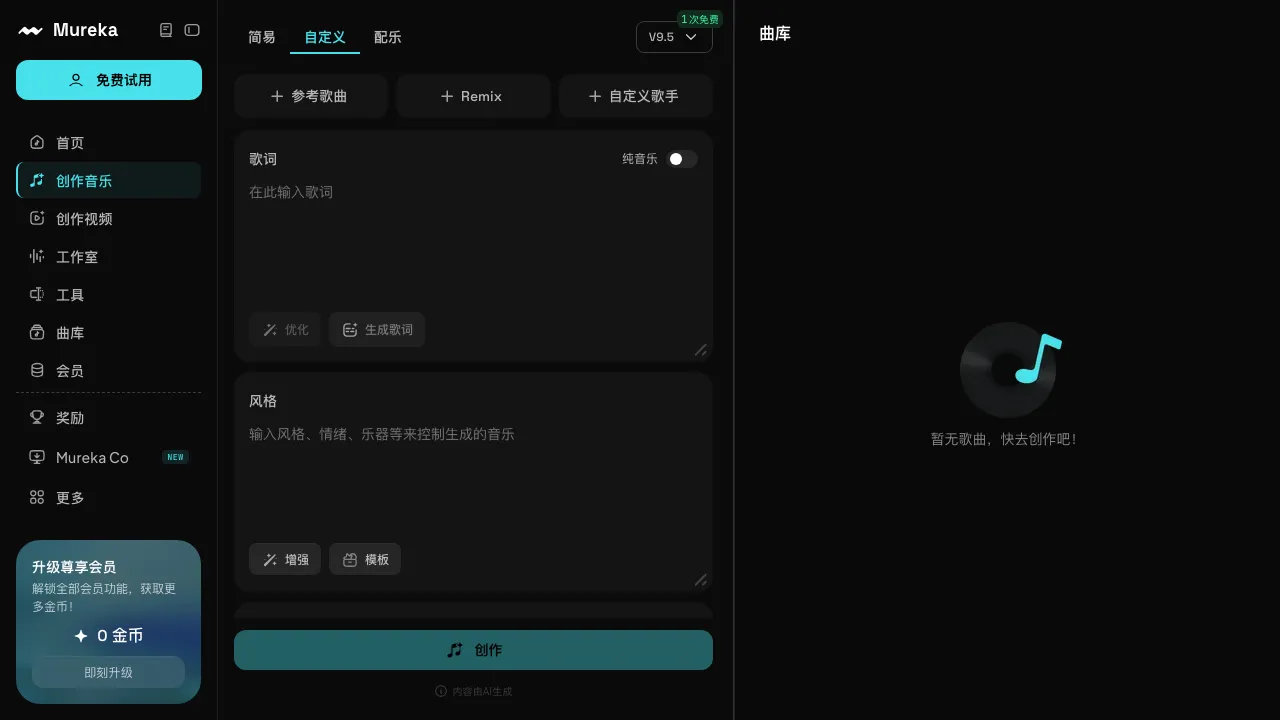
Mureka is also in the audio category, at mureka.cn, directly accessible in China, with its pricing model left to its official site. It can generate songs as well as serve scoring scenarios, and Chinese-speaking users can open its site to see its current features and limits directly. For scoring, settle the use case first: a short-video intro, podcast bed music, and a long-video background each ask for different lengths and looping behavior.
Adaptation and Remixing: Changing Style and Structure
AIVA is positioned as an AI composition assistant, in the audio category, directly accessible in China, with a freemium pricing model. It suits people who already have a melody or harmony idea and want to expand it into a full arrangement: hand the motif to it, let it develop the material, and then keep or drop parts by your own judgment, which saves time compared with starting from zero.
Another route to adaptation and remixing is to generate repeatedly inside a songwriting tool and pick the version you like. Suno and Udio produce different versions each time, so running the same lyrics several times yields different arrangement directions, and Mureka can join the same comparison. Keep the original version before adapting, so you can look back and compare which version fits the visuals or the lyrics better.
Commercial Use: Check the License Before Publishing
The five tools differ in licensing and commercial terms, and a paid tier does not imply the same license across tools, so check the current licensing terms on each official site before publishing. The rights covered by Soundraw's paid model differ from those covered by the freemium models of Suno and AIVA, and price alone says nothing about the scope of a license.
The site's own data can serve as a starting point for choosing: as of 2026-11-12, the Lumo hub listed 1,720 published tools, including 88 in the audio category, and all five tools in this guide are among them, with their /t/ pages verified to open on the same day. Sort by use case — songwriting, scoring, or adaptation — then narrow down by access and pricing model, and the tool you pick is more likely to stay useful over time.
Tools mentioned



Sources
This article is compiled from the public sources above and does not reproduce the originals in full; see the official sources for details.