Choosing AI Audio Tools by Quality and Speed: Finished Songs, Natural Voiceovers, and Transcription Efficiency

1. Conclusions First: Quality Means a Usable Output, Speed Means a Skipped Step
Conclusions first: for output quality, look at the song and voice groups — Suno, Udio, and Mureka turn text into complete songs, while ElevenLabs and Murf turn text into natural voiceovers; for speed, look at transcription and quick revision — iFlyRec turns recordings and meetings into text, while Murf and Udio revise existing material quickly. Quality and speed are not two camps of tools but successive stages of one pipeline.
This grouping comes from Lumo's catalog fields: the pricing models and China access status of all six tools were verified on 2026-11-25. Lumo hub's audio category holds 117 entries; this article takes six with clear roles. It gives no generation times, benchmarks, or speed figures — quality and speed are grouped by public positioning and catalog fields only, with quotas and prices left to the official websites. The makers and roles of all six come from the catalog fields: Suno, Udio, and Mureka handle music, ElevenLabs and Murf handle voiceovers, and iFlyRec handles transcription — the division of labor is stated in the catalog descriptions.

2. Quality-Oriented: Three Song Tools — Suno, Udio, and Mureka
Suno generates a complete song from a text prompt, suited to quickly producing finished music with melody. It is freemium, with restricted access from China. Udio generates a complete song with lyrics and vocals from a text description, supporting continuation, remixing, and partial redraws — suited to iterating on an existing melody. It is directly accessible in China, with pricing on its official website.
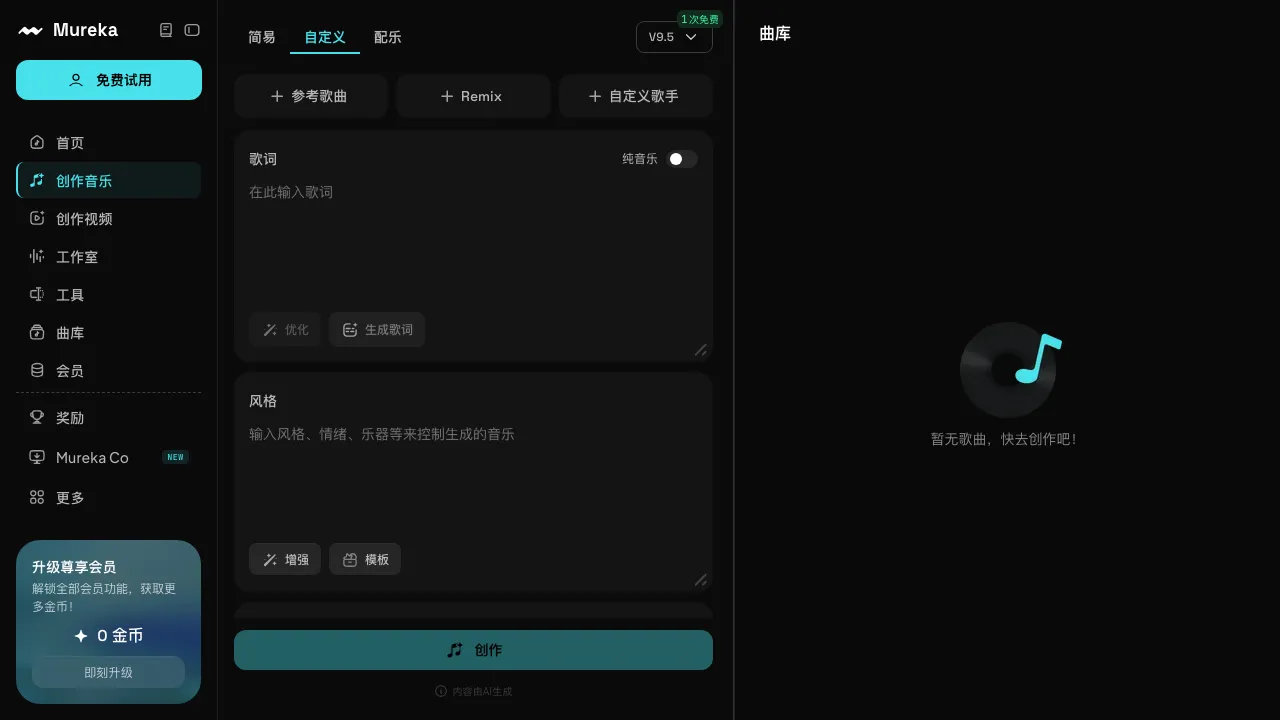
Mureka, from Kunlun Tech, generates complete songs with vocals from lyrics and style descriptions, and works for Chinese lyrics. It is directly accessible in China, with pricing on its official website. All three deliver complete songs; they differ in how you revise: Udio can continue and redraw an existing melody, Mureka suits starting from Chinese lyrics, and Suno suits going straight from a one-line description to a finished song.

3. Quality-Oriented: Two Voice Tools — ElevenLabs and Murf
ElevenLabs is an AI voice synthesis and dubbing platform, suited to narration and voiceovers in many languages and voices. It is freemium, with access as stated on its official website. Murf AI is an AI voiceover platform offering many voices in multiple languages, turning text into natural narration with adjustable tone, pauses, and speed — suited to course and promo narration. It is directly accessible in China and freemium.
Voiceover quality is not about how many voices there are, but whether the result sounds like a person speaking: whether tone, pauses, and speed can be adjusted decides whether the narration is ready to use. Both support multilingual voiceovers; they differ in access — Murf is directly accessible in China, while ElevenLabs access should be checked on its official website. Confirm you can open it first, then compare voices.
4. Speed-Oriented: iFlyRec Transcription and Pipeline Advice
iFlyRec, from iFlytek, is a speech-to-text platform offering recording transcription, real-time subtitles, and meeting minutes, with multilingual transcription and translation. It is directly accessible in China, with pricing on its official website. Its speed value is not in generation but in skipping manual transcription: a recording becomes a written draft directly, and edits do not require re-recording. Once meeting minutes are preserved, the same recording can go out as a text version and then become narration.
Speed advice: set the quality bar first, then arrange the pipeline. Generate one version of the music in each of Suno, Udio, or Mureka and compare them; hand narration to ElevenLabs or Murf; transcribe recordings with iFlyRec first. Try one version on each free quota, work out the cost per piece, and then decide who to pay — quotas and prices are on the official websites.
Tools mentioned




Sources
This article is compiled from the public sources above and does not reproduce the originals in full; see the official sources for details.